Mason bees
Mason Bees in your BeeHome
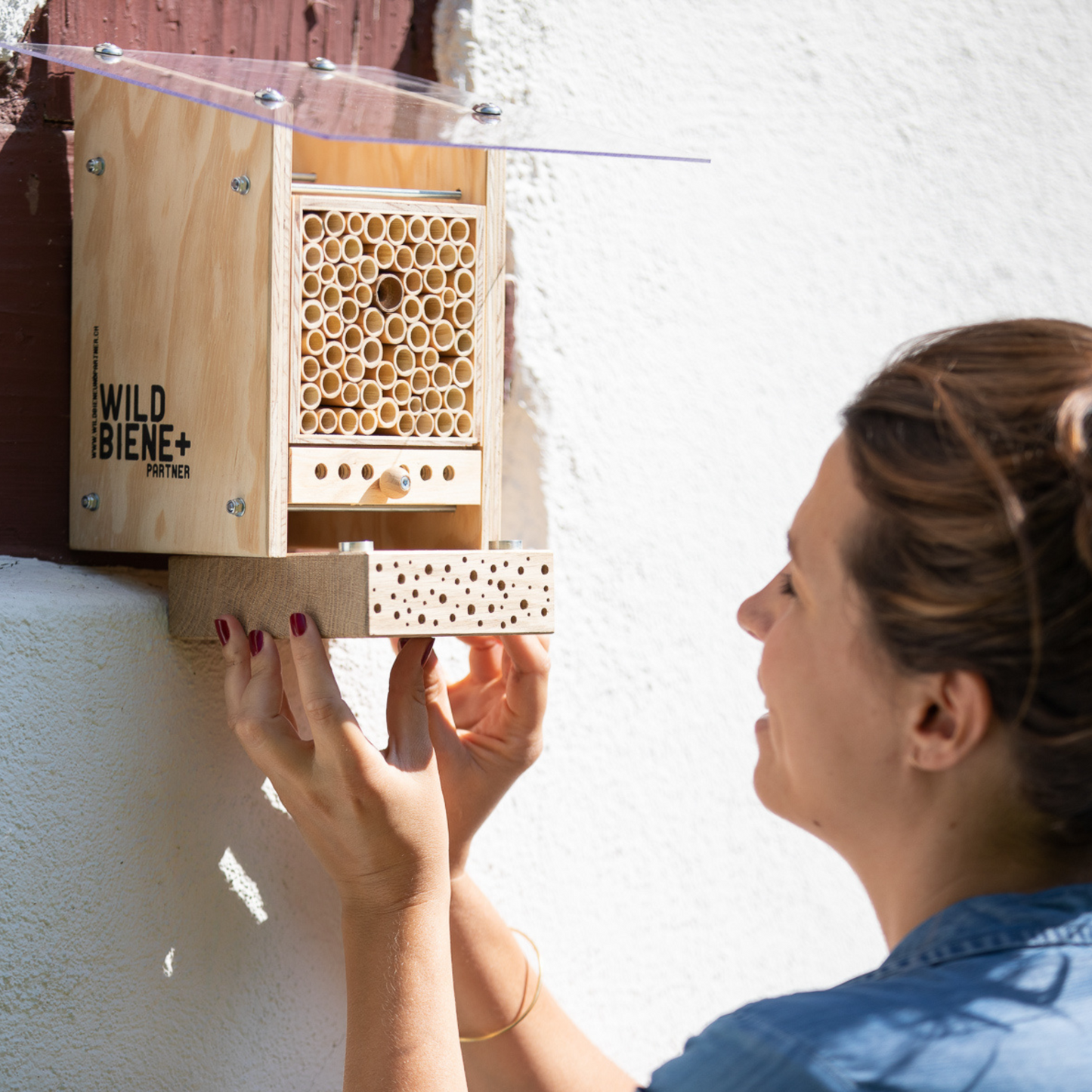
With every one of our BeeHomes, you receive a voucher for red mason bee cocoons. This is your personal starter population and guarantees a fascinating start to your wild bee adventure. We have designed the BeeHome as a nesting aid specifically for the needs of these peaceful mason bees.
On this page, we introduce you to the most common mason bees you might encounter at your BeeHome.
What are mason bees?
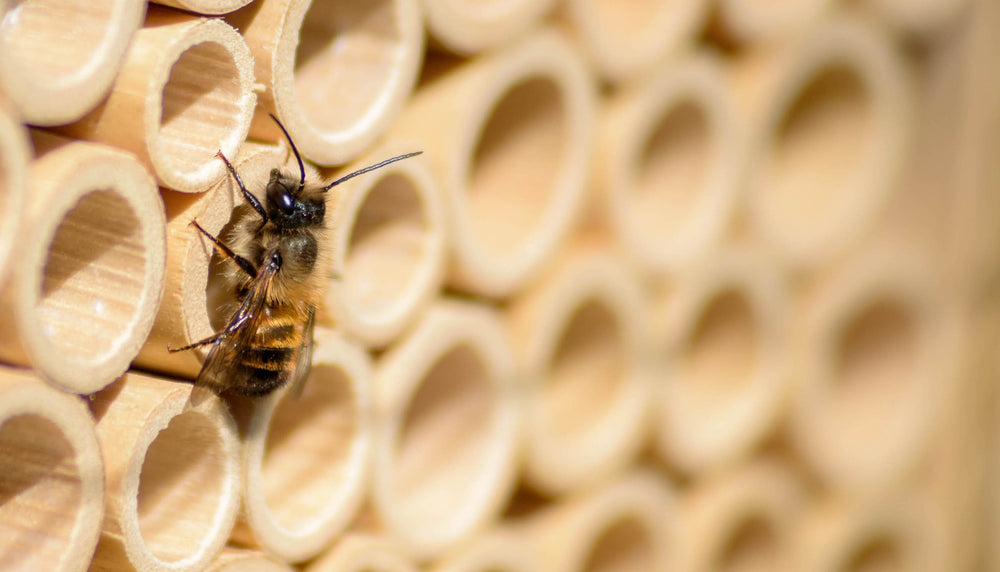
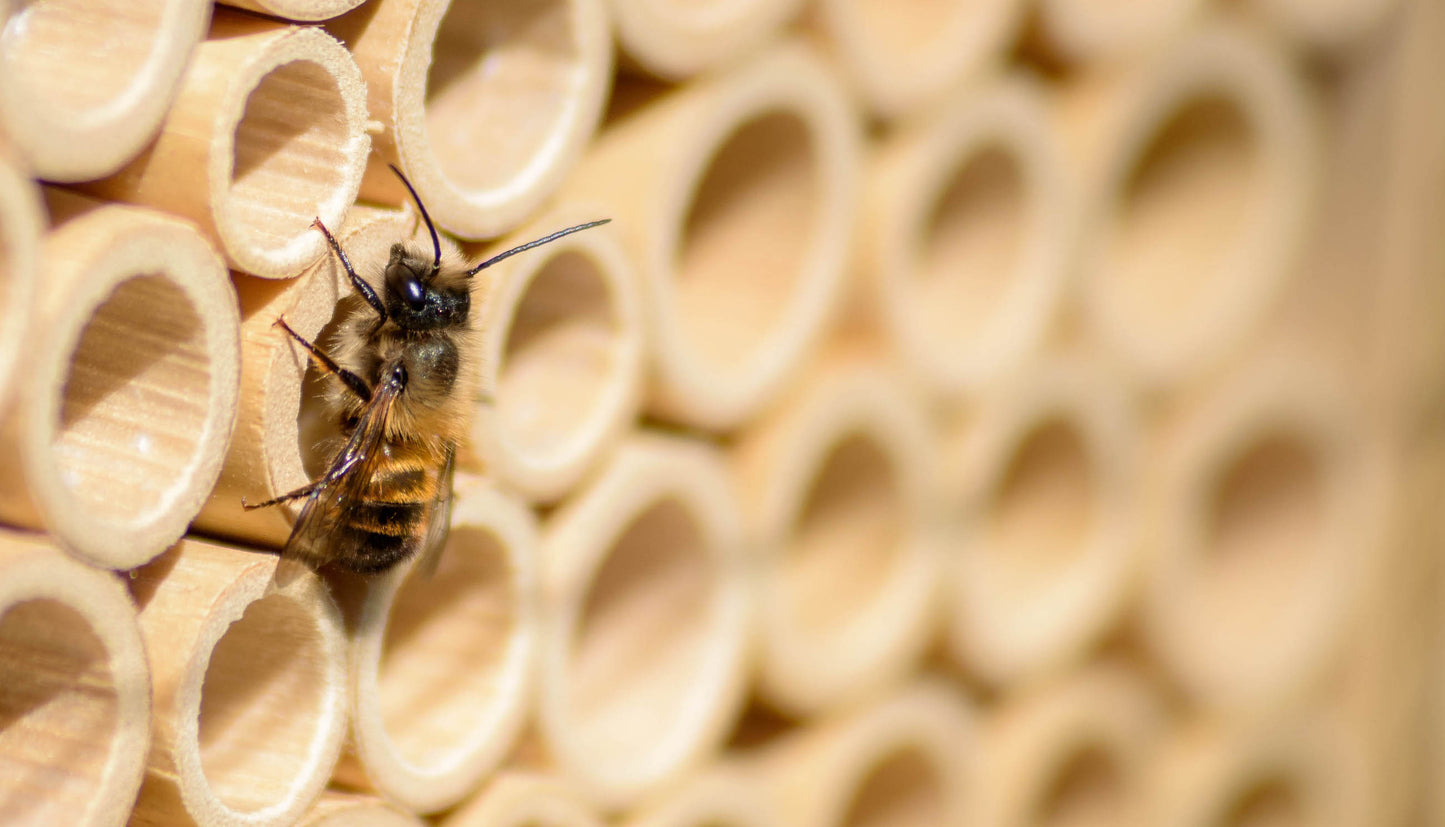
Mason bees are biologically grouped under the genus Osmia. They are found almost worldwide in the northern hemisphere, and approximately 347 species of mason bees have been described globally – including the red mason bee (Osmia bicornis), which is widespread in Europe.
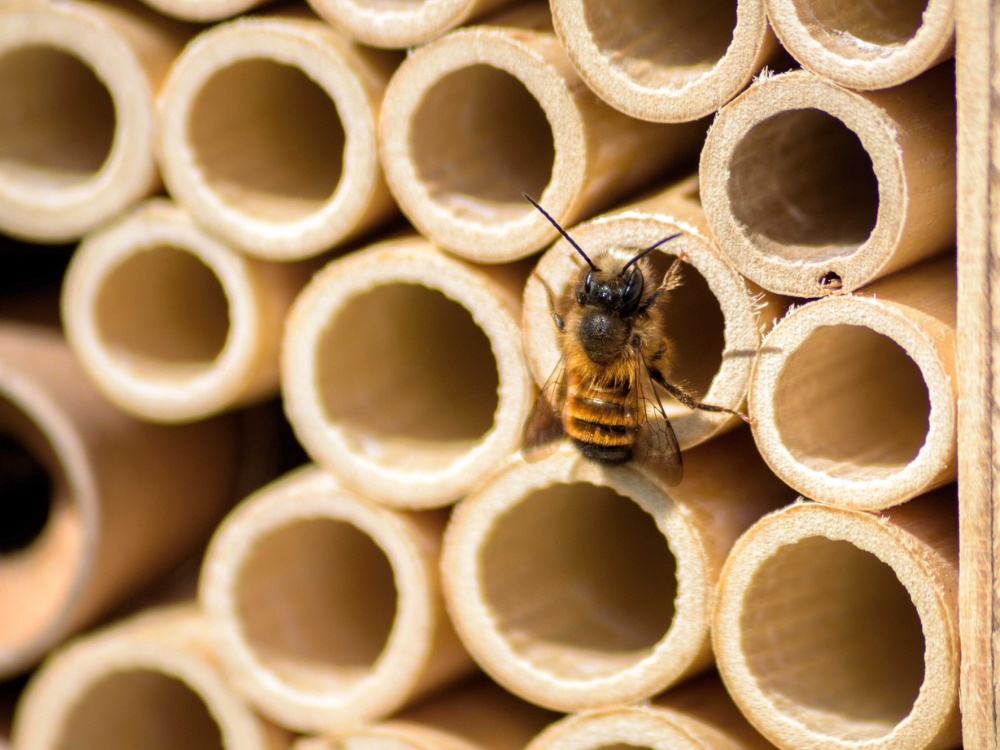
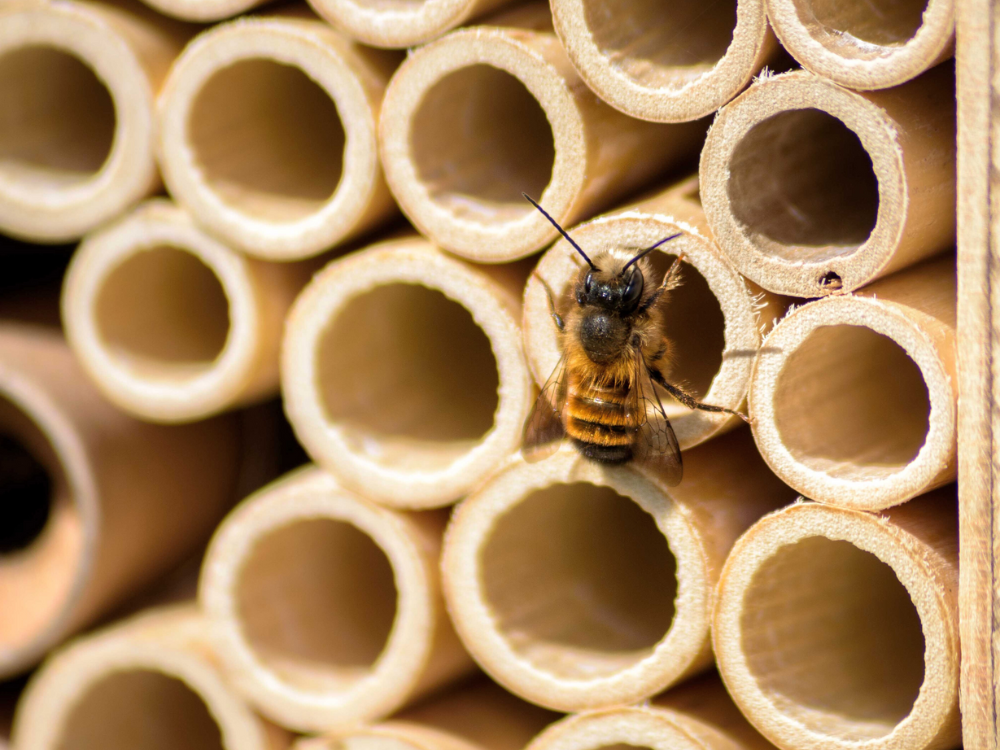
Red Mason Bee
This species feels particularly at home in gardens and on balconies in populated areas and can be wonderfully observed in your BeeHome. After releasing your personal starter population, you can watch the bees hatch, mate, and then begin to collect pollen and nectar for their offspring.
The red mason bee is not picky about flower choice and collects pollen from various wildflowers, perennials, and trees. It is an excellent pollinator - especially of apple and pear trees, but also of berry bushes, such as strawberries, raspberries, and blackberries.
The red mason bee is active early in the year and can be observed as early as March. Its flight period can last until the end of June but is limited to one generation per year.
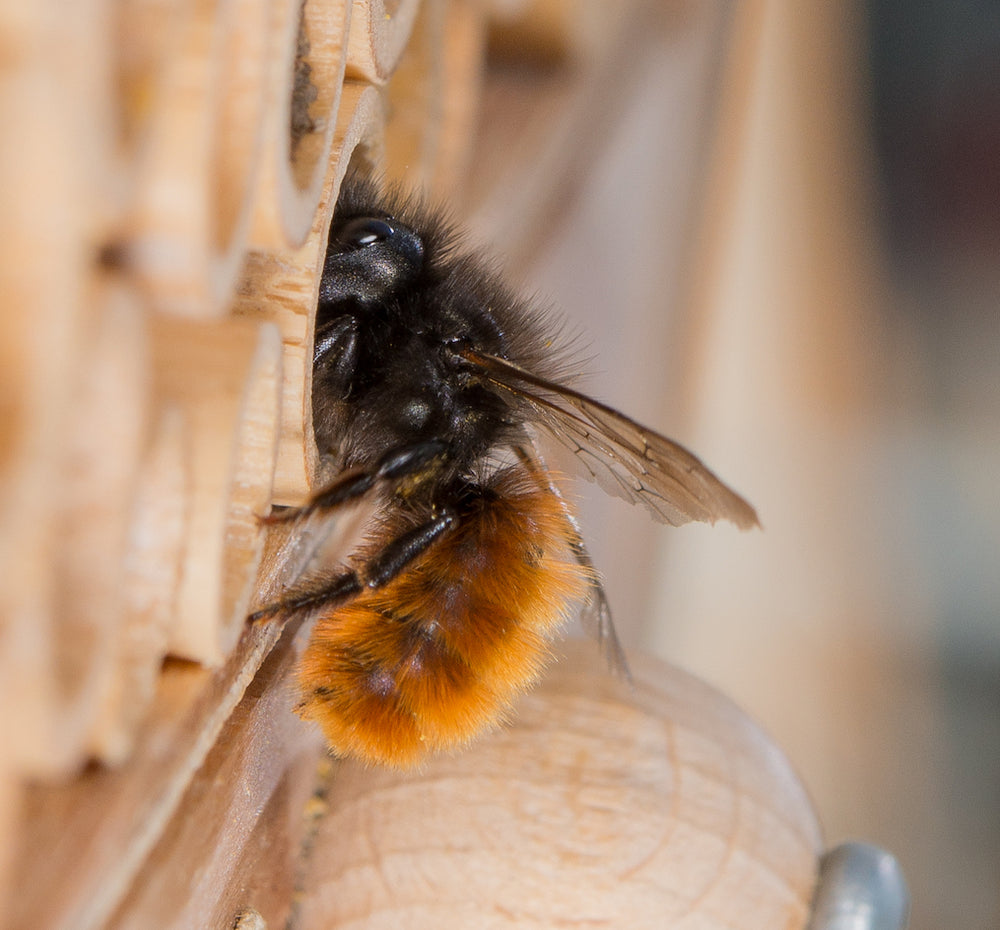
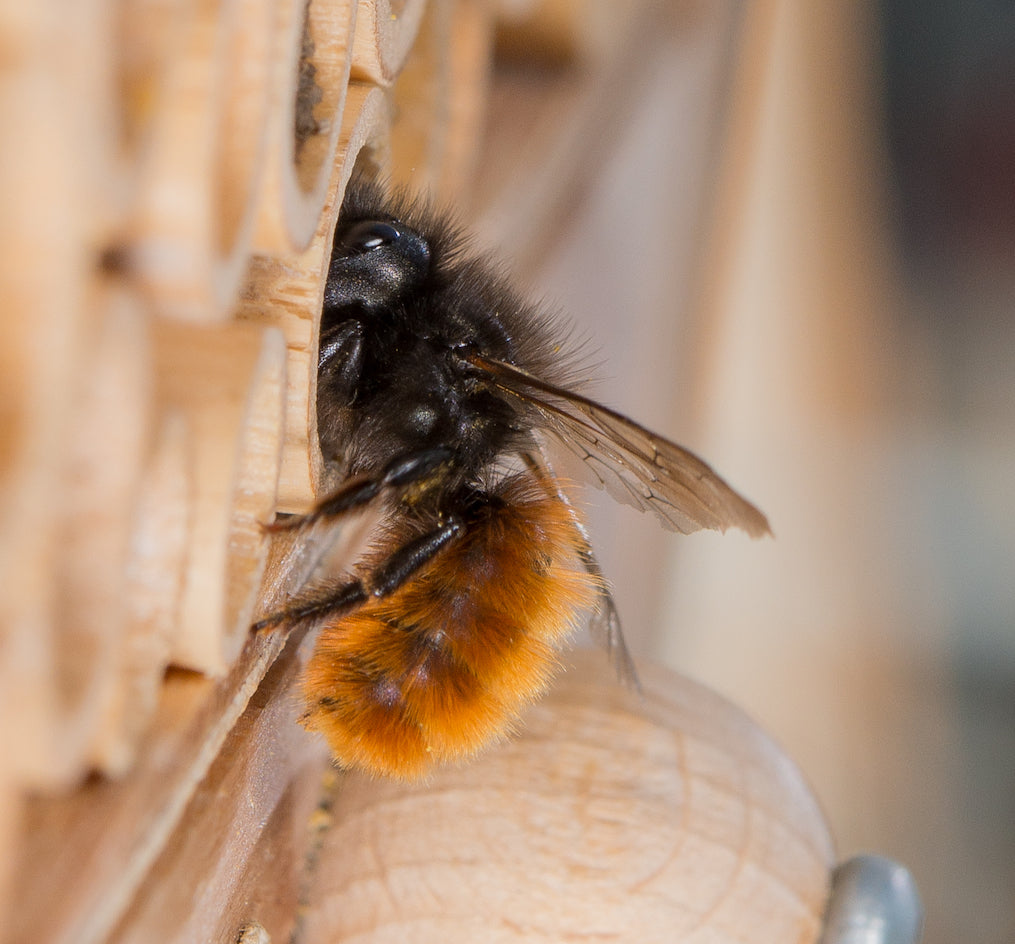
Horned Mason Bee
The European Orchard Bee (Osmia cornuta) is another species that is very frequently observed at nesting aids. We also offer cocoons of this species as a starter population in limited numbers for a limited period in February.
The European Orchard Bee is an absolute early starter and is already active several weeks before the Red Mason Bee - depending on weather conditions, as early as mid-February. Its flight period lasts until early June and is also limited to one generation per year.
Just like the Red Mason Bee, it is not picky about flower choice and collects pollen from various plants. However, it shows an even stronger preference for woody Rosaceae, such as apricot, cherry, and plum trees. Due to its high cold tolerance and early flight period, it is therefore particularly well-suited for pollinating these crops.
Other mason bees that may nest in your BeeHome
Steel-blue Mason Bee
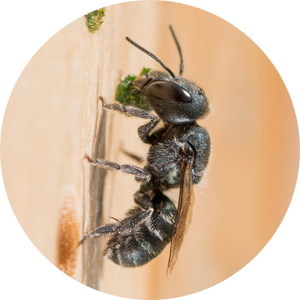
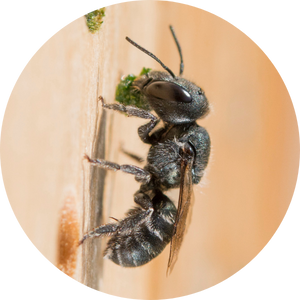
Steel-blue Mason Bee
The blue mason bee (Osmia caerulescens) is common and widespread throughout Switzerland.
Thistle Mason Bee
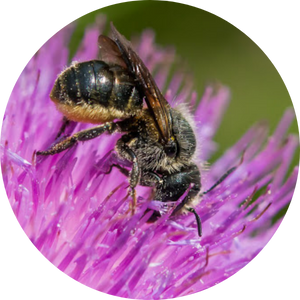
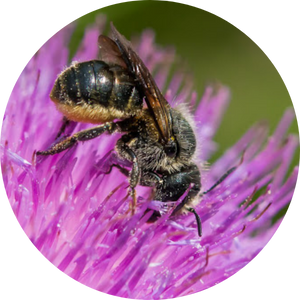
Thistle Mason Bee
The Bristly Nomad Bee (Osmia leaiana) has become rare due to the ongoing eradication campaign against its main food plant.
Helmeted Mason Bee
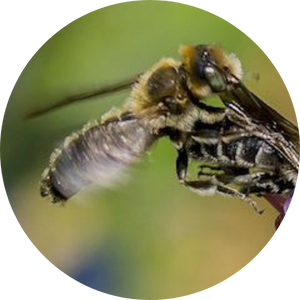
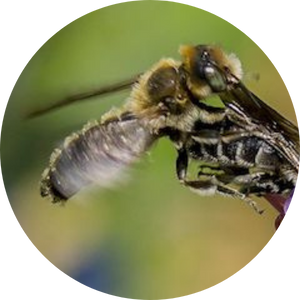
Helmeted Mason Bee
Due to its strict specialization on Viper's Bugloss, the Viper's Bugloss Mason Bee (Hoplitis adunca) is dependent on the presence of this plant.
Wall mason bee
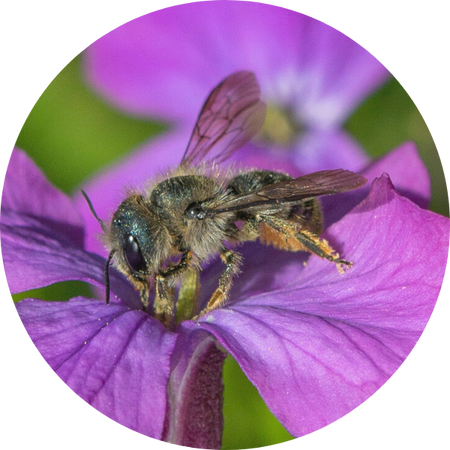
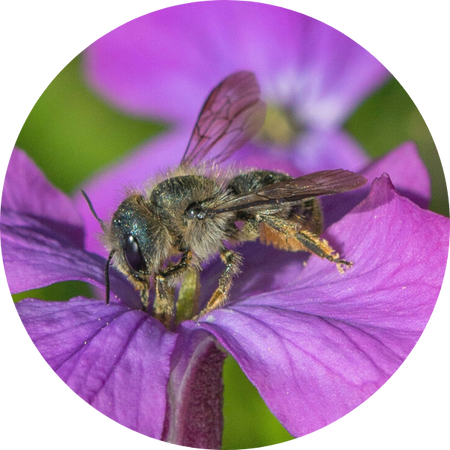
Wall mason bee
The Horned Mason Bee (Osmia brevicornis) is rather rare, but can sometimes be observed on flowers of dames rocket or moon violet.