

Mason bees
Interesting facts about mason bees
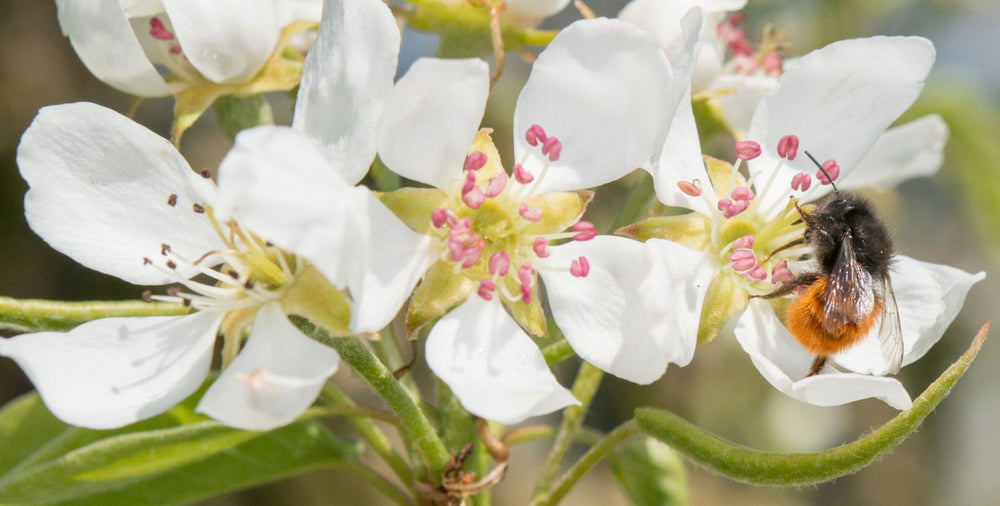
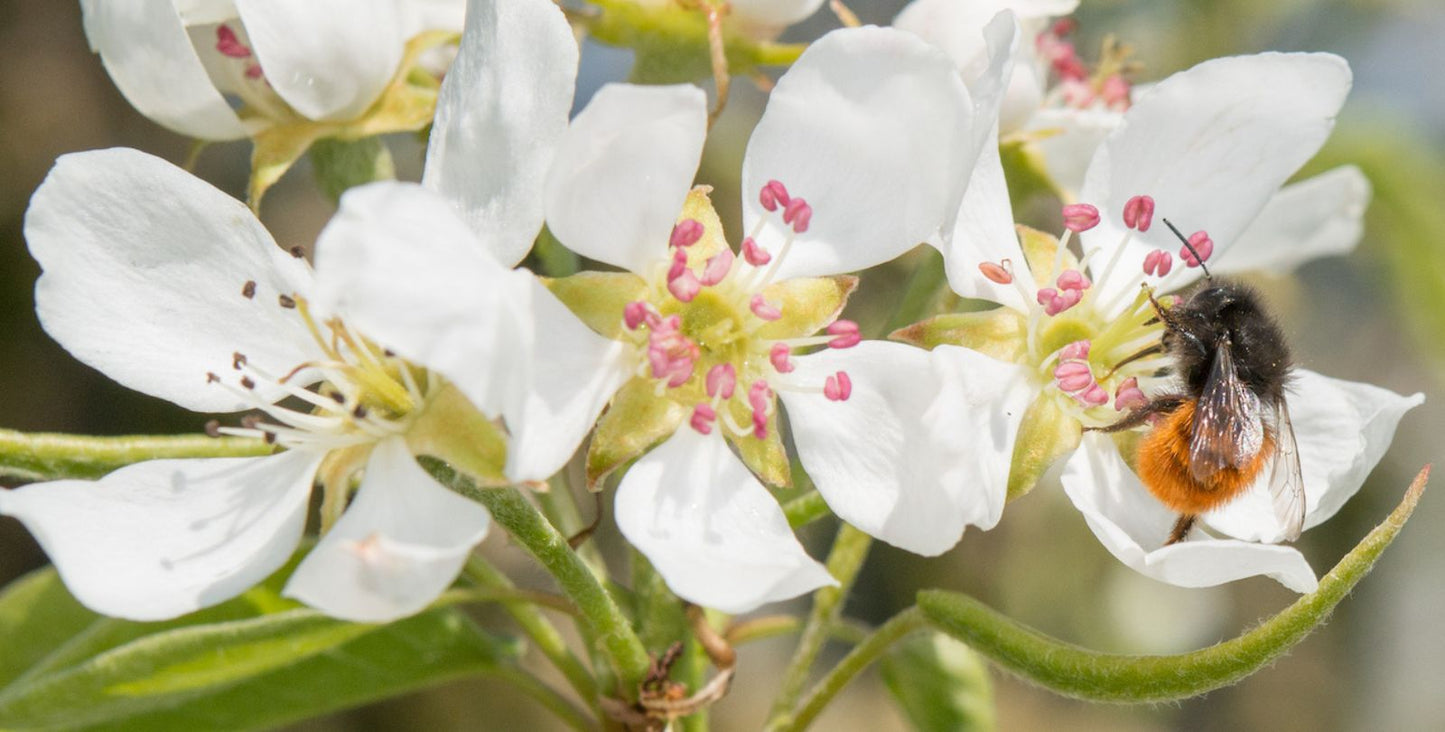
Mason bees are biologically grouped under the genus Osmia. They are distributed throughout the northern hemisphere, and around 347 species of mason bees have been described worldwide - including the European red mason bee (Osmia bicornis), which is widespread in Europe. With the purchase of a BeeHome, you will receive a voucher for mason bee cocoons of this species.
Introductory knowledge about mason bees
There are over 20,000 different wild bee species in the world, which have adapted to a wide variety of habitats. These include mason bees, which are biologically grouped under the genus Osmia. A genus is a group of closely related species.
Where does the name "mason bee" come from?
The German name "Mauerbiene" (mason bee) comes from the fact that these animals seal their nests with small "walls," usually made of clay or chewed plant material. Some mason bees also use sand or small stones. However, not all species work this way. Mason bees colonize many different habitats and have different requirements for nesting sites. They build their nests in existing cavities, in sandy soils, in self-drilled tunnels in deadwood, or even in empty snail shells, as the snail shell mason bee does.
Where can mason bees be found?
Mason bees can be found in the temperate latitudes of Europe, Asia, and North America. There are 101 mason bee species in Europe – including the widespread red mason bee, also simply called the common mason bee (Osmia bicornis). With the purchase of a BeeHome, you will receive a voucher for mason bee cocoons of this species. The very adaptable red mason bee is widespread in large parts of Europe. It occurs from cool southern Sweden to hot North Africa. The red mason bee is not endangered and is one of the most frequent visitors to your BeeHome.
Mason bees are solitary.
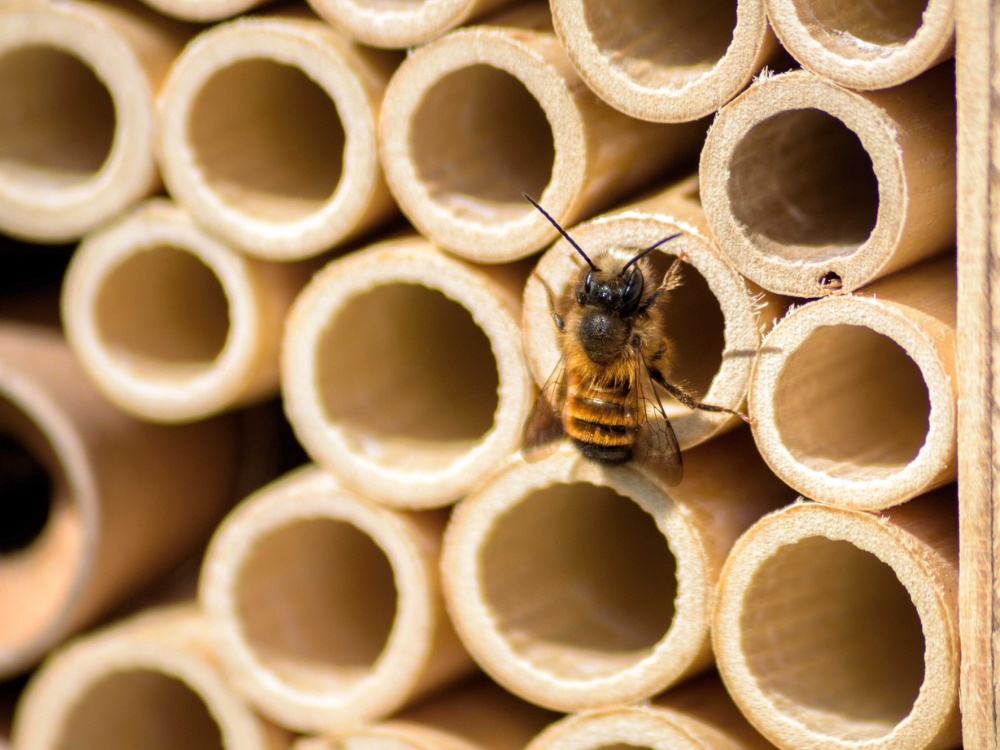
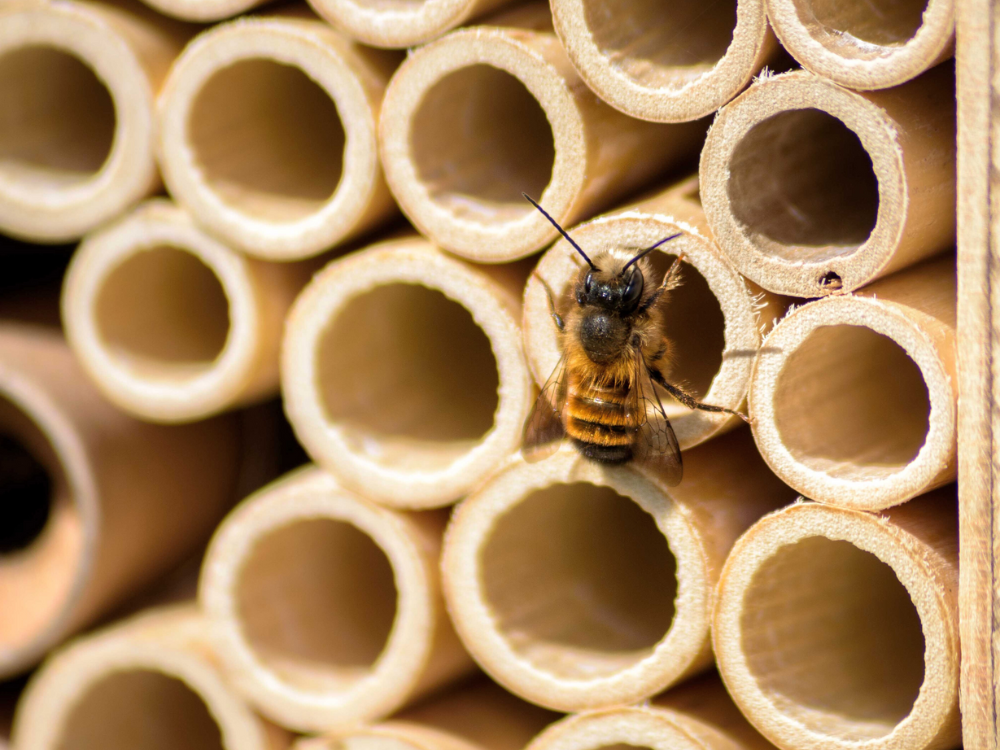
Unlike honey bees, which form colonies of up to 40,000 bees, mason bees are solitary. This means that mason bees do not live in a community and are not organized among themselves. Nevertheless, mason bees are also gregarious and like to live "door to door" in your BeeHome. Each female mason bee can lay eggs and takes care of raising her brood alone, such as the red mason bee (Osmia bicornis). Most mason bees also only have one generation per year, with some species emerging in early spring or as late as late summer, depending on the species.
On this page, you can find more information on how wild bees differ from honey bees.
Mason bees are sought-after pollinators
Mason bees also play an important role in agriculture because they are excellent natural pollinators of our fruit and berry plants. In particular, the European orchard bee and the red mason bee are up to 300 times more efficient at pollination than a honey bee, thanks to their cold tolerance, flower constancy, and special pollen collection technique. A female mason bee pollinates more than 2,500 flowers a day while foraging. Over her entire life, she pollinates more than 40,000 flowers. This means that just a few active females are enough to successfully pollinate a private orchard.
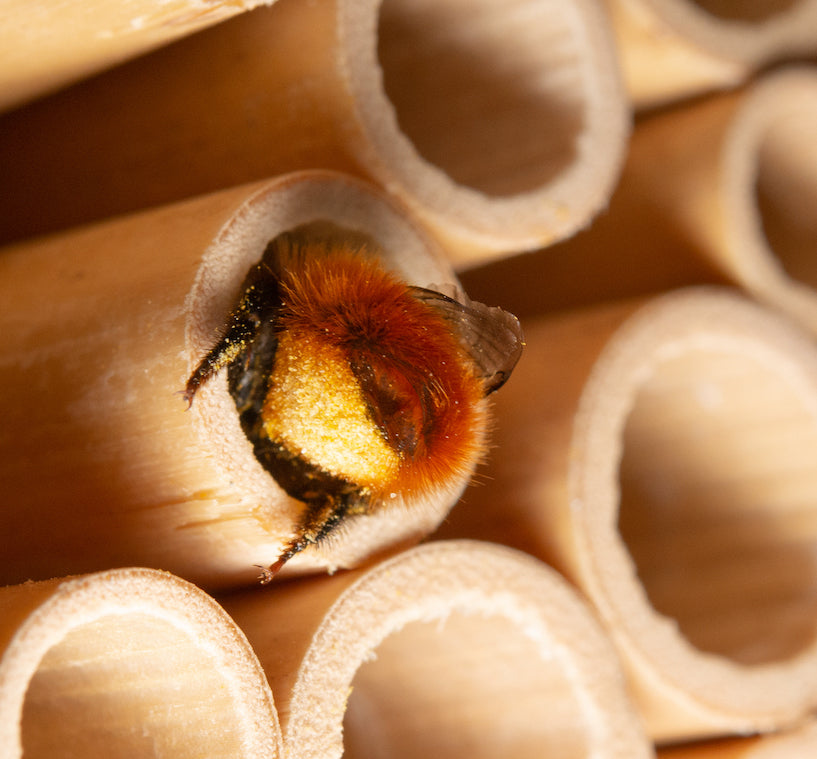
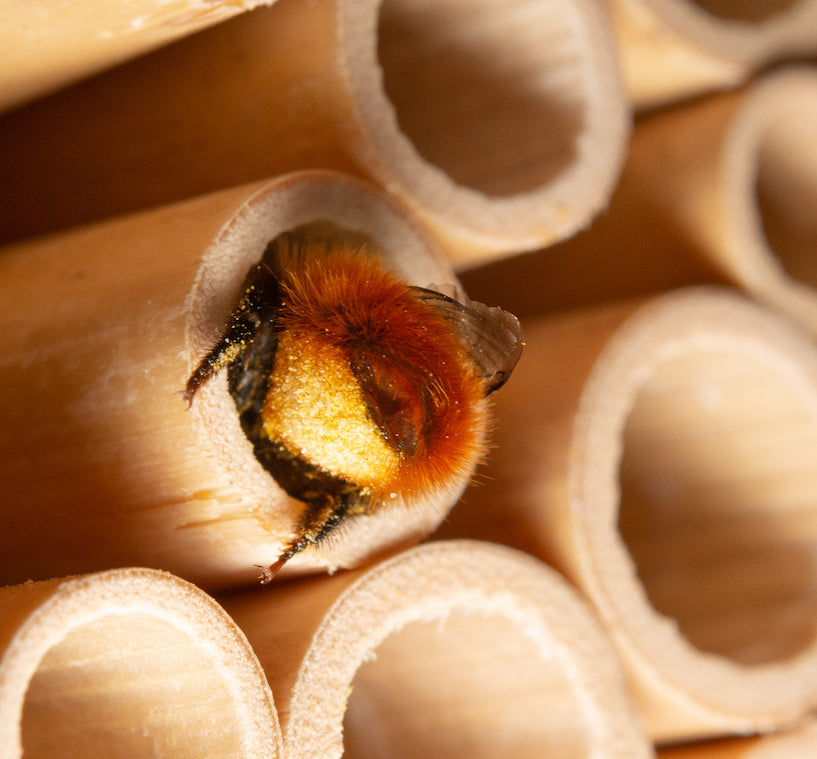
Mason bees are harmless
Although female mason bees have a small stinger, they hardly ever use it, and it is so soft that it practically cannot penetrate our skin. Mason bees show no aggressive behavior whatsoever: One would literally have to crush the animals by hand to risk a sting. However, a sting would be barely painful and not comparable to stings from honeybees or wasps.


