Wild bees
What exactly are wild bees and how do they differ from honey bees?
What do you think of when you talk about bees? Honey and honeybees, right? Of course, because honeybees are by far the most well-known bees. After all, we all love honey and know that honeybees pollinate many wild and cultivated plants. For these reasons, people have been keeping honeybees for thousands of years. Besides the domesticated honeybee, however, there are thousands of other bee species, which are typically referred to as wild bees.
What exactly are wild bees?
Wild bees are all bee species that occur "wild" in nature and are not kept by humans. Strictly speaking, the honey bee also belongs to the wild bees, but: Typically, we understand honey bees to mean the domesticated Western Honey Bee (Apis mellifera), which was specifically kept by humans for honey production many thousands of years ago and can therefore no longer be called a wild animal or wild bee in this context. There are around 9 bee species in the world that belong to the genus of honey bees (Apis). All of them store honey as a food reserve and are predominantly native to Asia. Today, there are only a few fragmented populations of wild honey bees left in the forests of Europe, as their habitat has steadily shrunk over the last hundred years due to, among other things, the severely decimated old-growth forests.
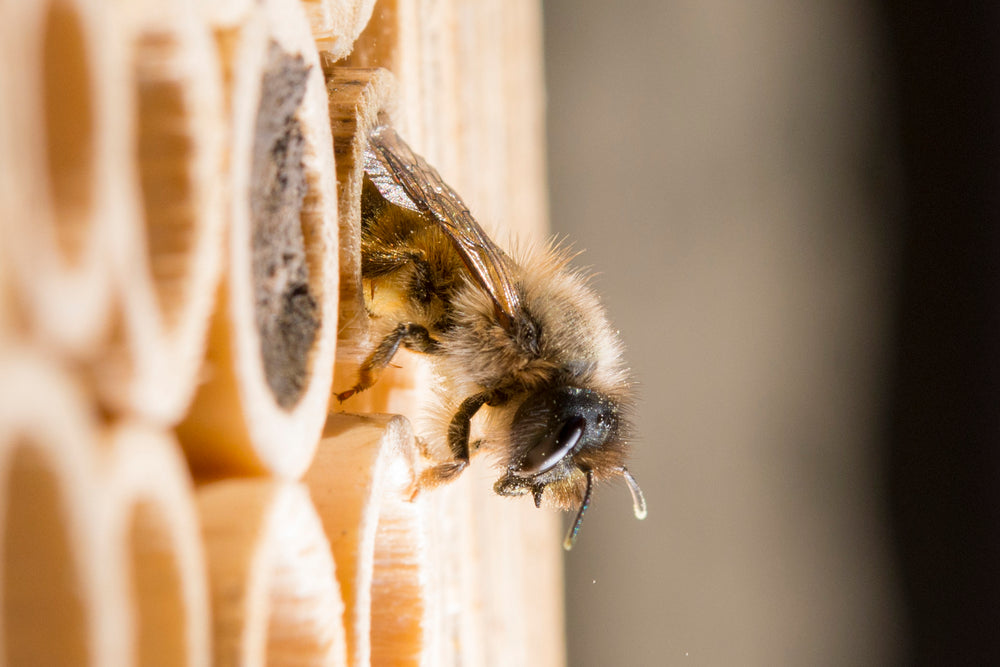
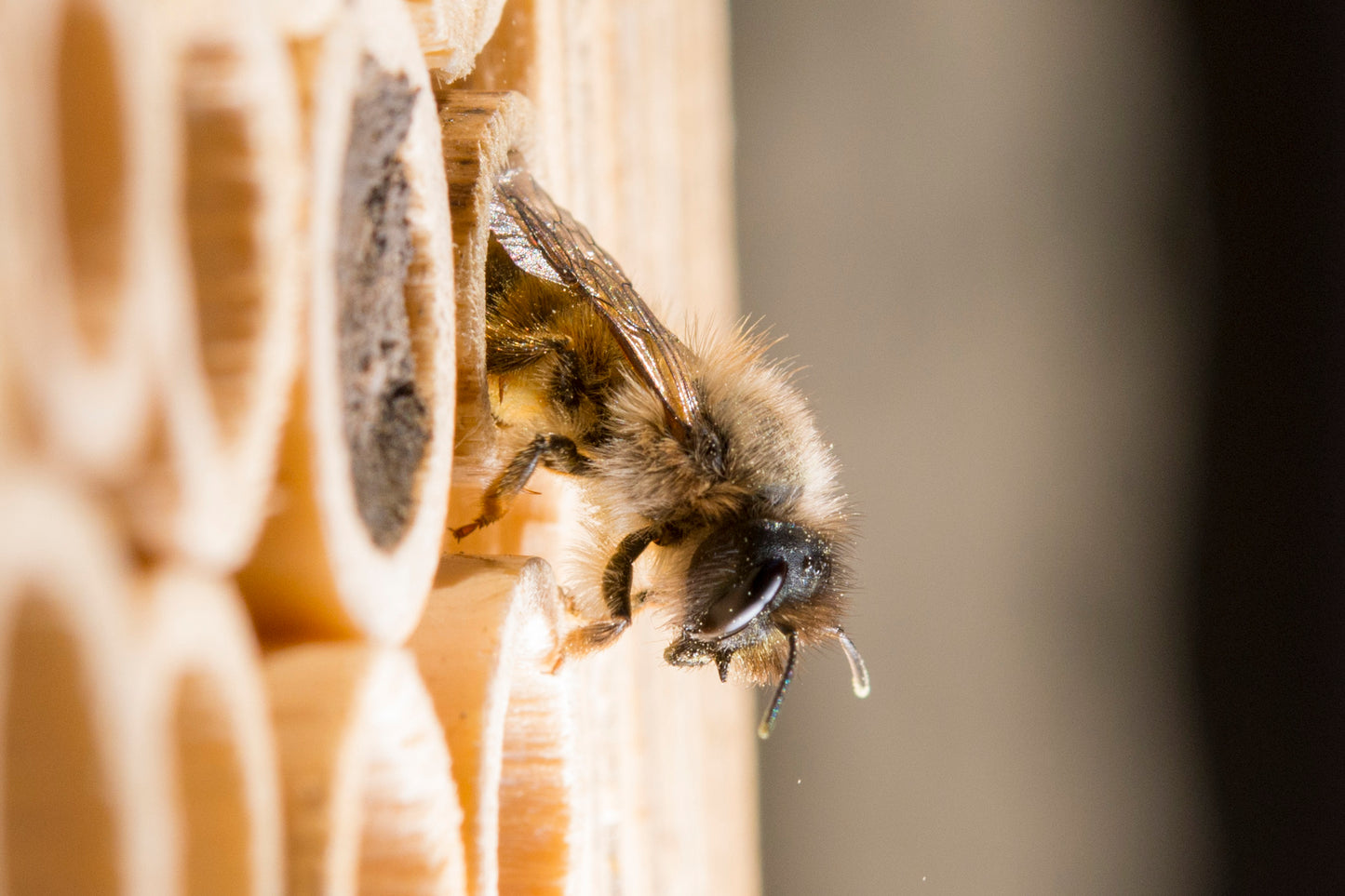
There are over 20,000 different wild bee species in the world, which have adapted to a wide variety of habitats. For comparison: There are only 5,500 species of mammals. In Switzerland, there are over 600 different wild bee species, including the Red Mason Bee (Osmia bicornis), which you can discover in the BeeHome.
Fascinating Diversity of Wild Bees
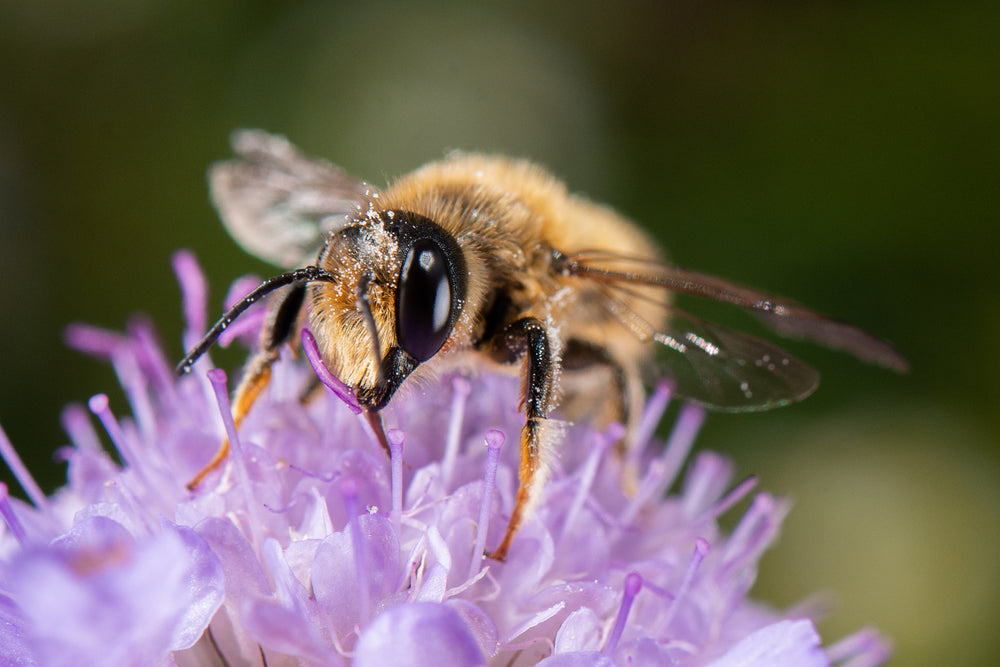
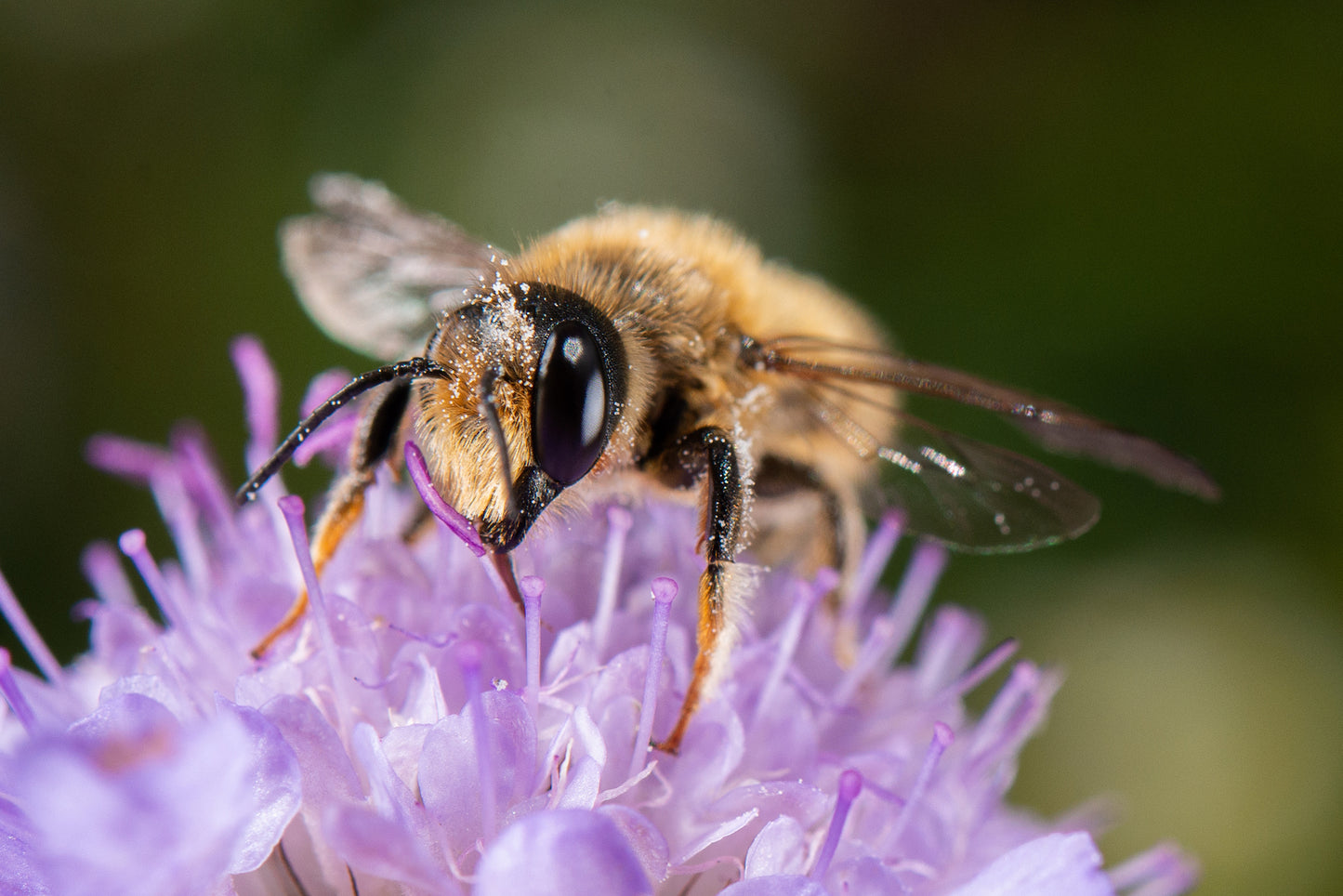
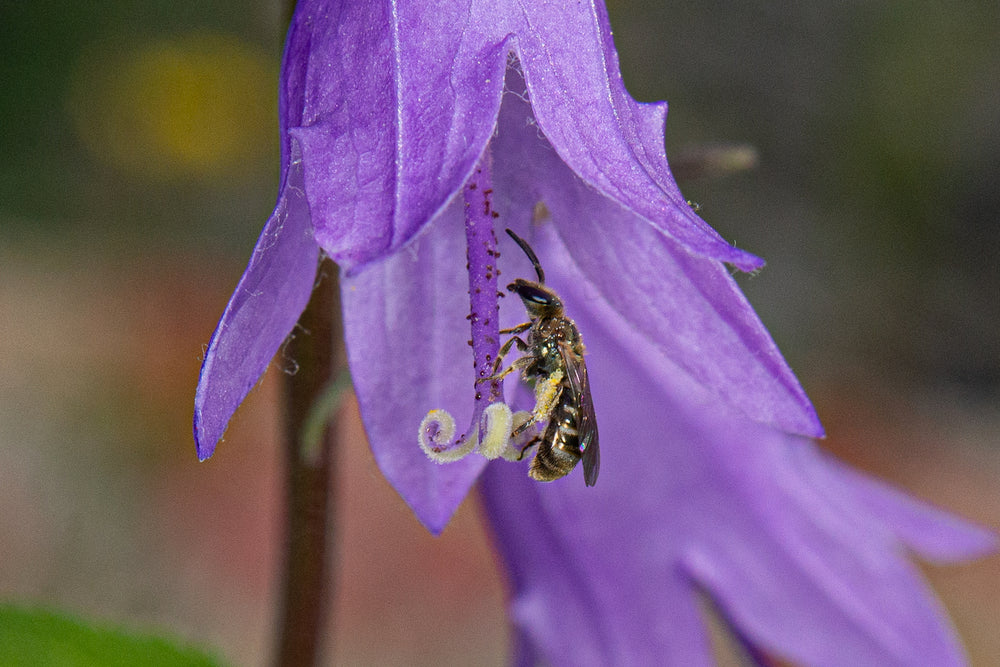
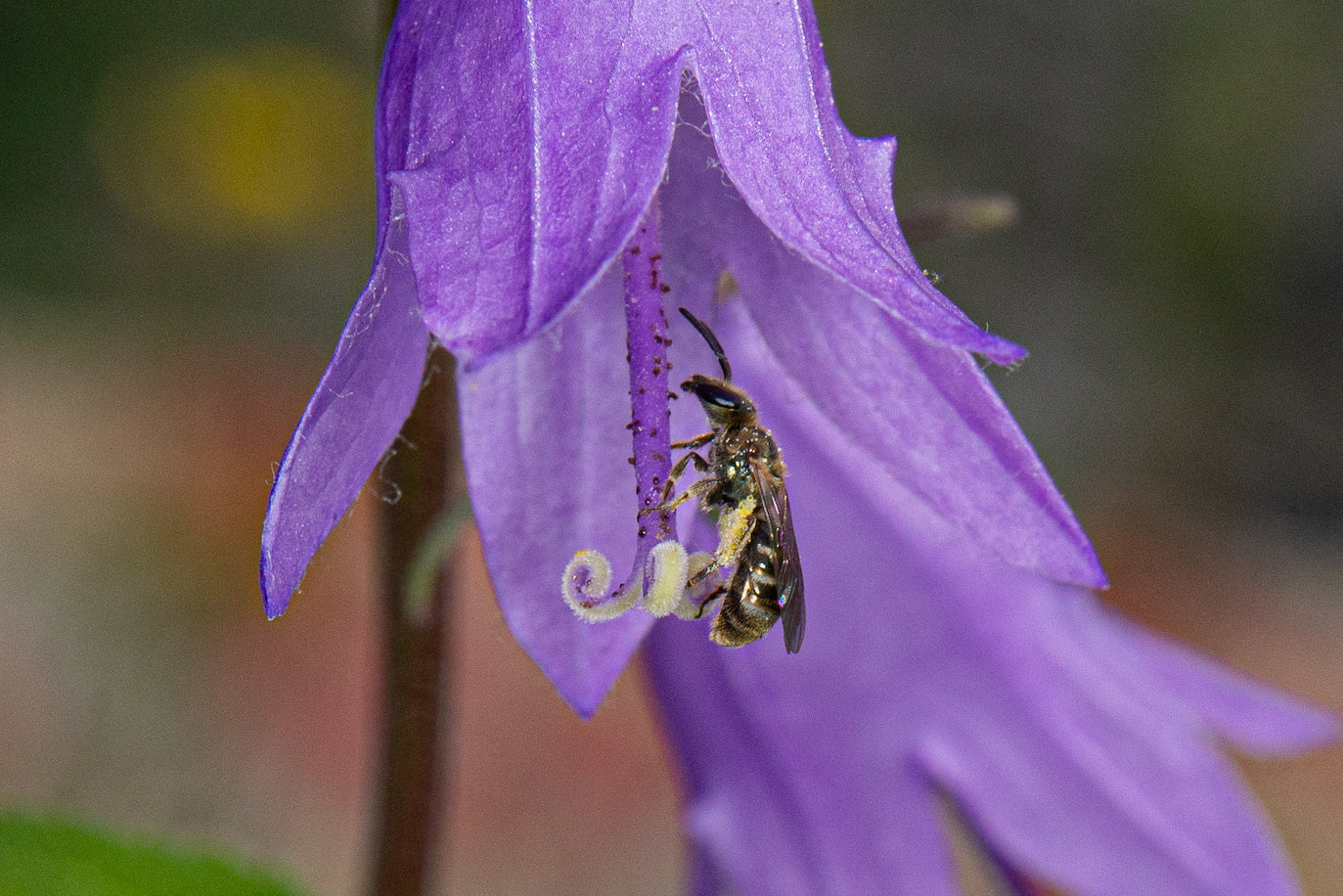
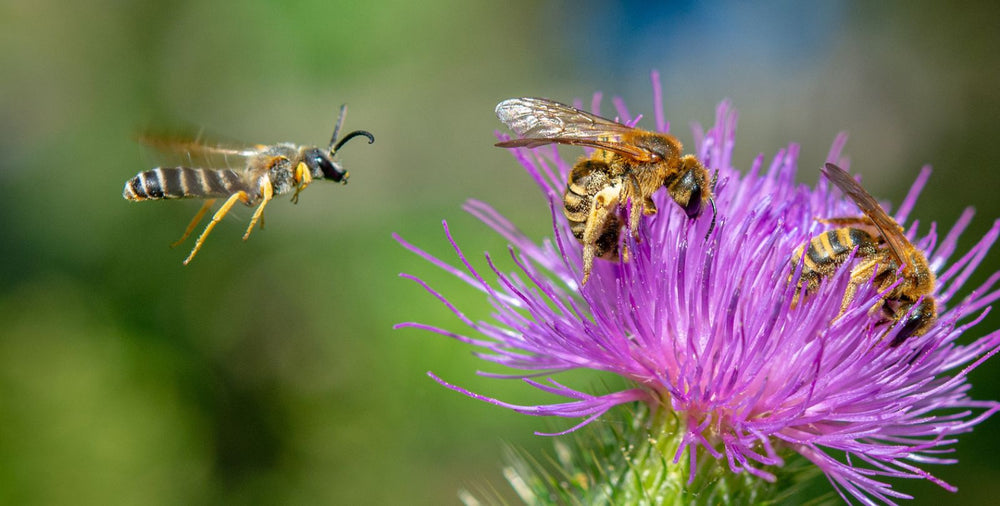
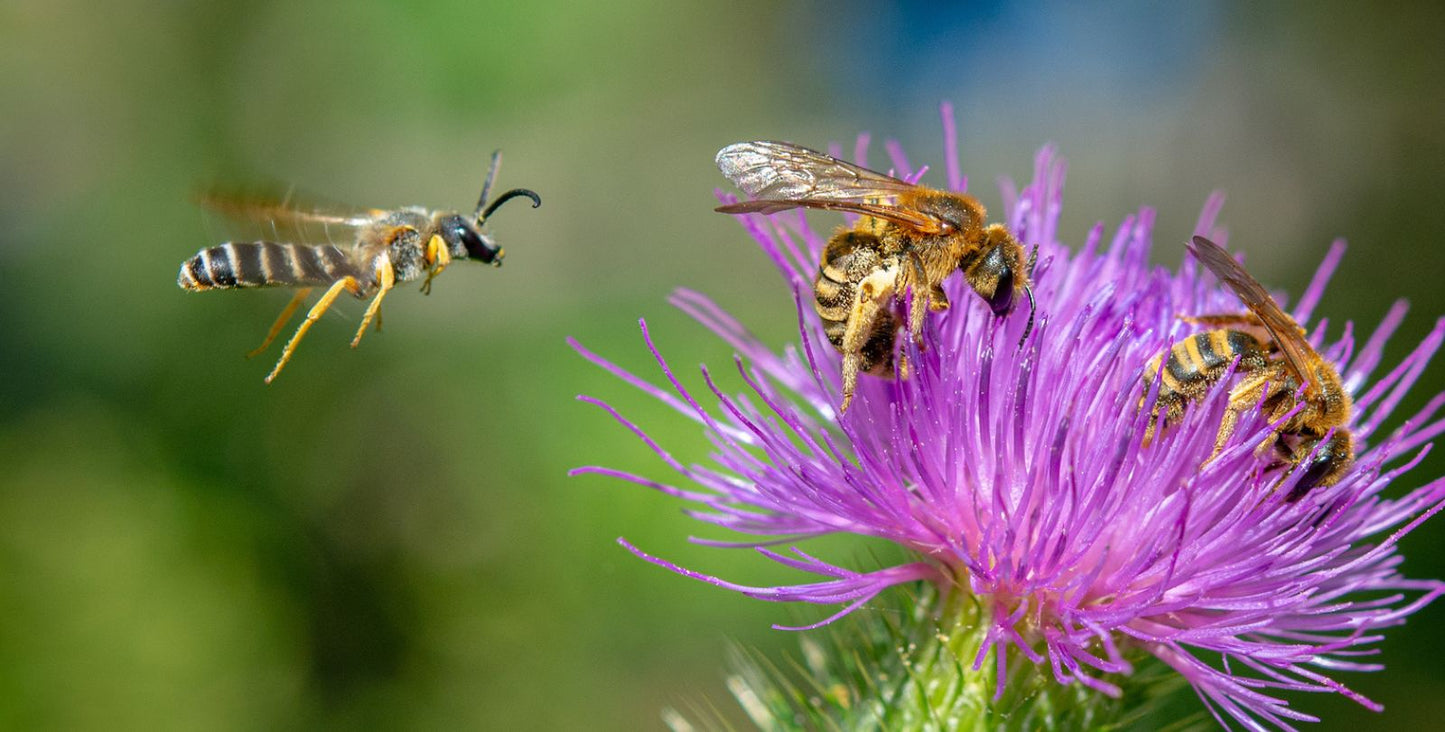
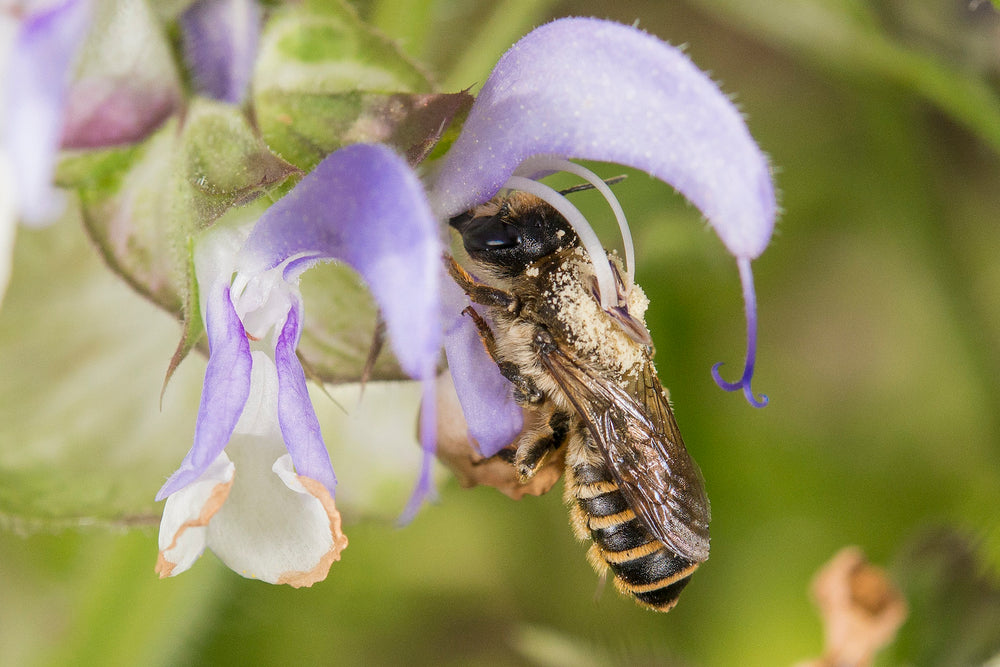
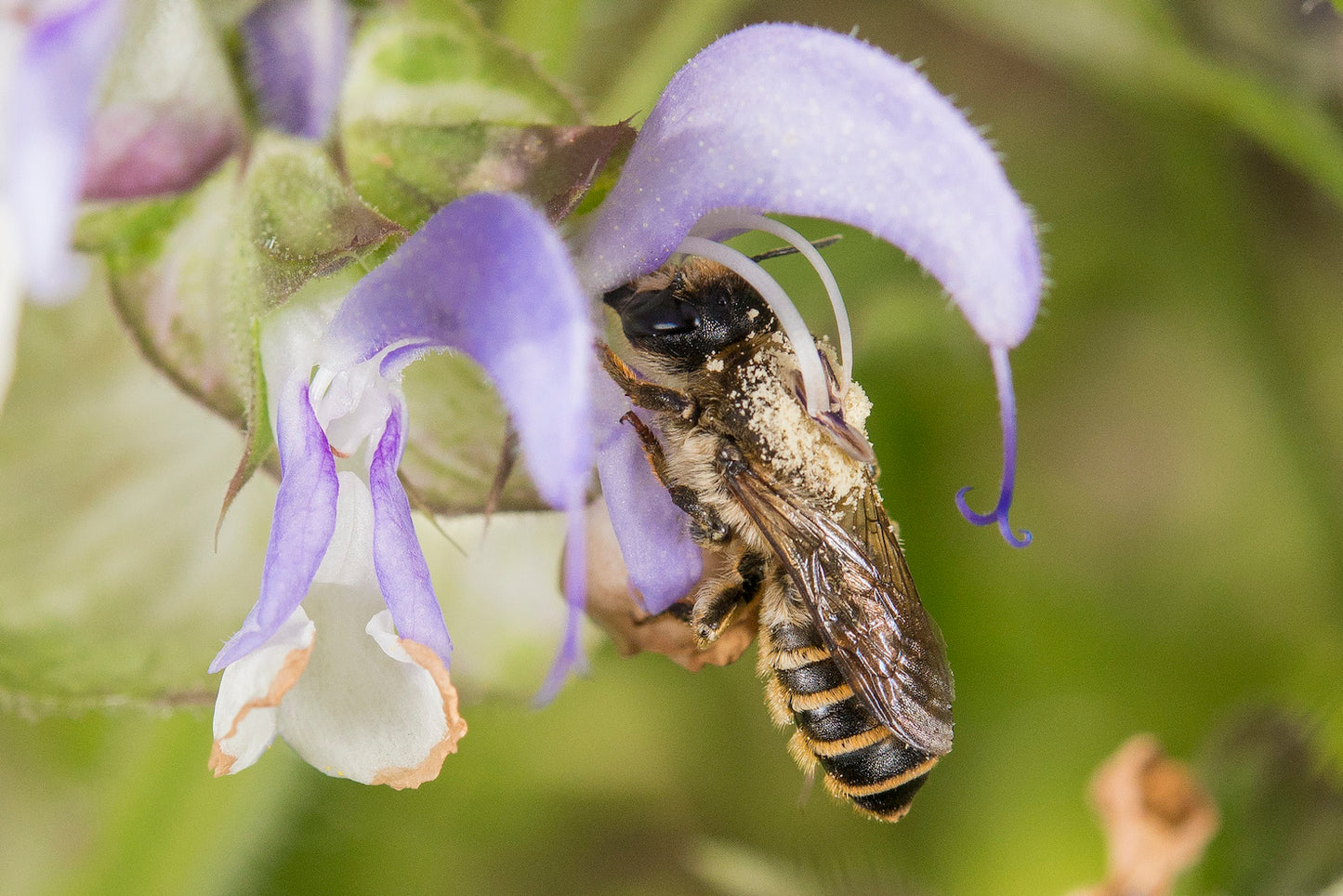
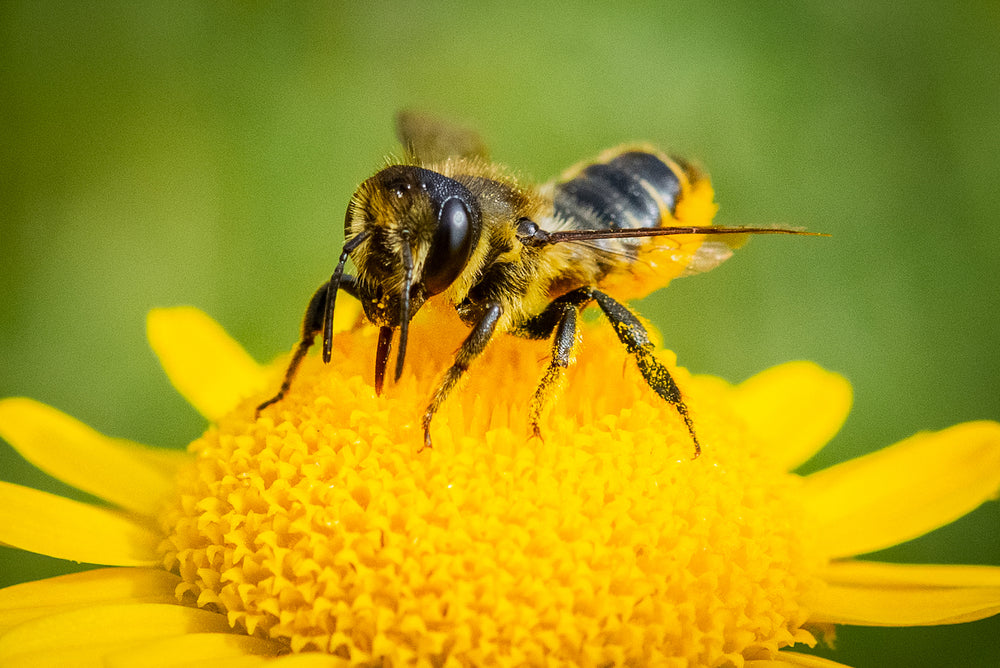
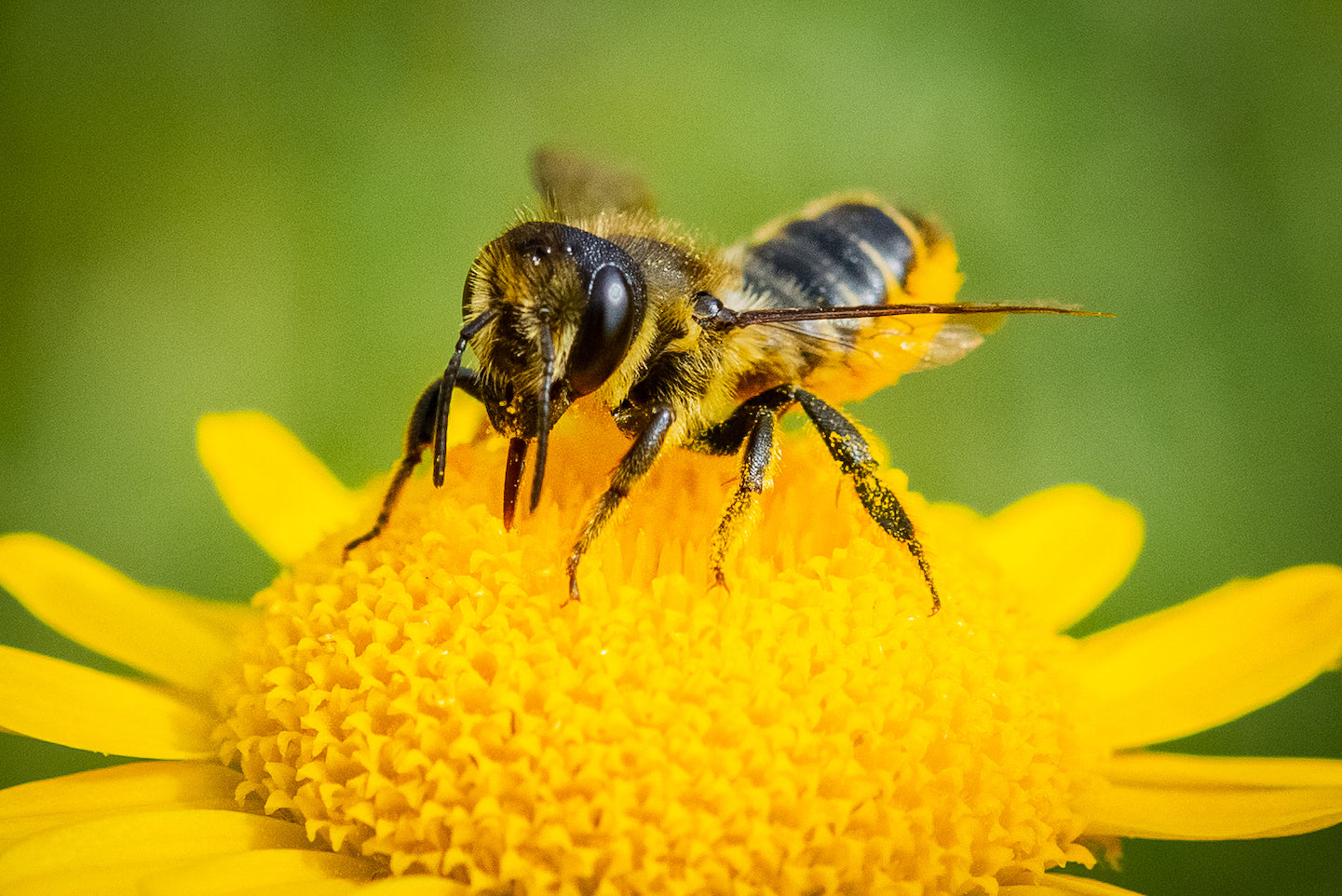
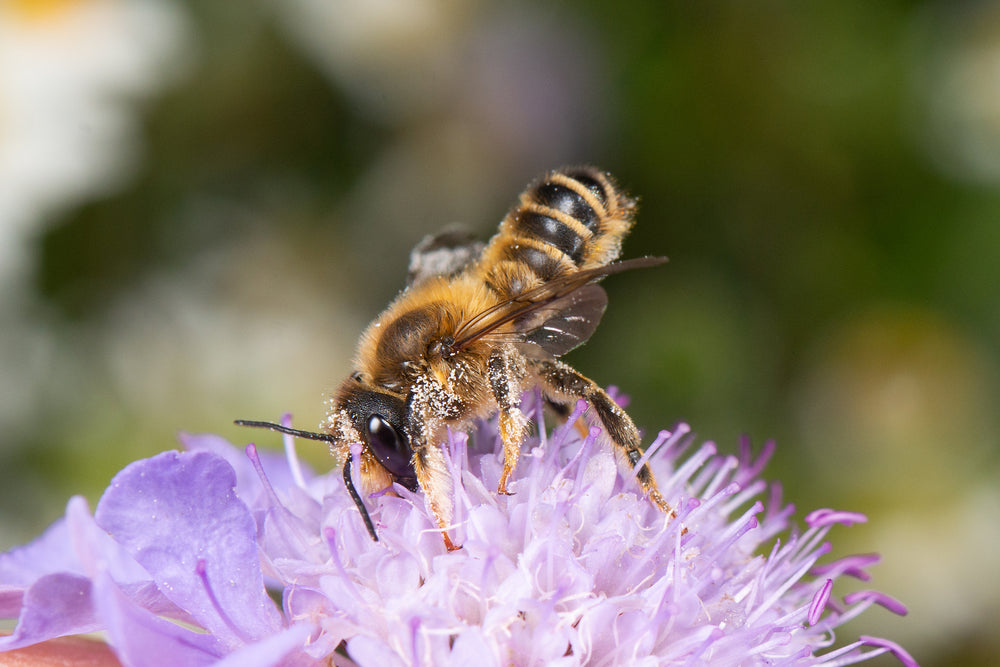
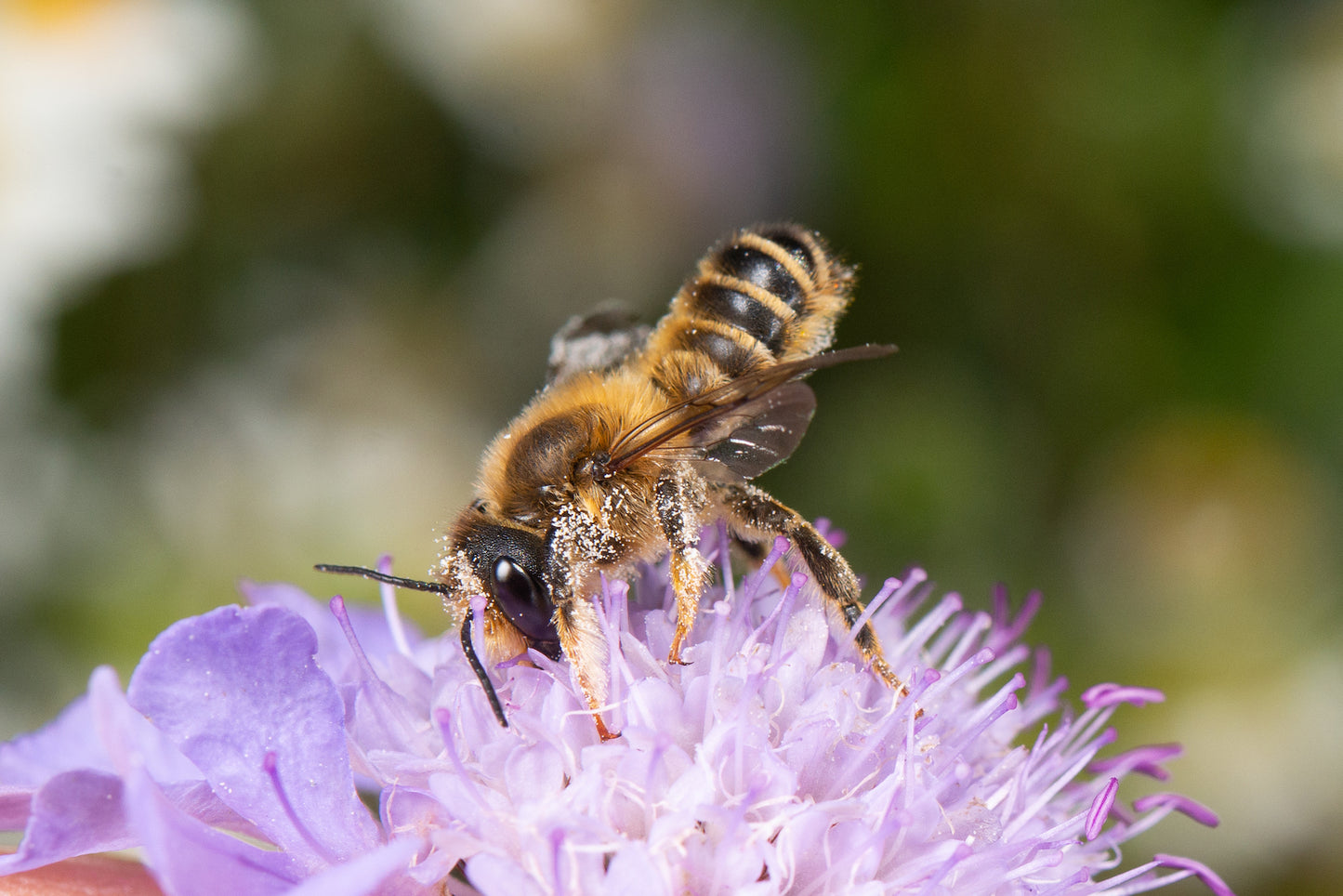
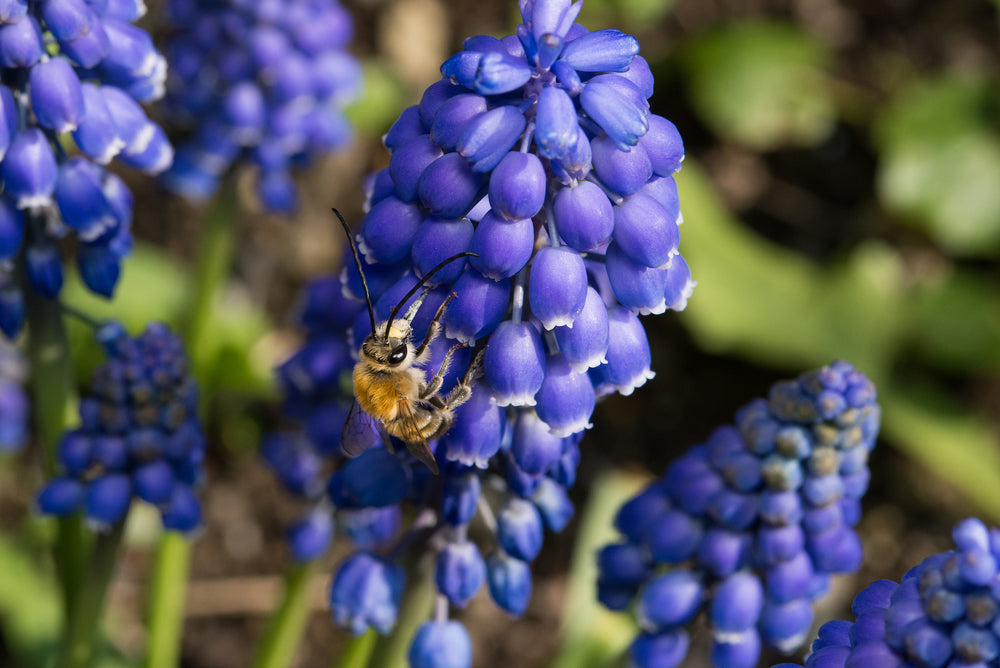
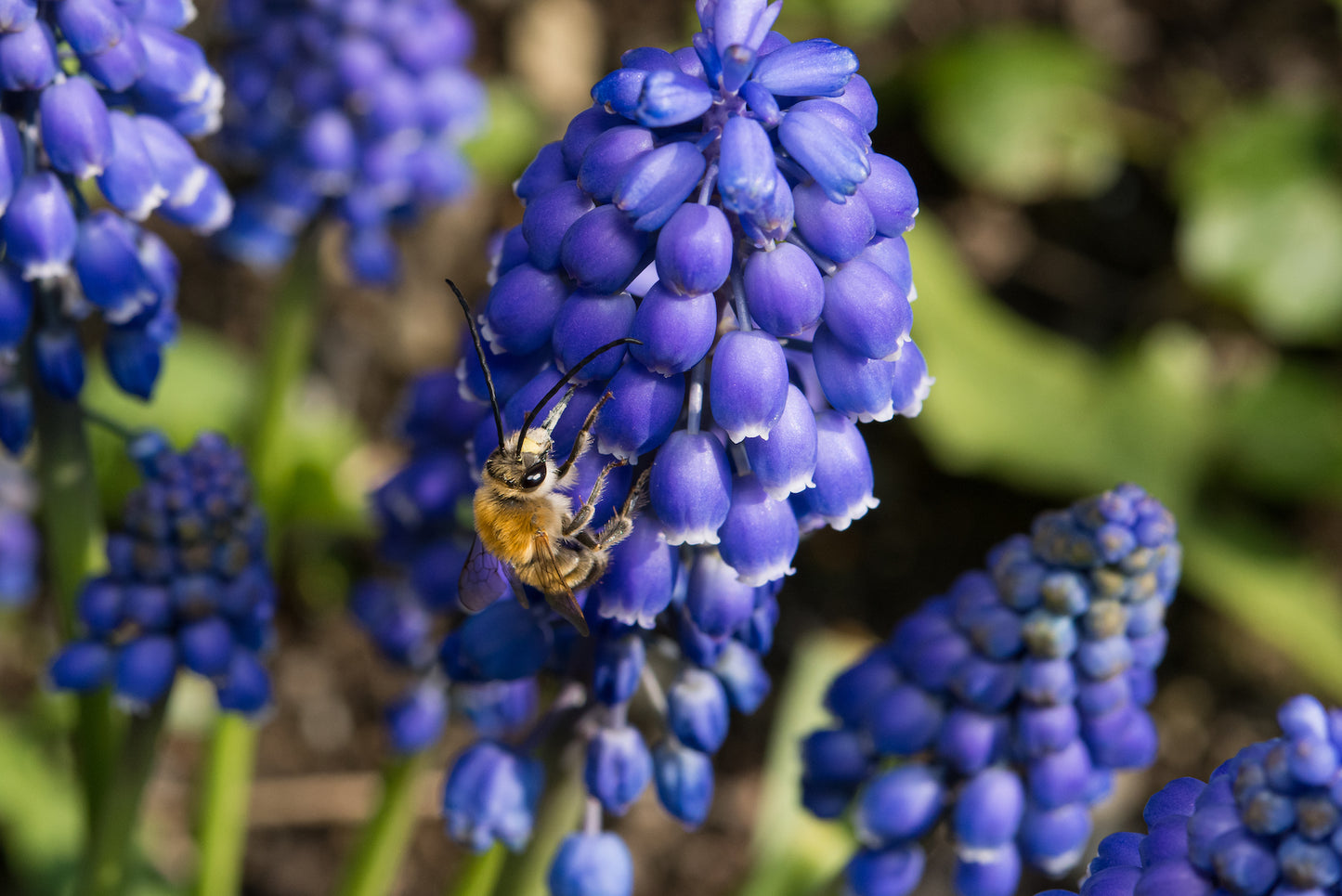
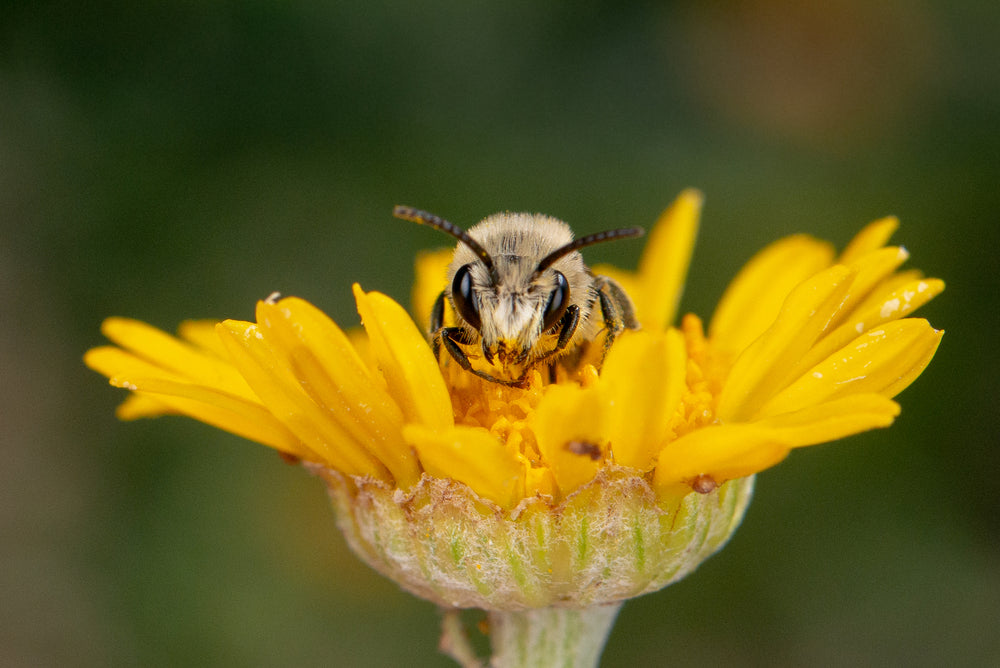
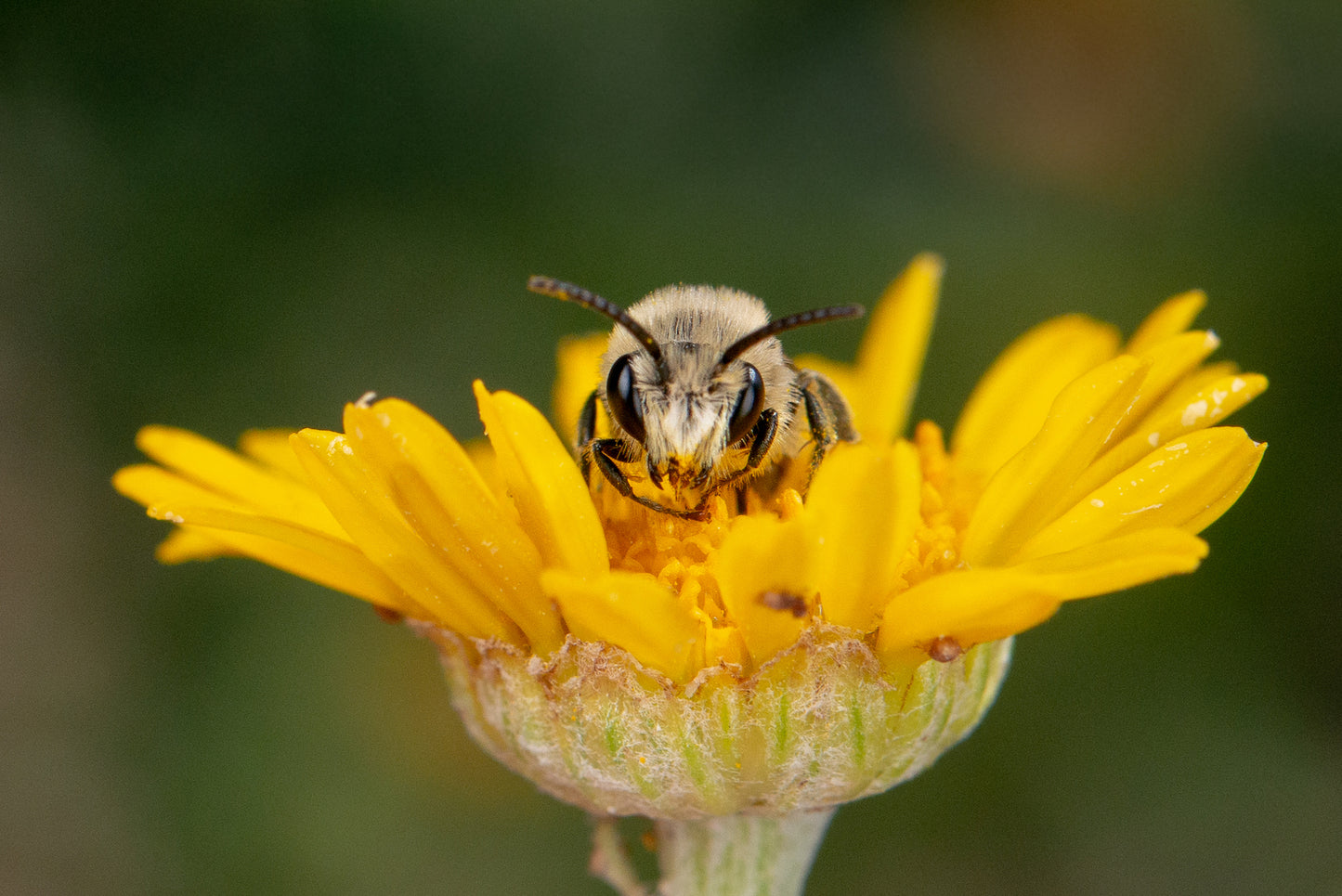
The fascinating world of wild bees is characterized by their astonishing diversity. These important insects present a kaleidoscope of colors and patterns, from rich browns to bright reds and high-contrast black and yellow patterns, as well as shimmering metallic green and blue. Their appearances also vary greatly in hairiness – some species are characterized by dense fur, while others are almost hairless. This diversity continues in their size, from individuals just a few millimeters small and barely perceptible, like the masked bees, to impressive specimens several centimeters in size, such as the carpenter bee.
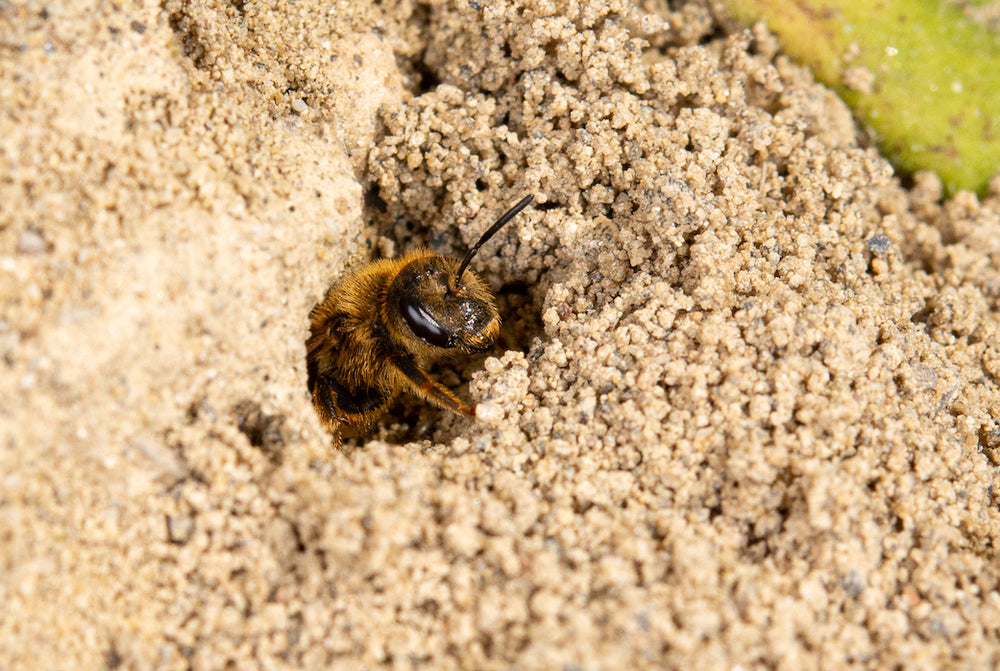
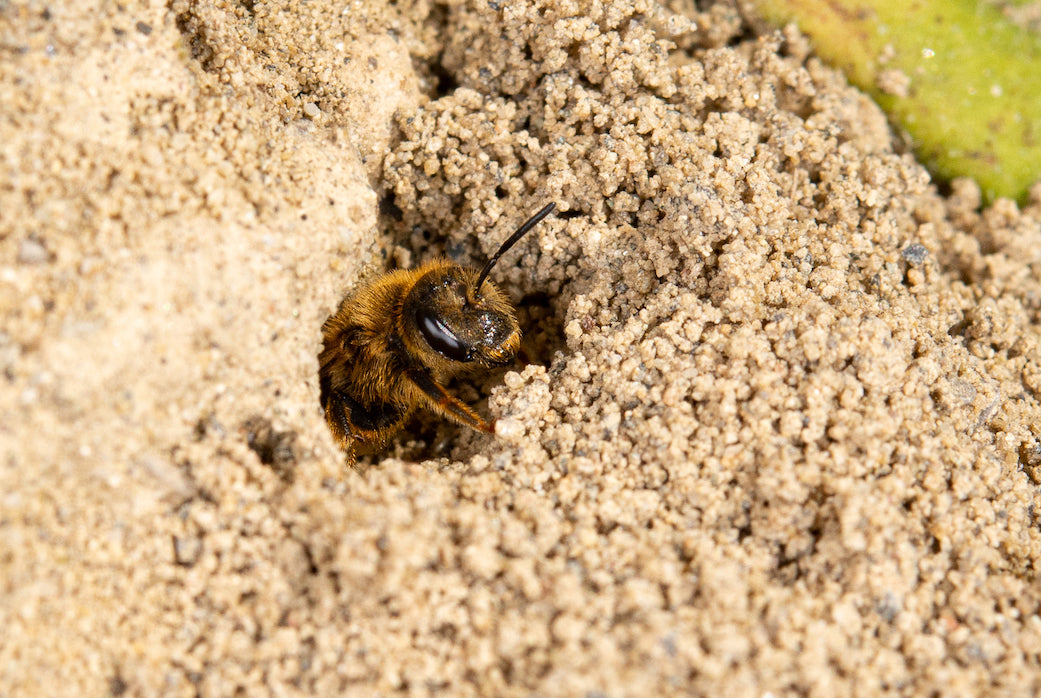
Where do wild bees nest?
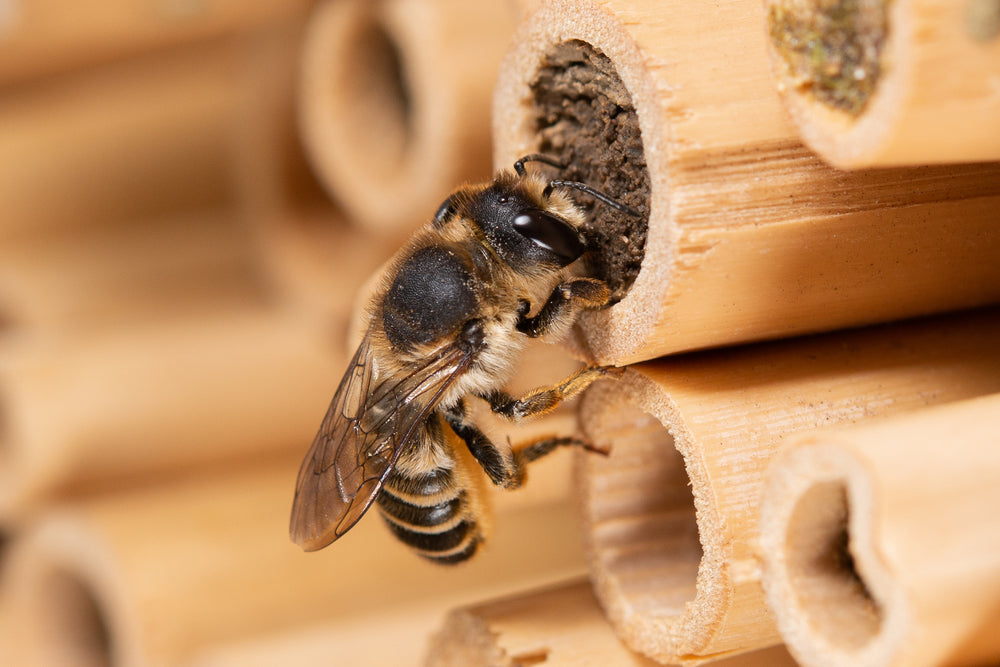
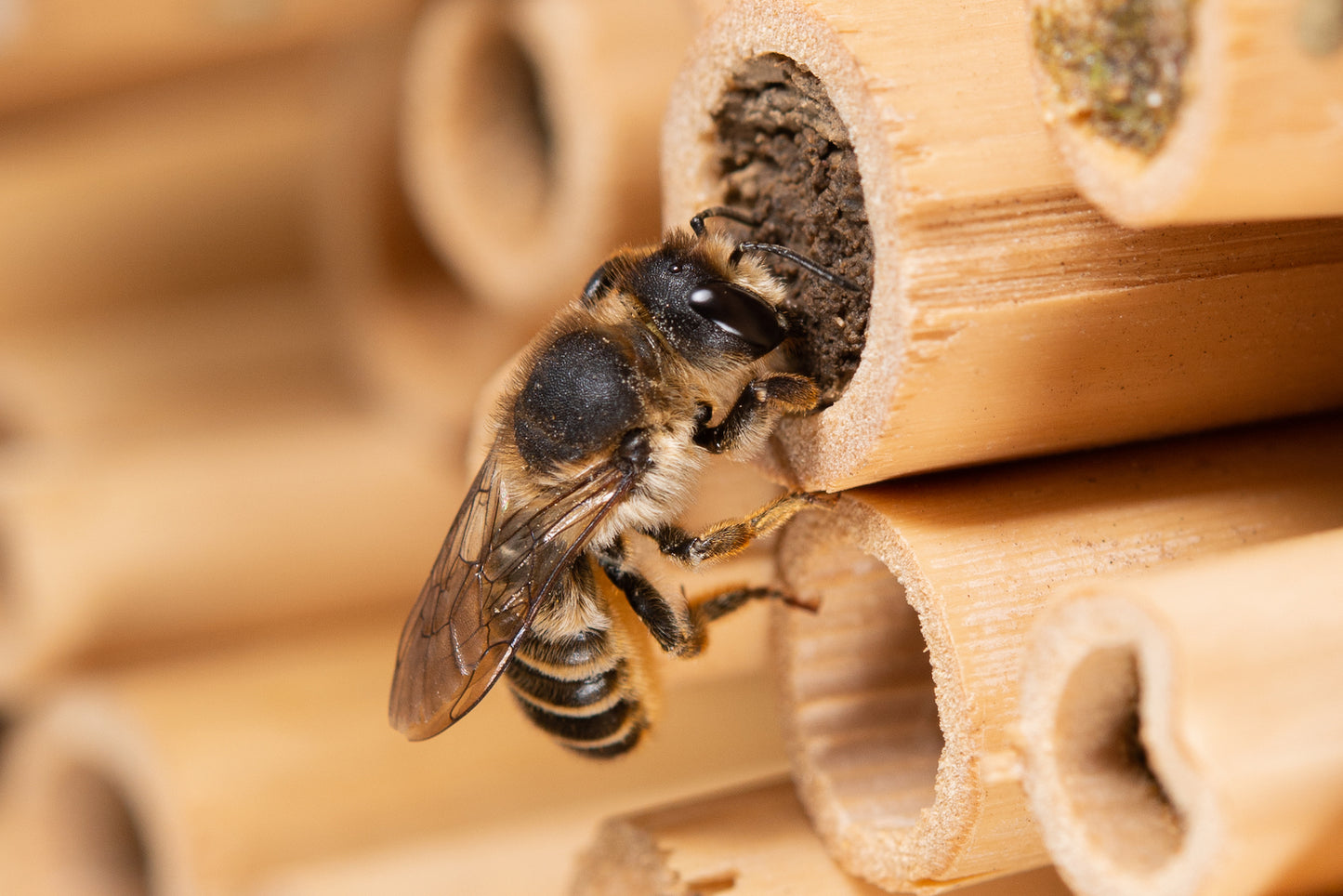
Wild bees demonstrate an equally remarkable diversity in their nesting habits. Unlike the domesticated Western honey bee, wild bees do not live in a beehive. They choose a variety of places for their nests, ranging from the ground to unexpected niches, with each species having specific requirements for its nesting site. Many of them prefer the ground for their nesting sites, but no less inventive are the species that transform decayed wood, plant stems, or even empty snail shells into a safe home for their offspring.
How do wild bees live?
Honey bees exhibit one of the most complex social behaviors in the bee world, forming colonies with up to 40,000 bees and typically producing the beloved honey as food for their brood. Most wild bees, on the other hand, live solitarily and do not produce honey stores. This means that these bees do not live in a community and are not organized among themselves. Each female can lay eggs and takes care of raising her brood alone, such as the red mason bee (Osmia bicornis).
From the complex colony-forming species to the solitary species, there are also many transitional forms. However, only a few species, such as bumblebees or some sweat bees (Lasioglossum), show pronounced social behavior similar to honey bees.