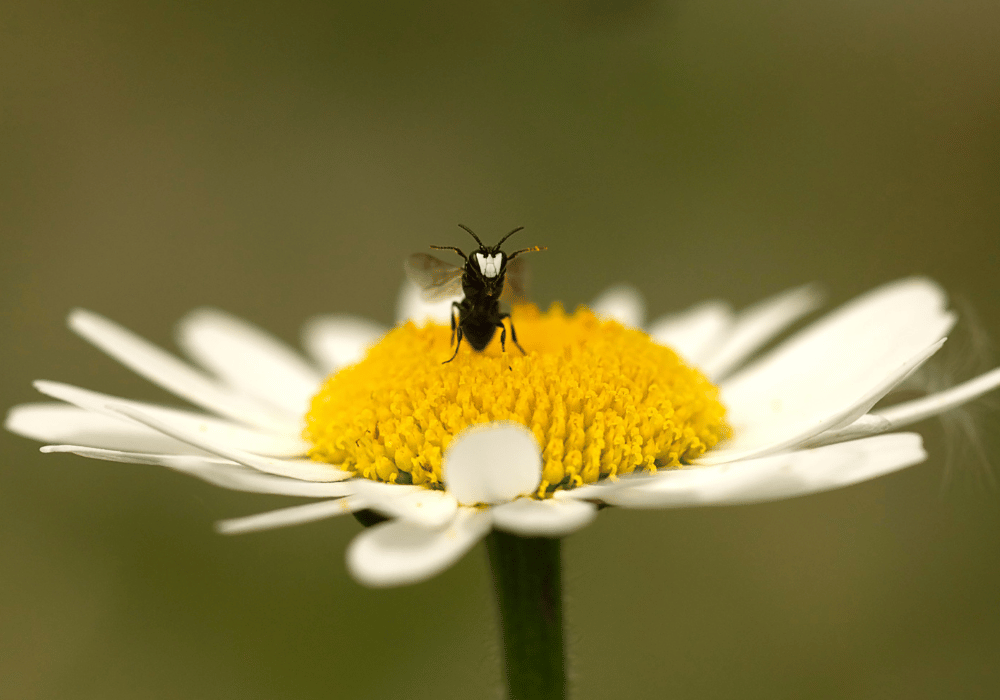
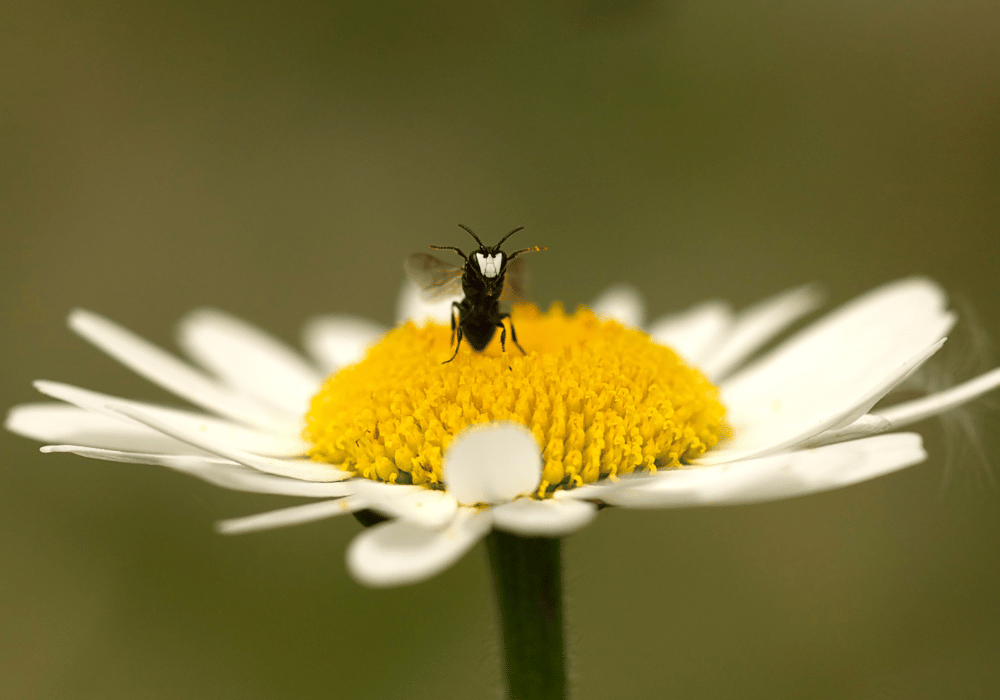
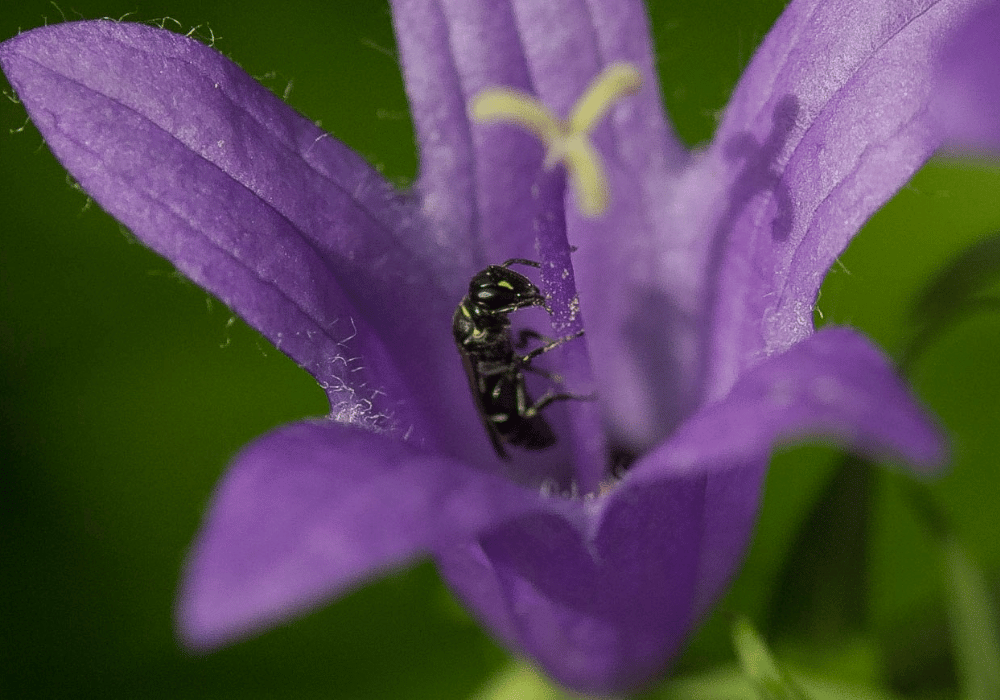
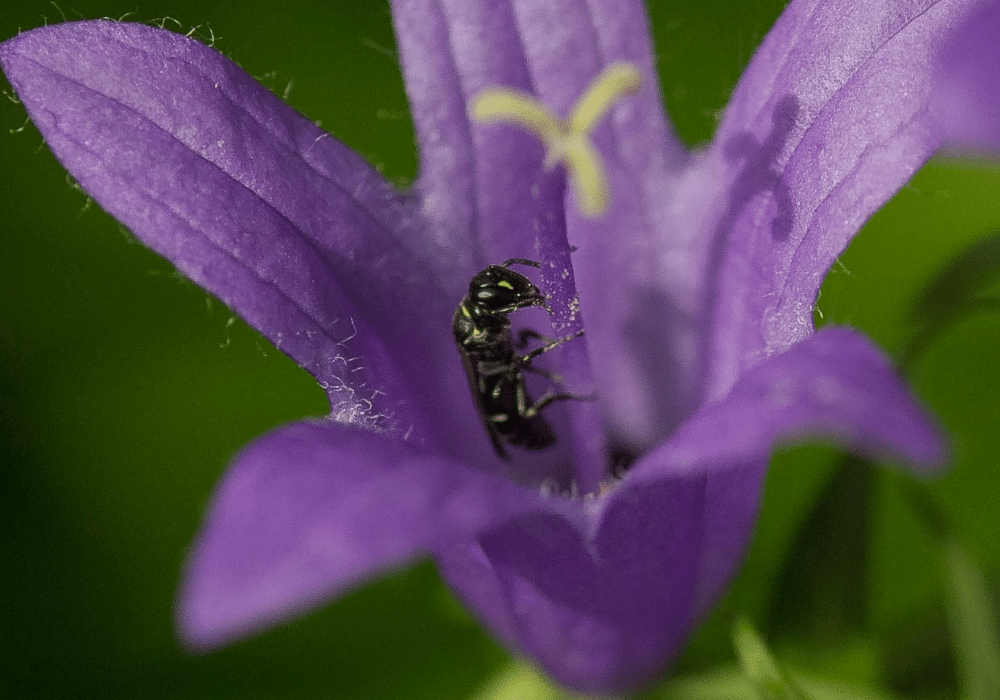
Masked bees are inconspicuous and, due to their small size and almost completely reduced hairiness, are often not perceived as bees. Unlike other bees, masked bees do not carry pollen externally on special body hairs, but instead swallow it and transport it in a special crop.
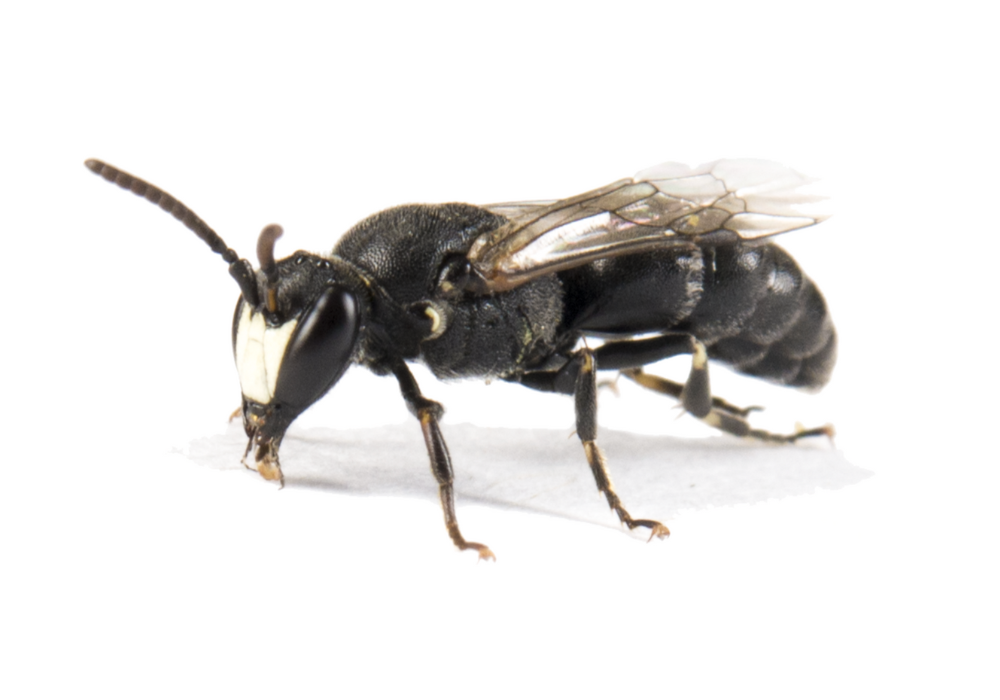
What do garlic furrow bees look like?
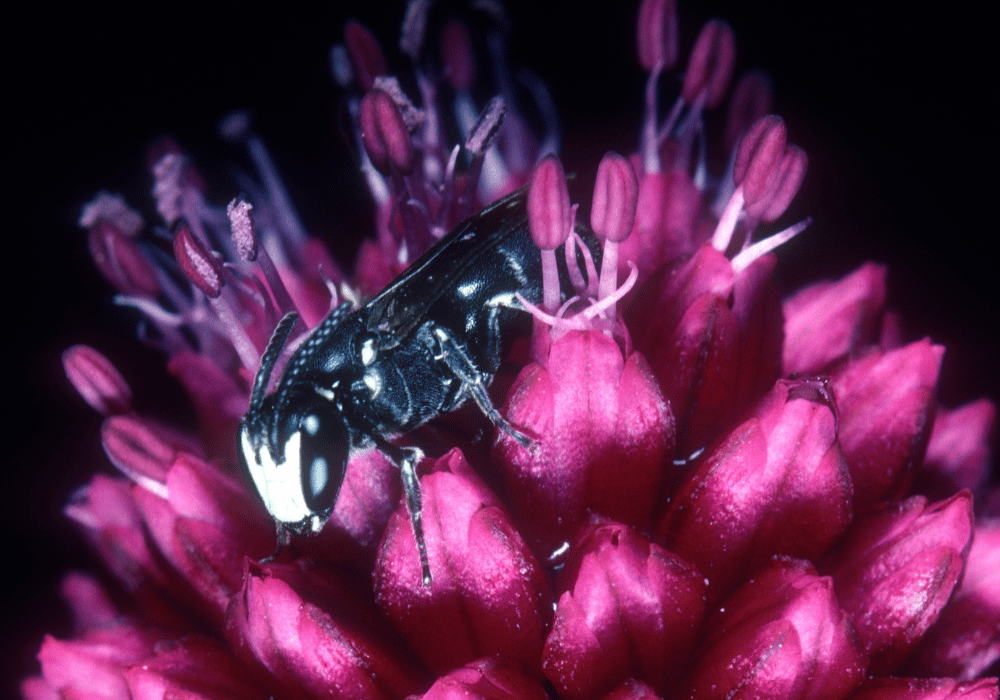
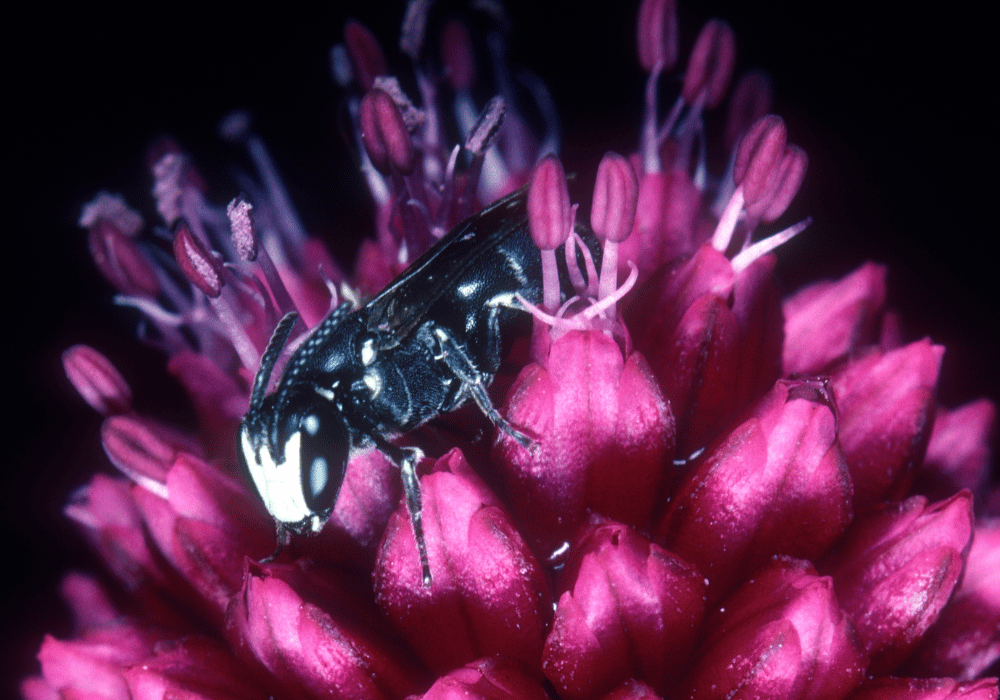
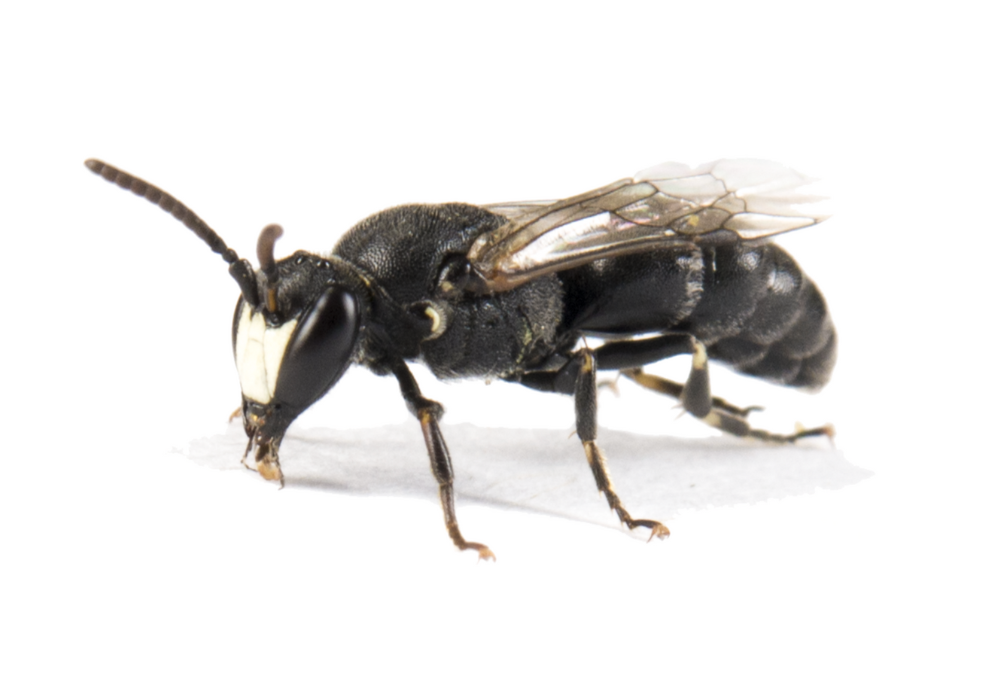
The garlic furrow bee is black and practically hairless. The males have striking white markings on their face, which resemble a mask. In females, the markings are reduced to narrow lateral stripes. The animals are delicate and, at first glance, resemble small winged ants.
How do leek masked bees feed?
The leek masked bee is a specialist: it collects pollen almost exclusively from the flowers of various leek species. Other masked bee species, such as the tansy or the mignonette masked bee, are also highly specialized. However, there are also species, such as the common masked bee, that are generalists and collect pollen from many different wild plants.
Flight duration
June to August. One generation per year.
Common native species
Tansy Masked Bee (Hylaeus nigritus), Common Masked Bee (Hylaeus communis)
Flight duration
June to August. One generation per year.
Common native species
Tansy Masked Bee (Hylaeus nigritus), Common Masked Bee (Hylaeus communis)
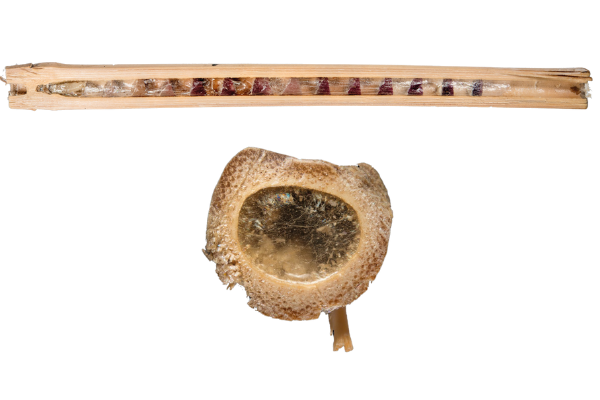
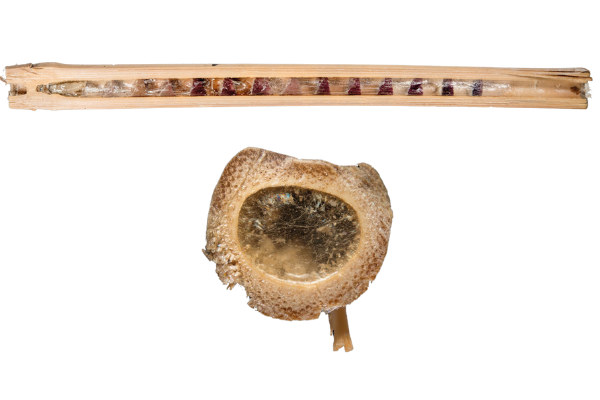
How do masked bees nest?
Masked bees do not use foreign materials for nest building. They construct the partition walls of the brood cells and the nest closures from a thin, transparent membrane of a specially produced body secretion. In part, they nest in existing cavities, in rock crevices, in the ground, or in hollow plant stems.
Wild Bees in Switzerland: Garlic Mining Bee