Mason bees
Life Cycle of Mason Bees
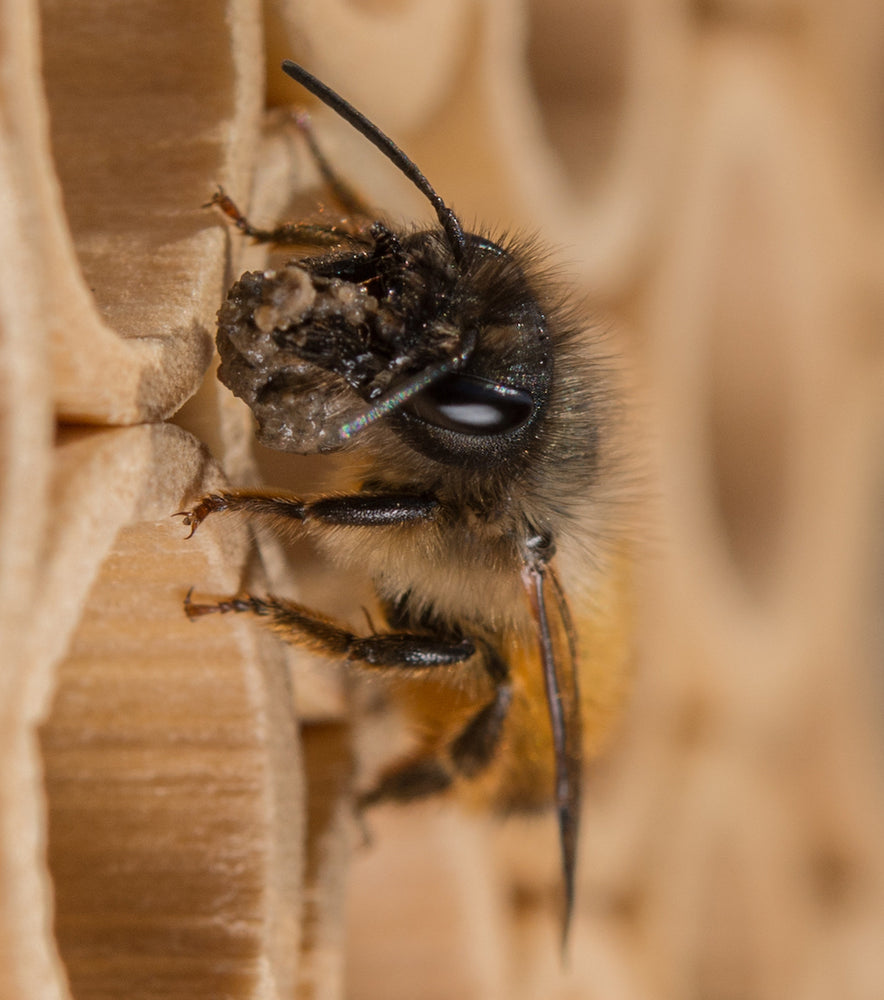
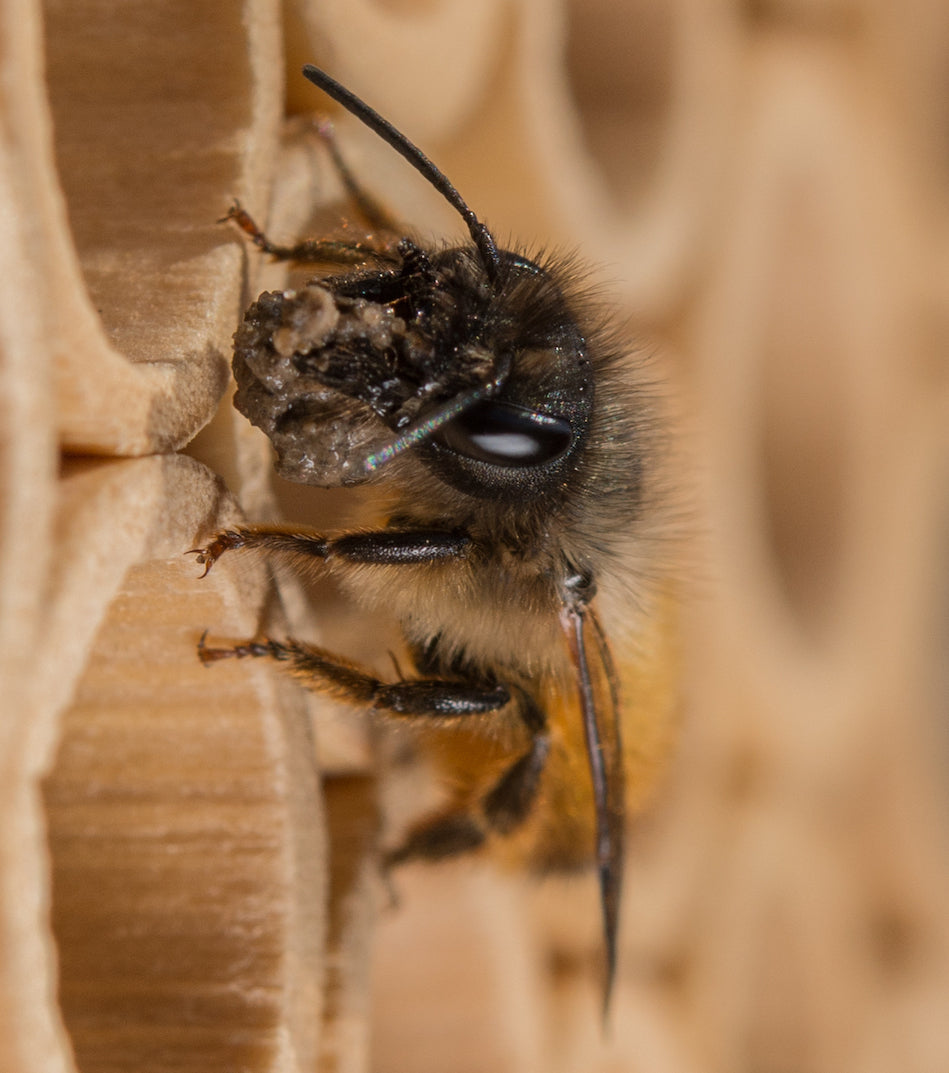
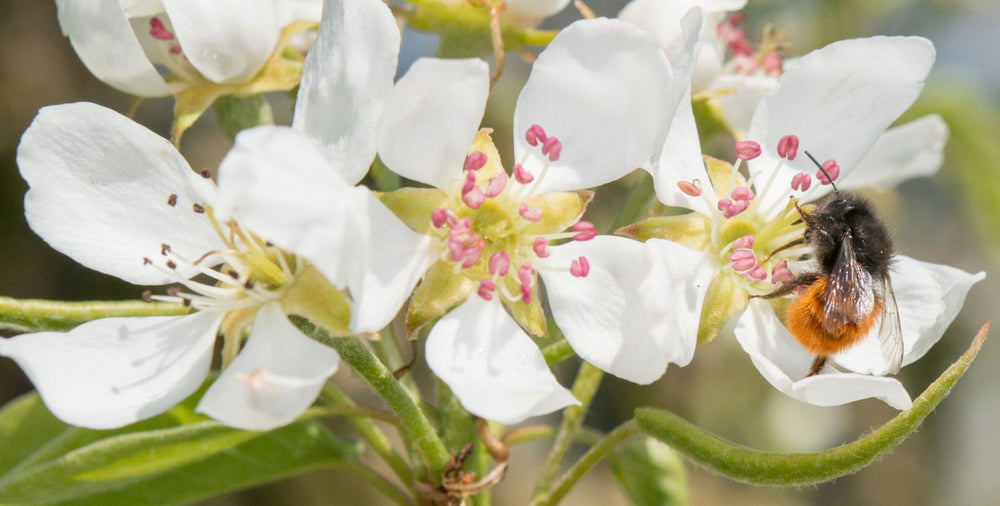
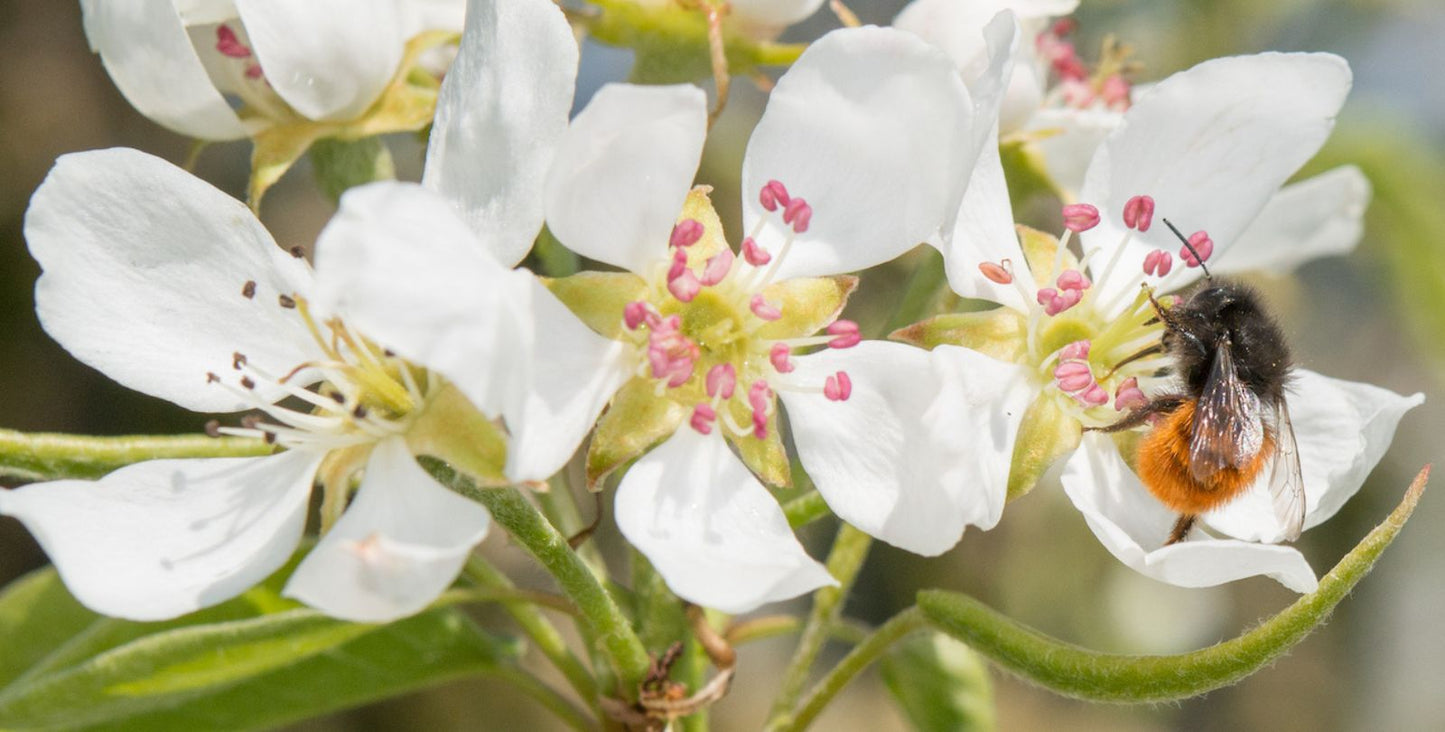
As diverse as wild bees are, so are their lifestyles and cycles. On this page, we introduce you to the life cycle of the red mason bee (Osmia bicornis) and the horned mason bee (Osmia cornuta).
The flight period for the red mason bee is – depending on the respective weather conditions – between March and June. The early-flying horned mason bee emerges before the red mason bee.
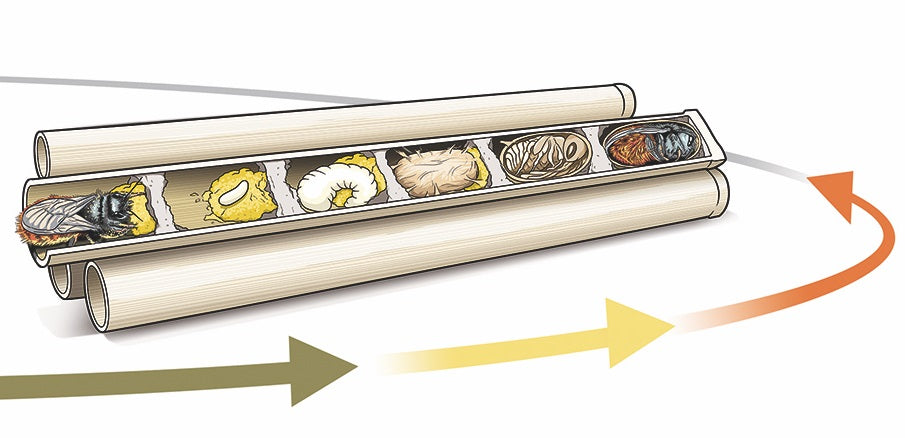
Mason Bee Life Cycle at a Glance
Hatching
Hatching
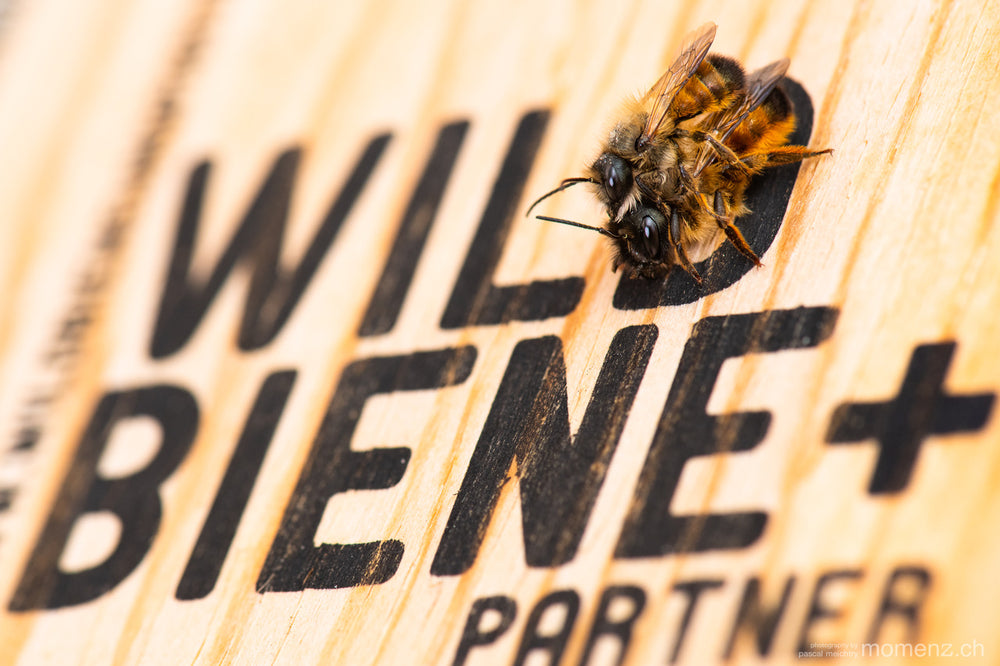
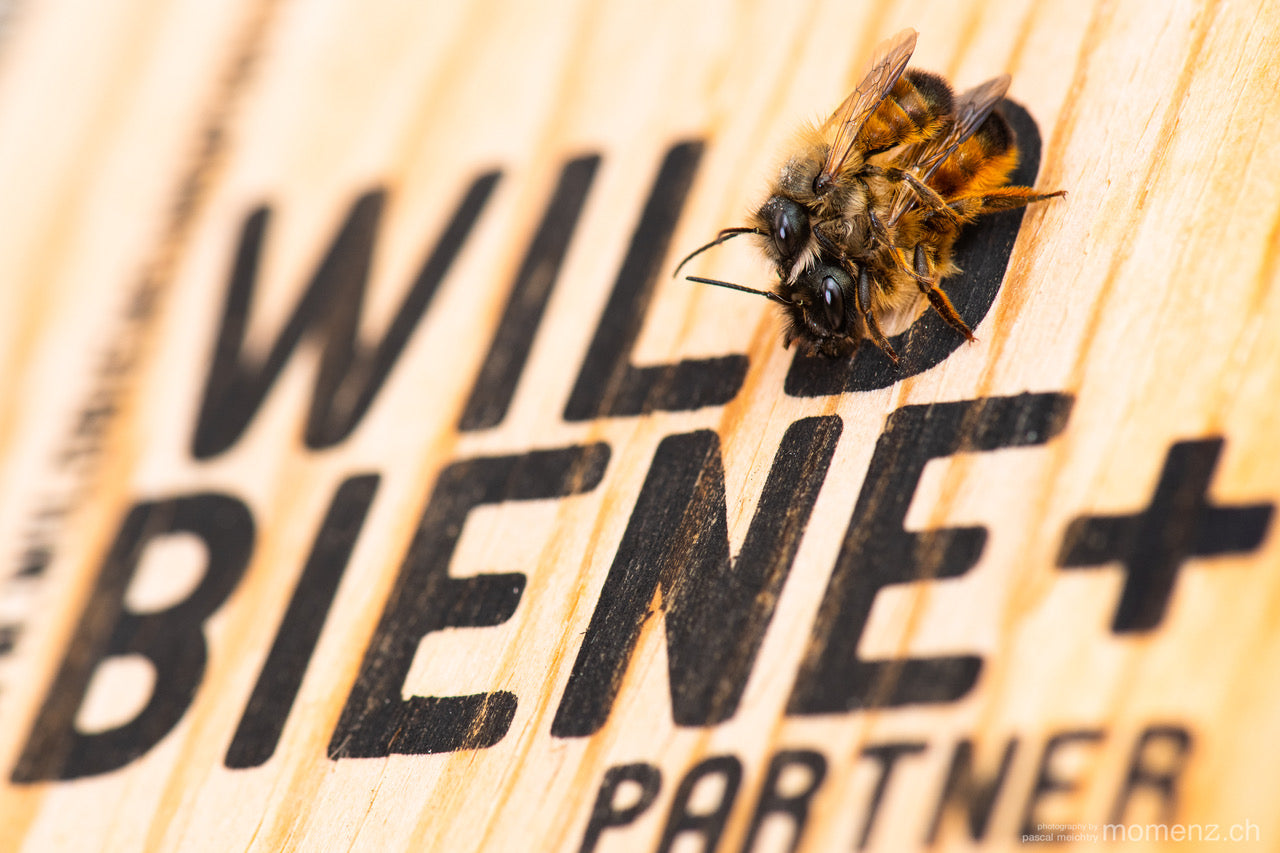
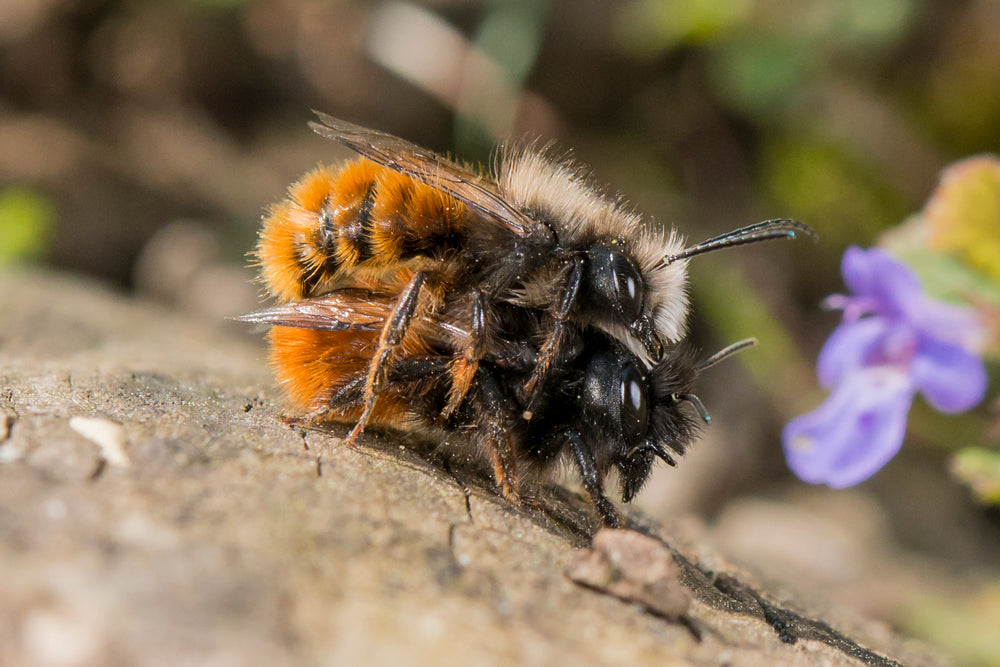
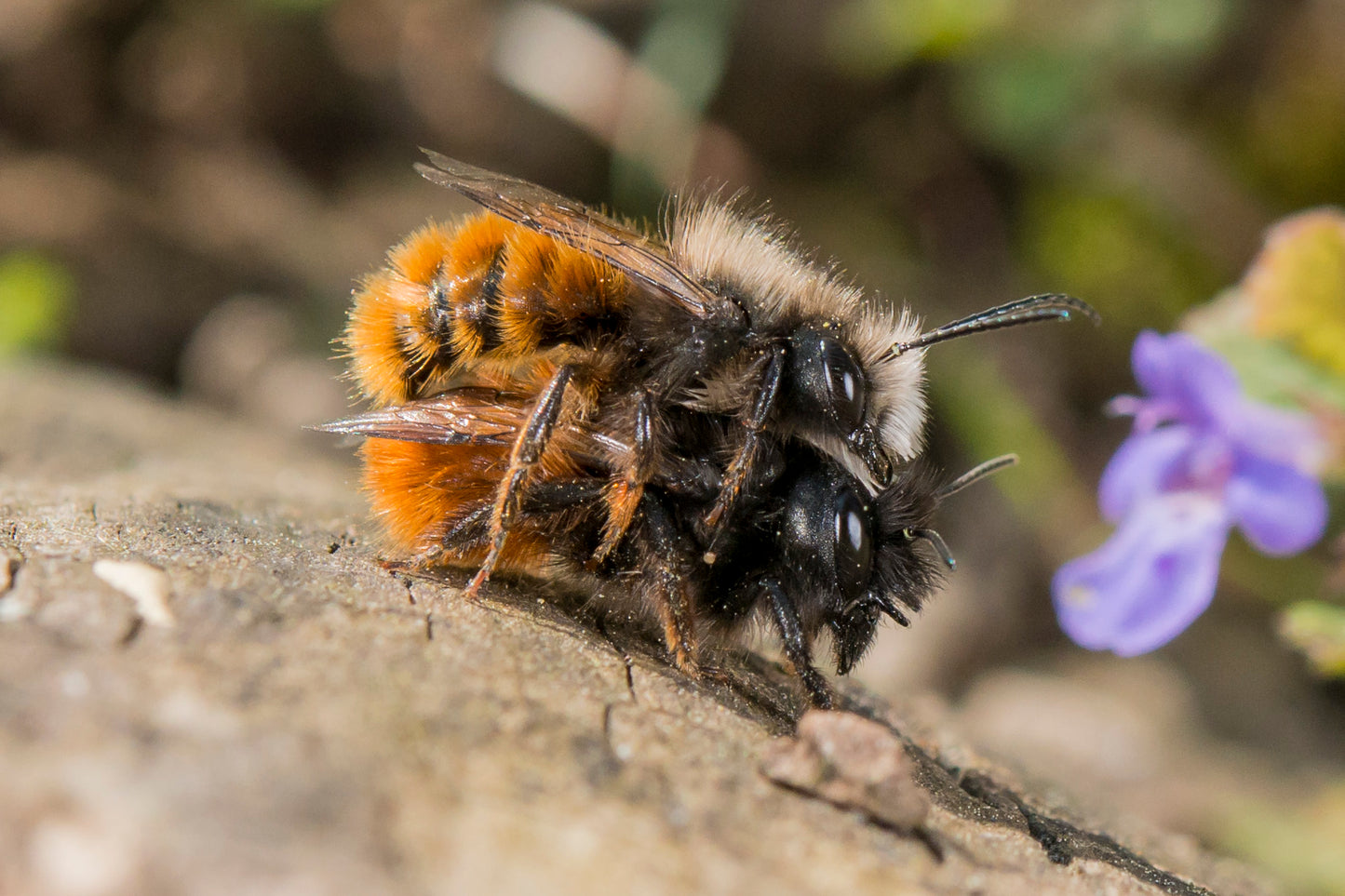
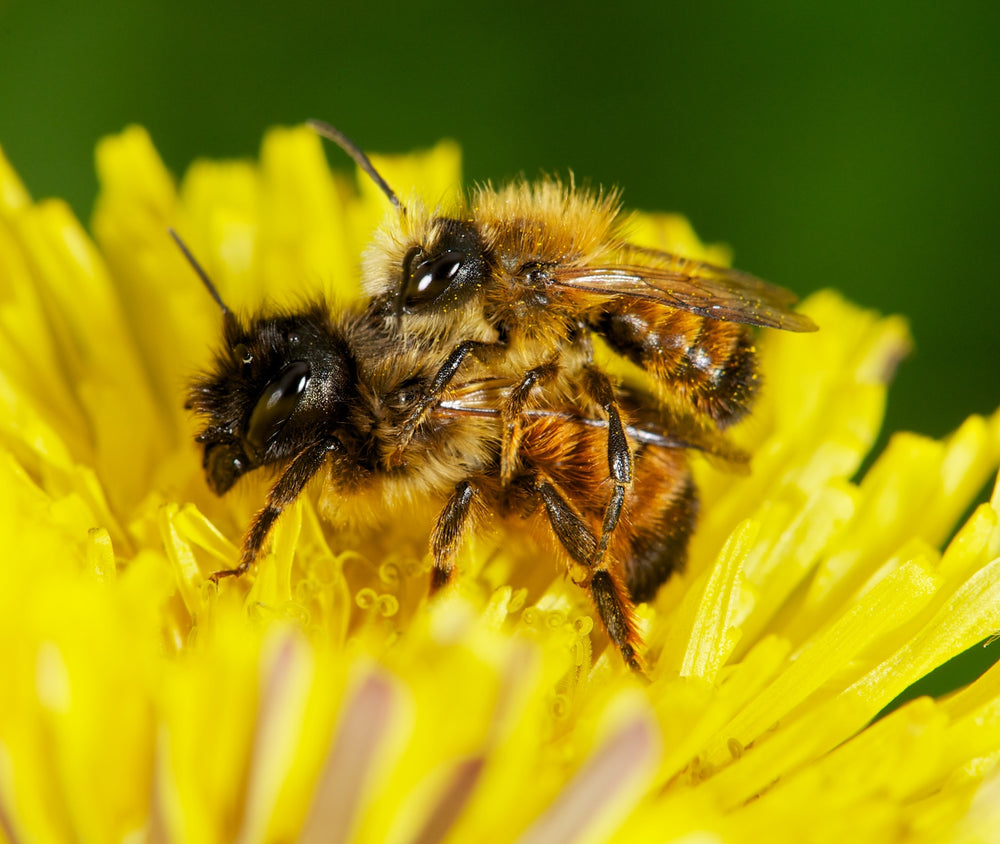
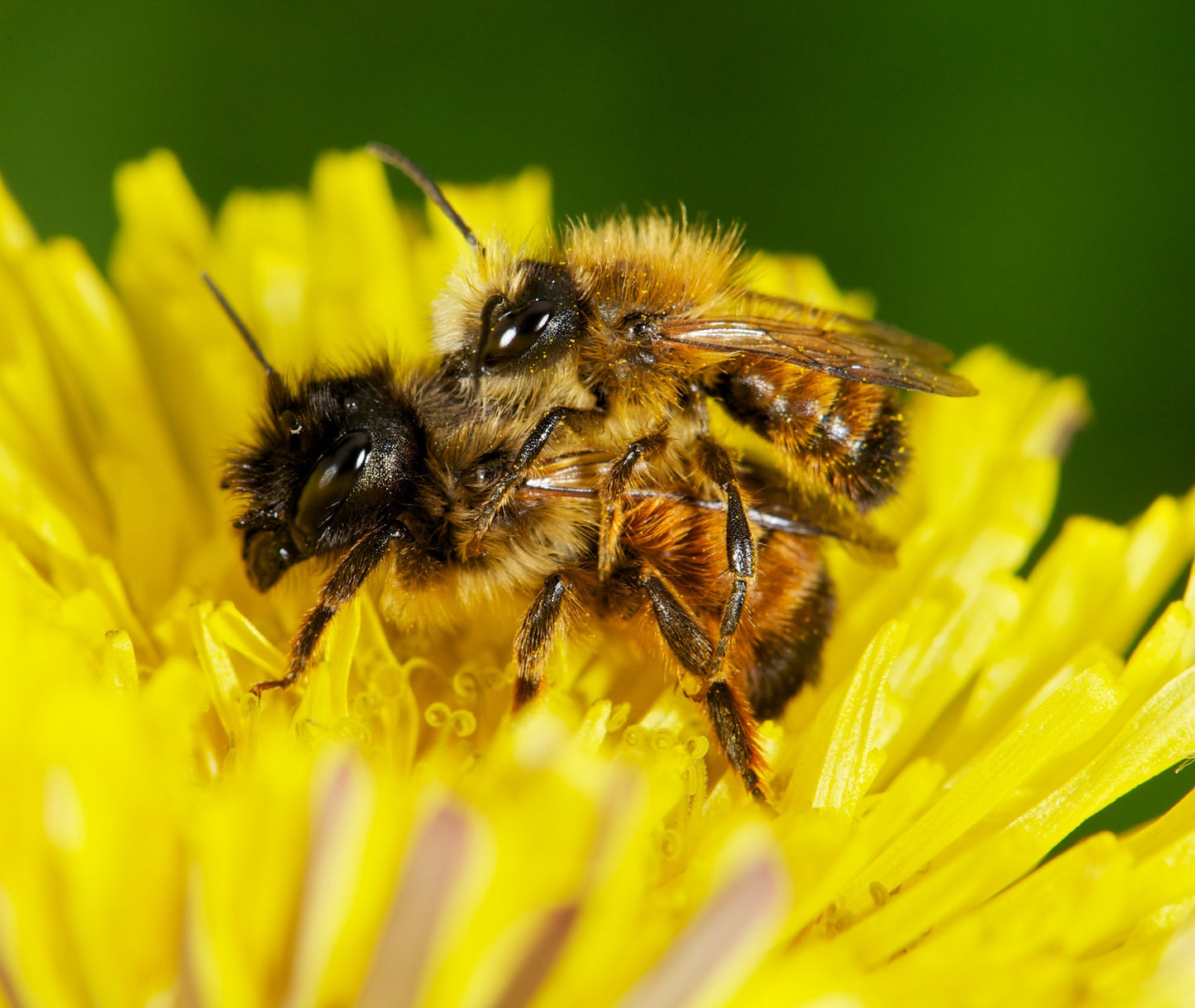
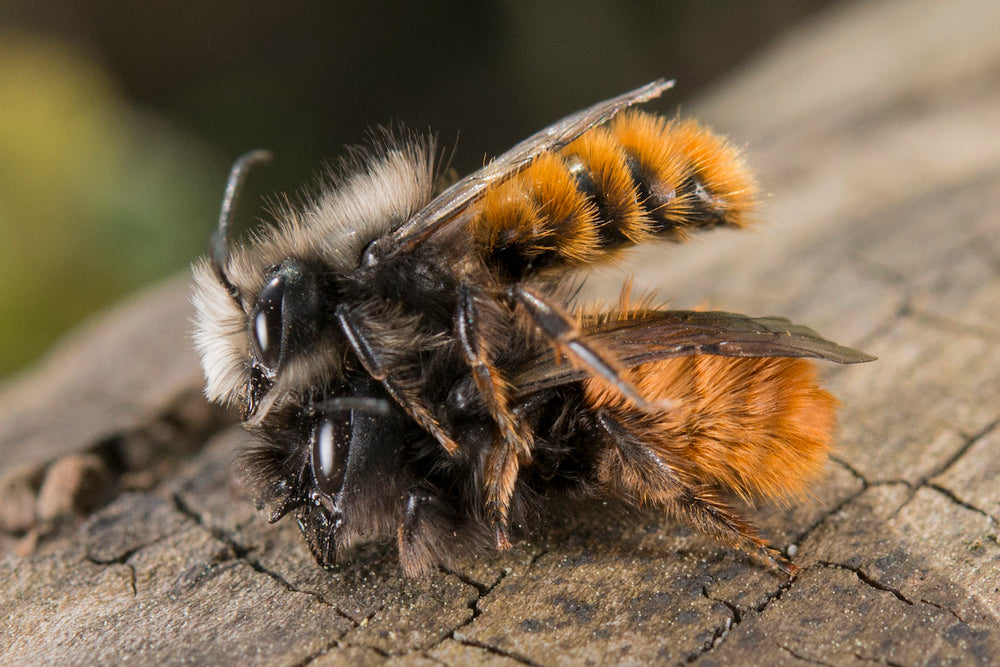
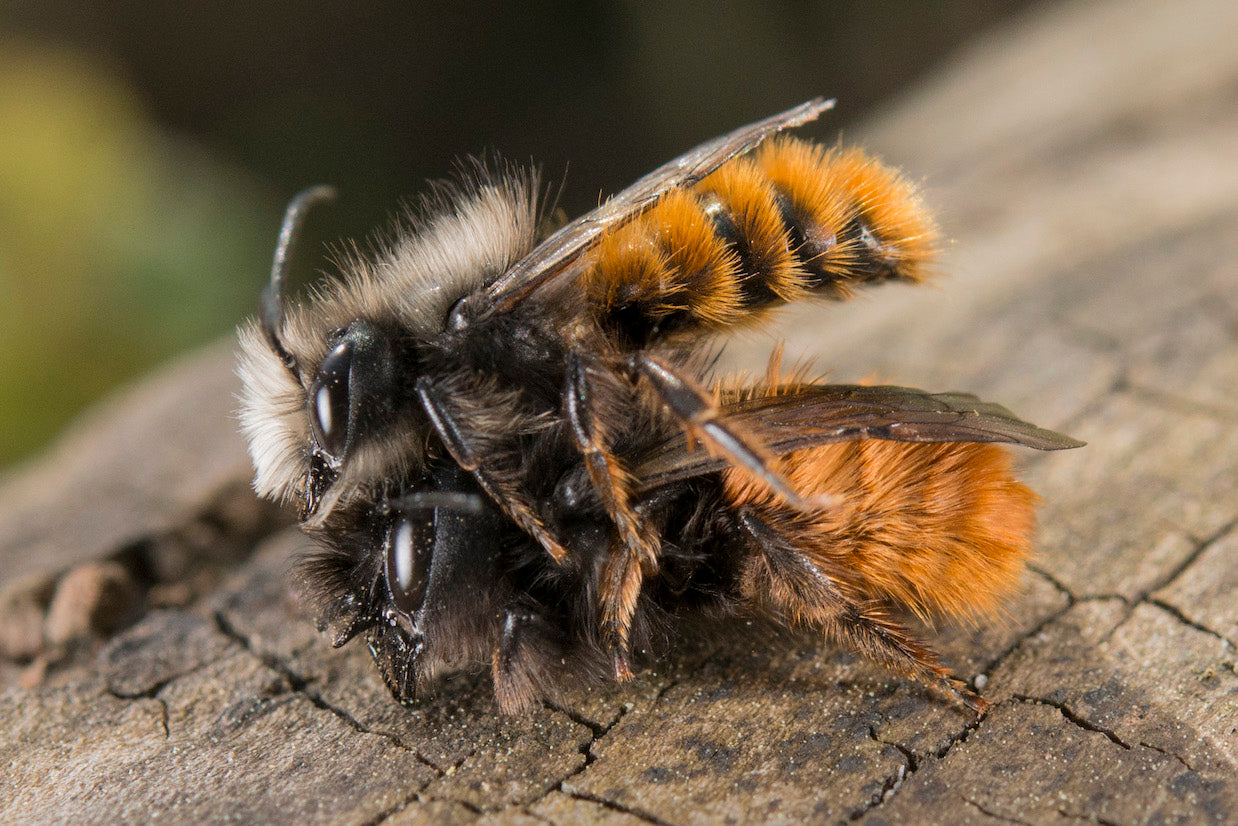
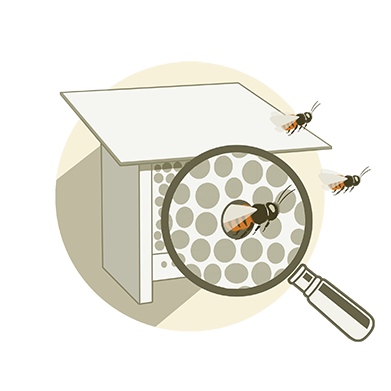
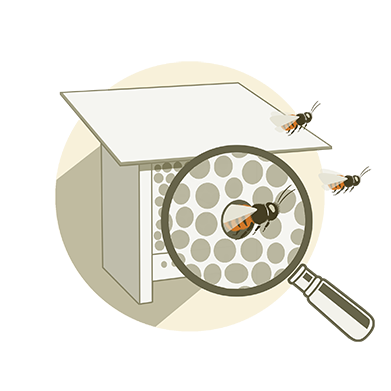
Mason bees emerge as soon as temperatures rise. First, the males emerge, waiting a few days for the female mason bees. Then, mating occurs. The males live for about 2-3 weeks after emerging, and the females for about 4-7 weeks.
Pollination
Pollination
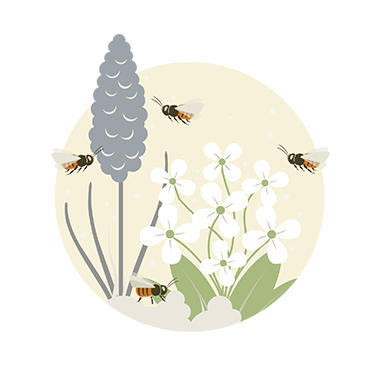
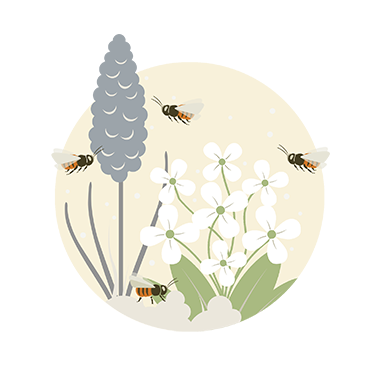
The female mason bee strengthens herself with flower nectar, while her ventral brush is ideal for collecting pollen. While foraging, she pollinates more than 2,500 flowers a day. Over her entire lifetime, she pollinates more than 40,000 flowers, which corresponds to the pollination performance of 80 to 300 honey bees.
Nest-Building
Nest-Building
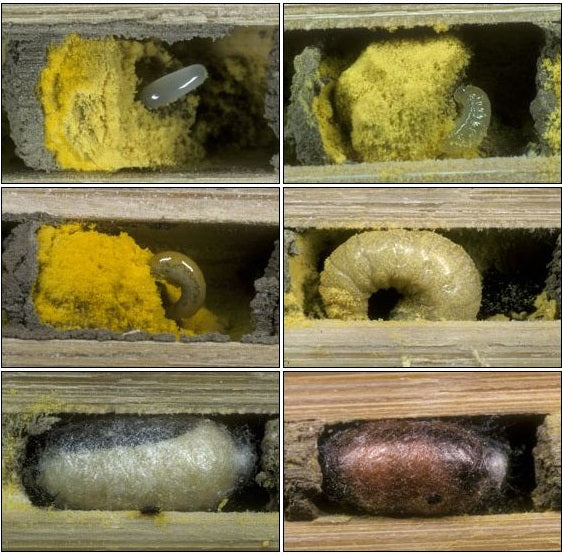
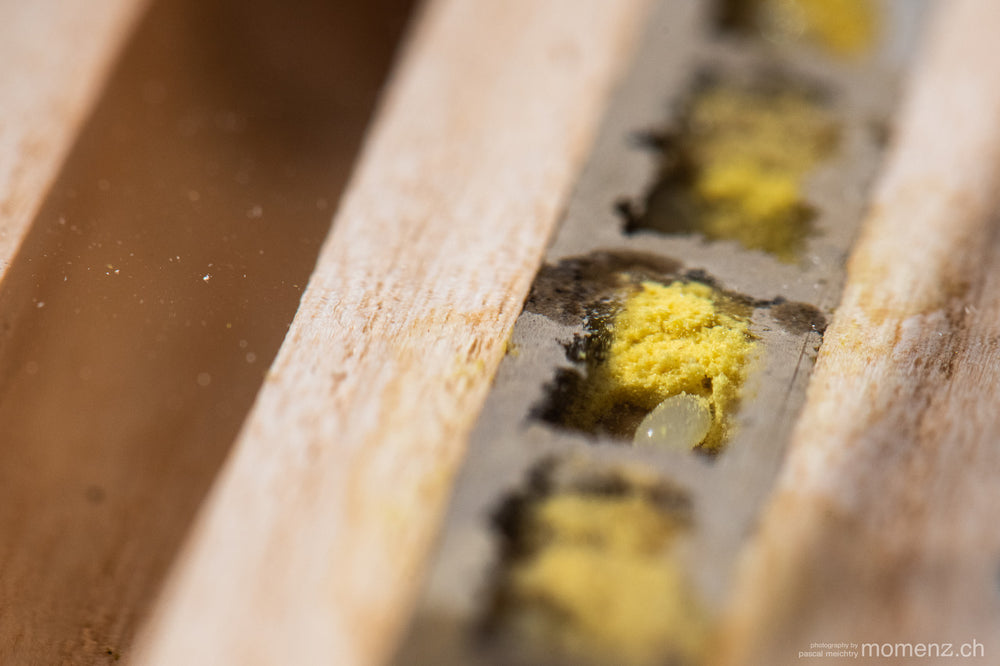
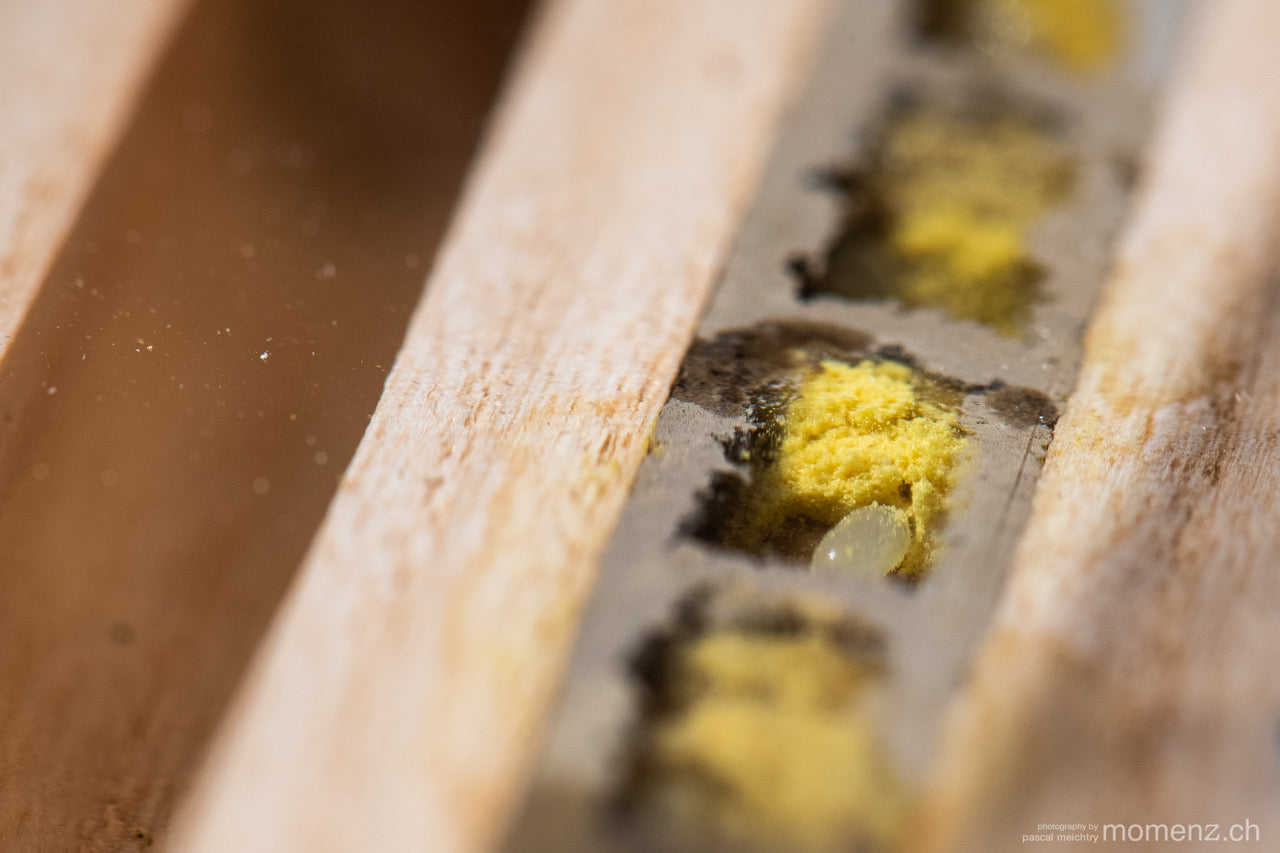
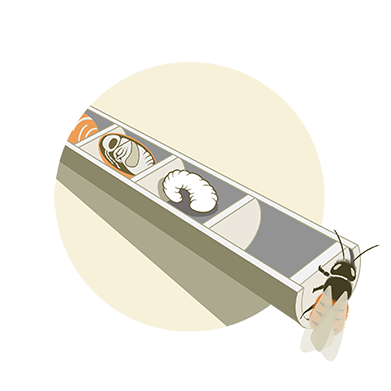
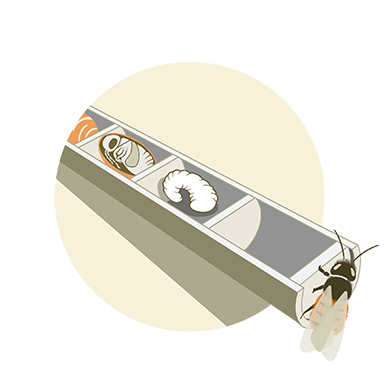
After mating, the female mason bee seeks out a nesting tube in the BeeHome and diligently collects the pollen-nectar mix for her offspring. The female mason bee lays one egg on each pollen loaf, from which a larva hatches. This develops into a fully grown mason bee in its cocoon by autumn.
Hibernation
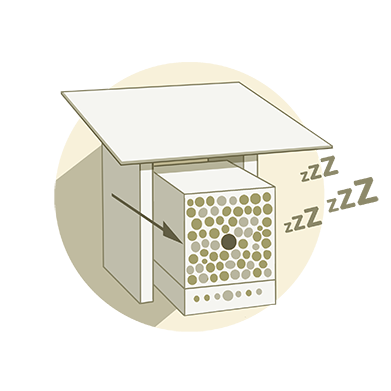
Hibernation
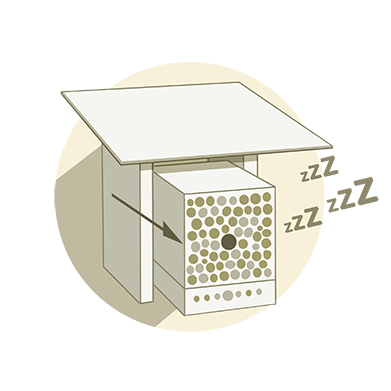
The mason bee larvae developed into adult wild bees in the nesting tubes of your BeeHome between spring and autumn. They now overwinter as adults in their cocoons for at least 90 days. The offspring emerge from their cocoons the following spring, and the buzzing adventure begins anew!