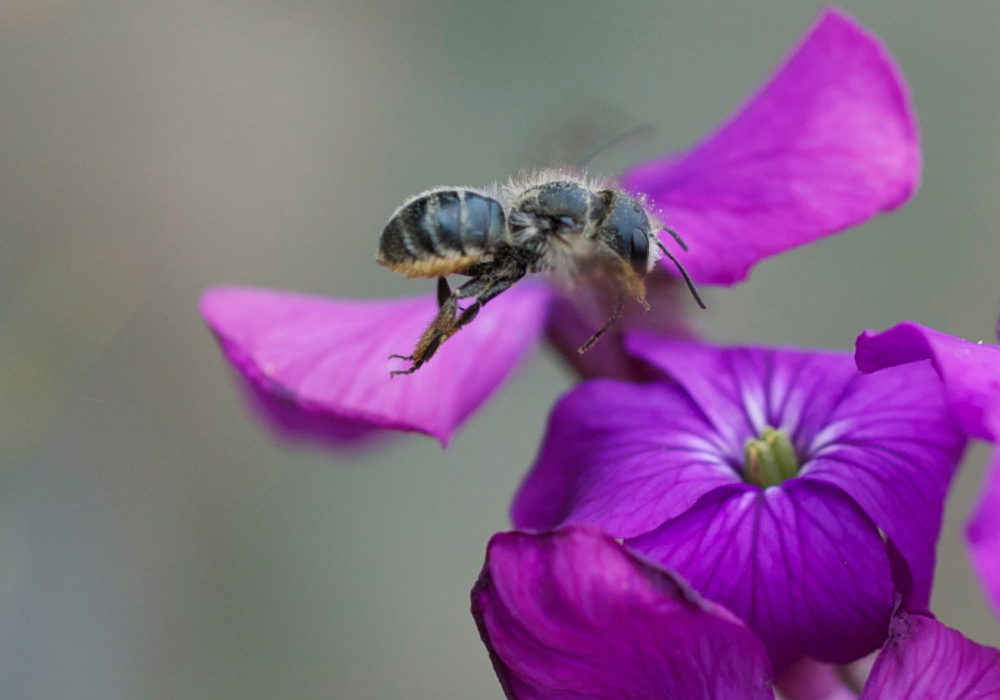
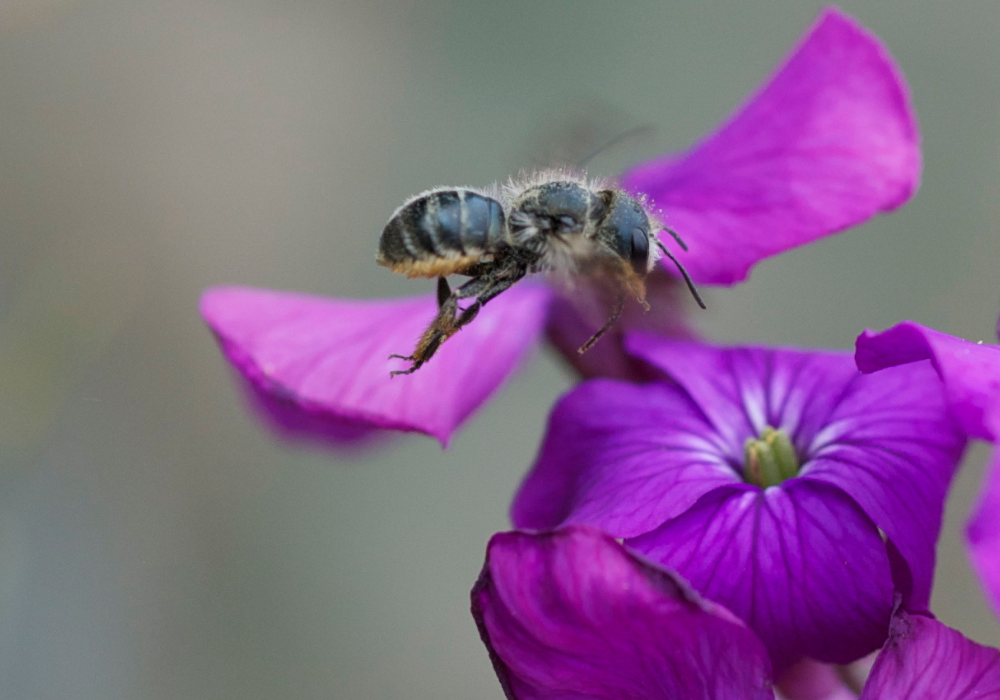
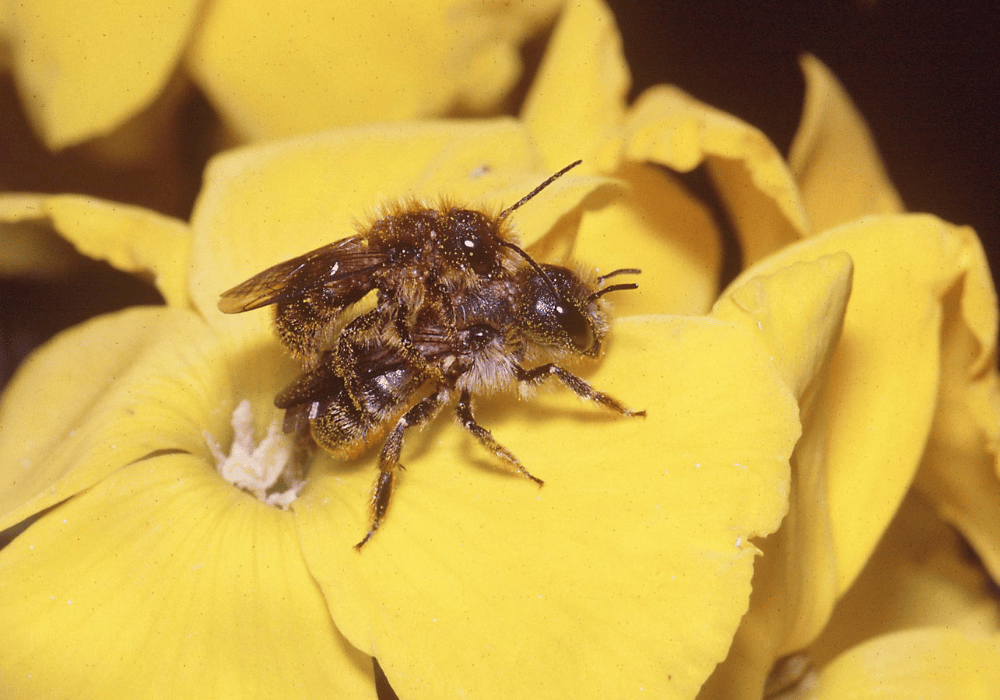
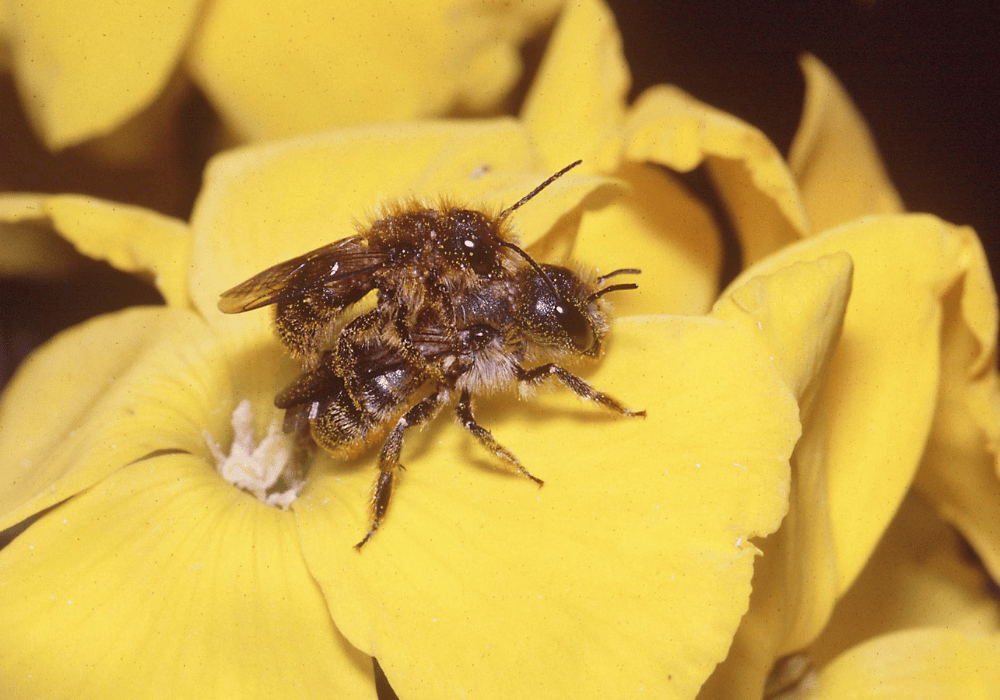
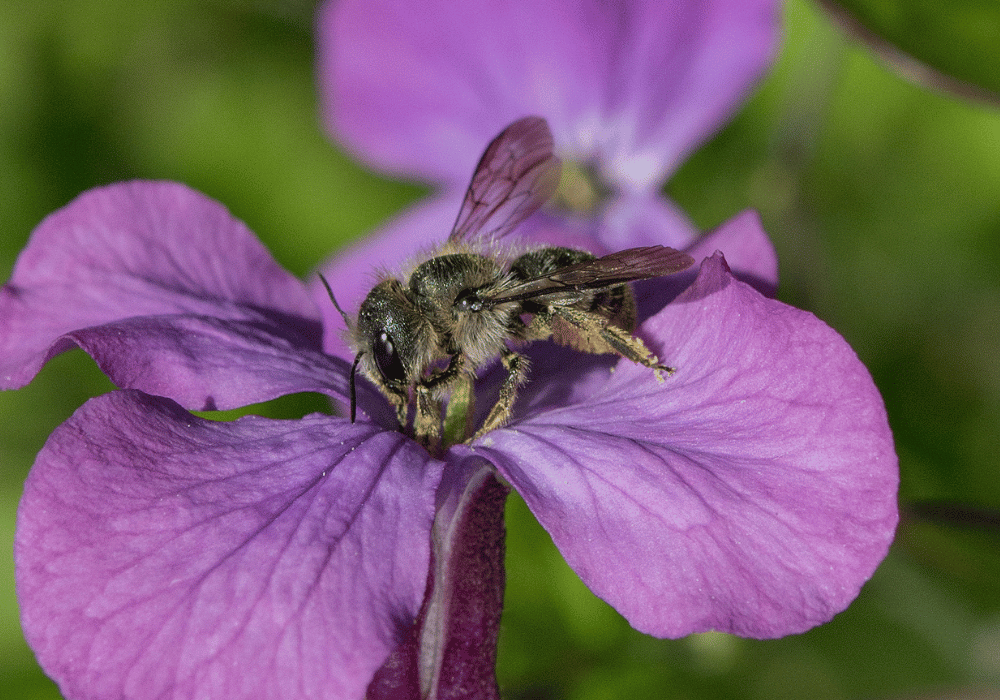
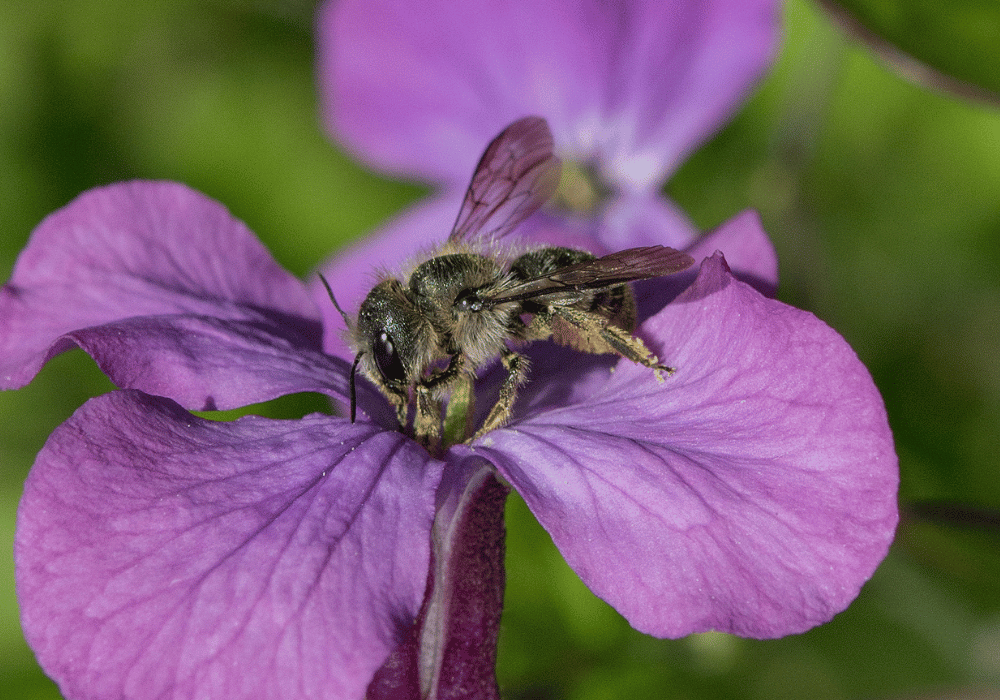
This bee species is rather rare and is often confused with the Steel Blue Mason Bee. The males usually hatch up to two weeks before the females. This phenomenon is known as protandry and occurs in many wild bee species.
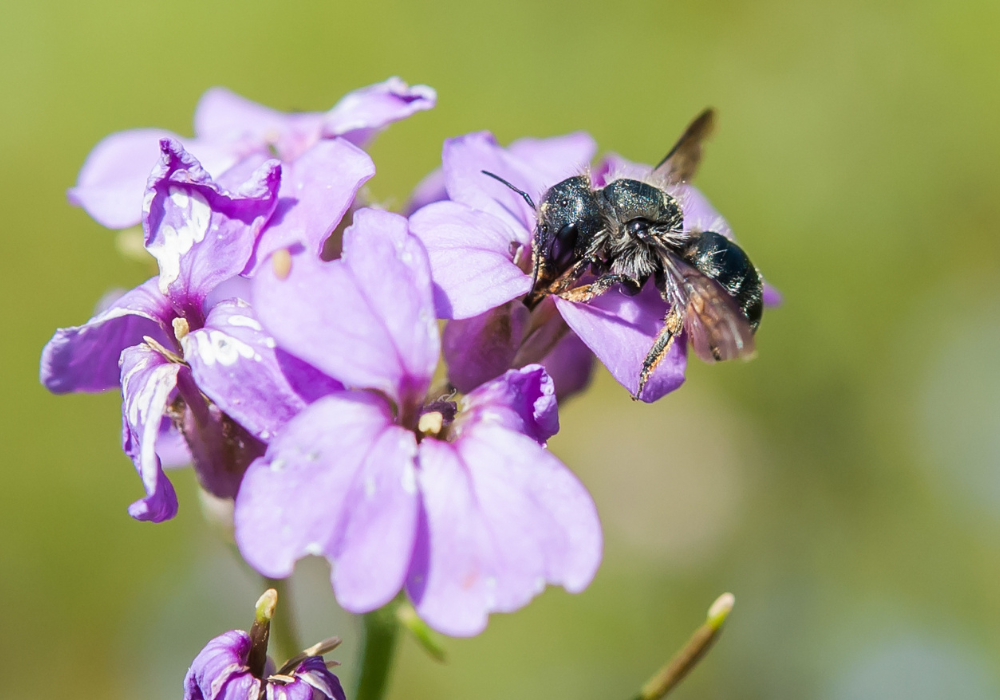
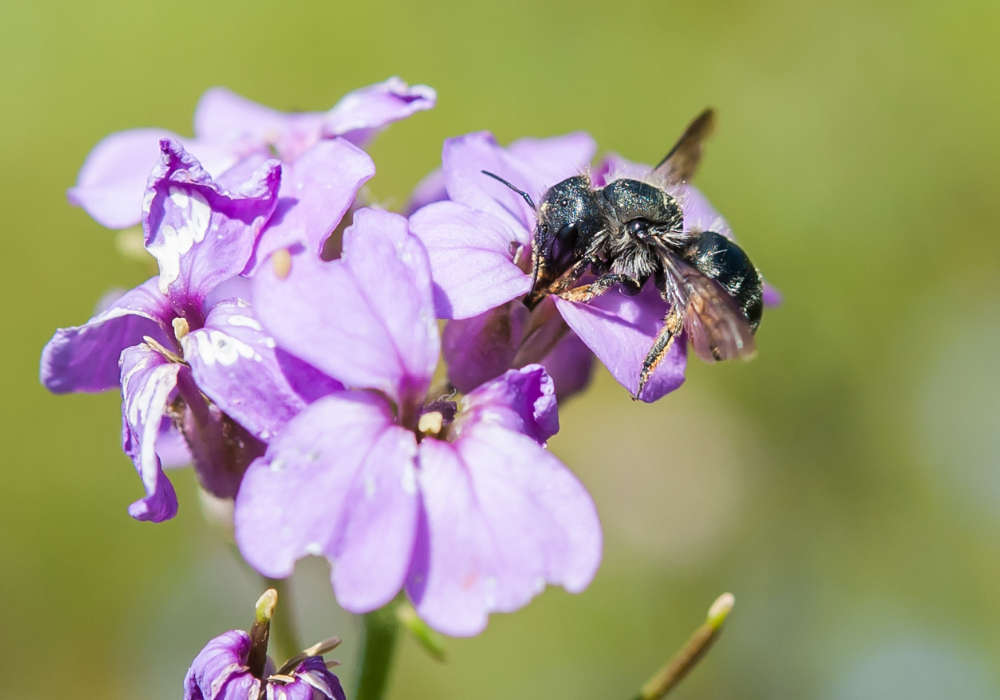
What do large mason bees look like?
Large mason bees are 8–12 mm long. The females have a metallic sheen and are only sparsely hairy. Faint white bands can be seen on their abdomen. The males have much stronger reddish-brown hair and differ greatly from the females.
Flight time
April to June. One generation per year.
Food preferences
This species specializes in large-flowered cruciferous plants. In particular, it loves wild mustard, rapeseed, honesty, dame's rocket, and arugula.
Flight time
April to June. One generation per year.
Food preferences
This species specializes in large-flowered cruciferous plants. In particular, it loves wild mustard, rapeseed, honesty, dame's rocket, and arugula.
How do campanula mason bees nest?
The campanula mason bee is the only wild bee species that foregoes partitions when building its nest. It fills the tube with a pollen-nectar mixture, depositing the eggs at small intervals. For its nest plug, it uses chewed leaf material. Additionally, the campanula mason bee often camouflages the nest plug with wood fibers. This plug is typically not at the end of the tube but set slightly inwards.
Wild bees in Switzerland: The White-bellied Mason Bee