

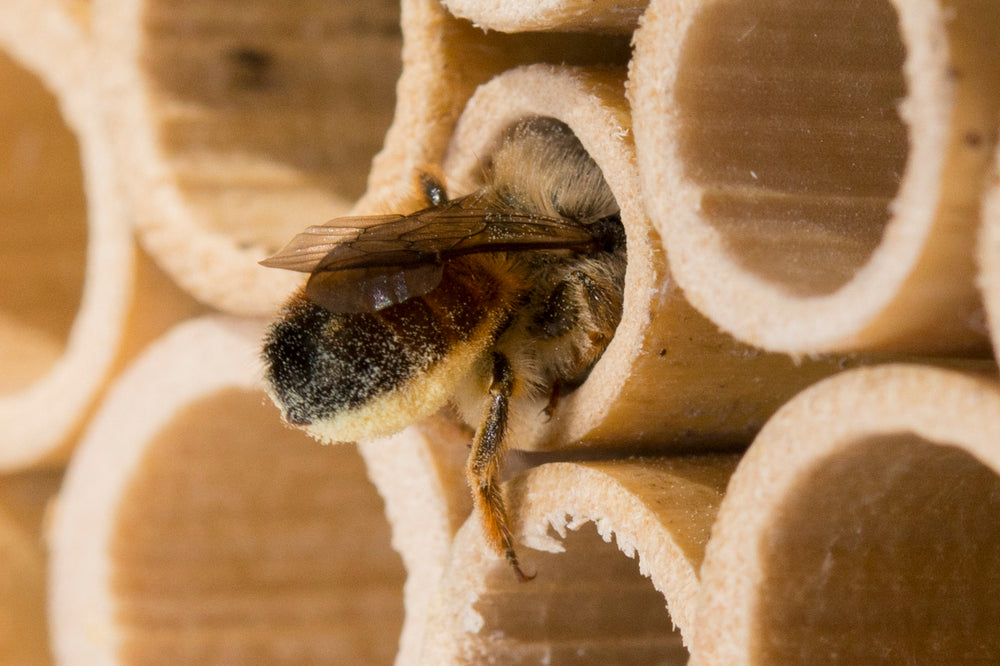
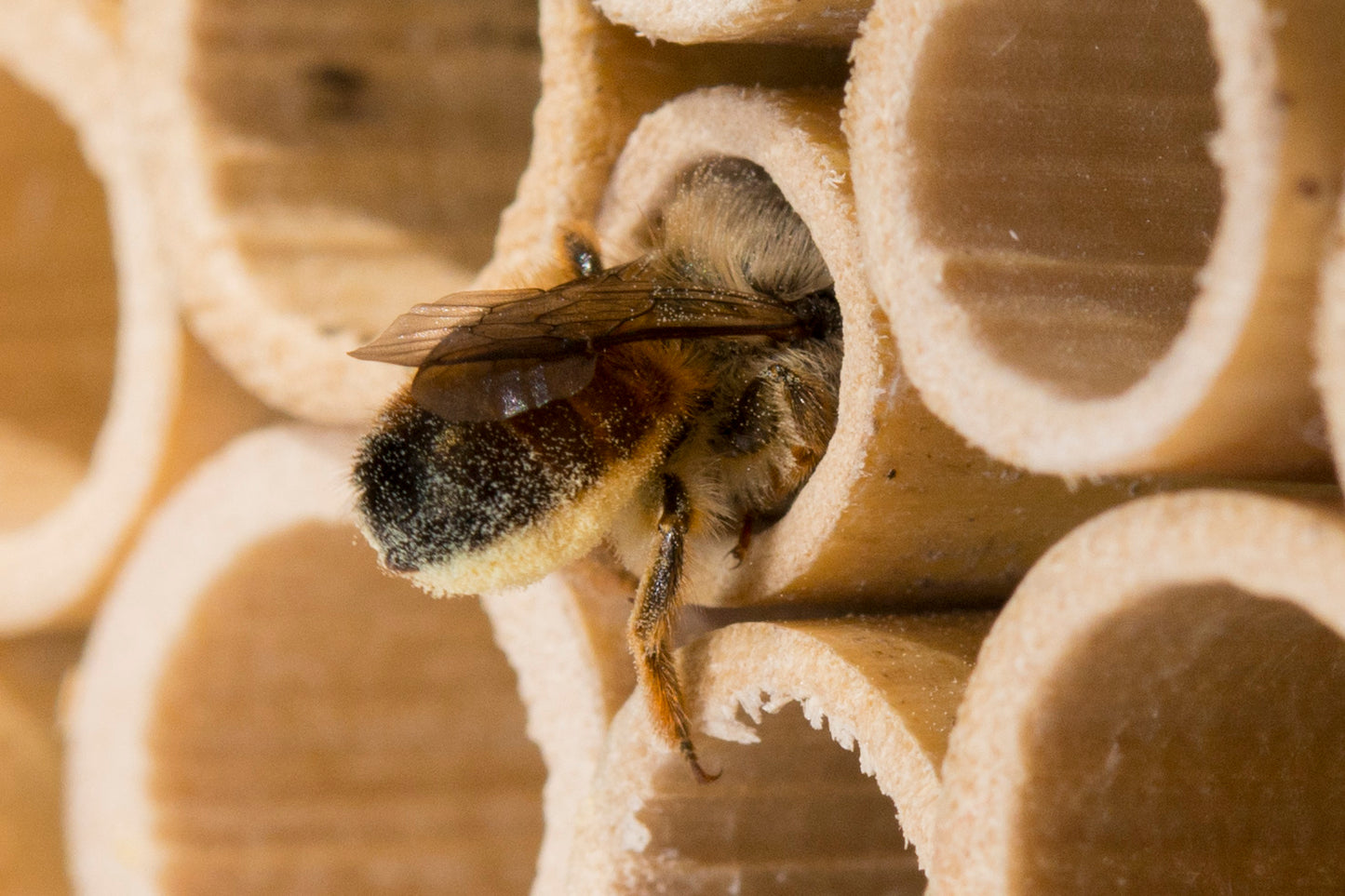
The Red Mason Bee is a typical follower of human civilization. While rare in nature, it thrives in urban gardens: it is very frequently found there and in nesting aids. It is active early in the year and can be observed as early as March. Due to its cold resistance and its preference for rose plants, it is a very efficient pollinator of fruits and berries.
What do red mason bees look like?
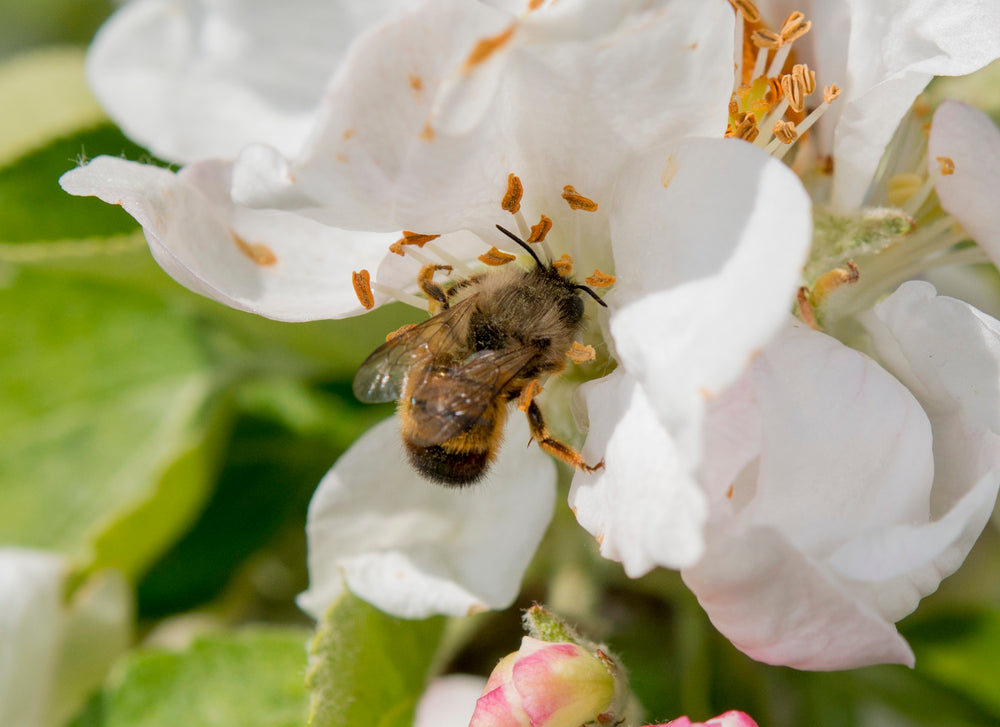
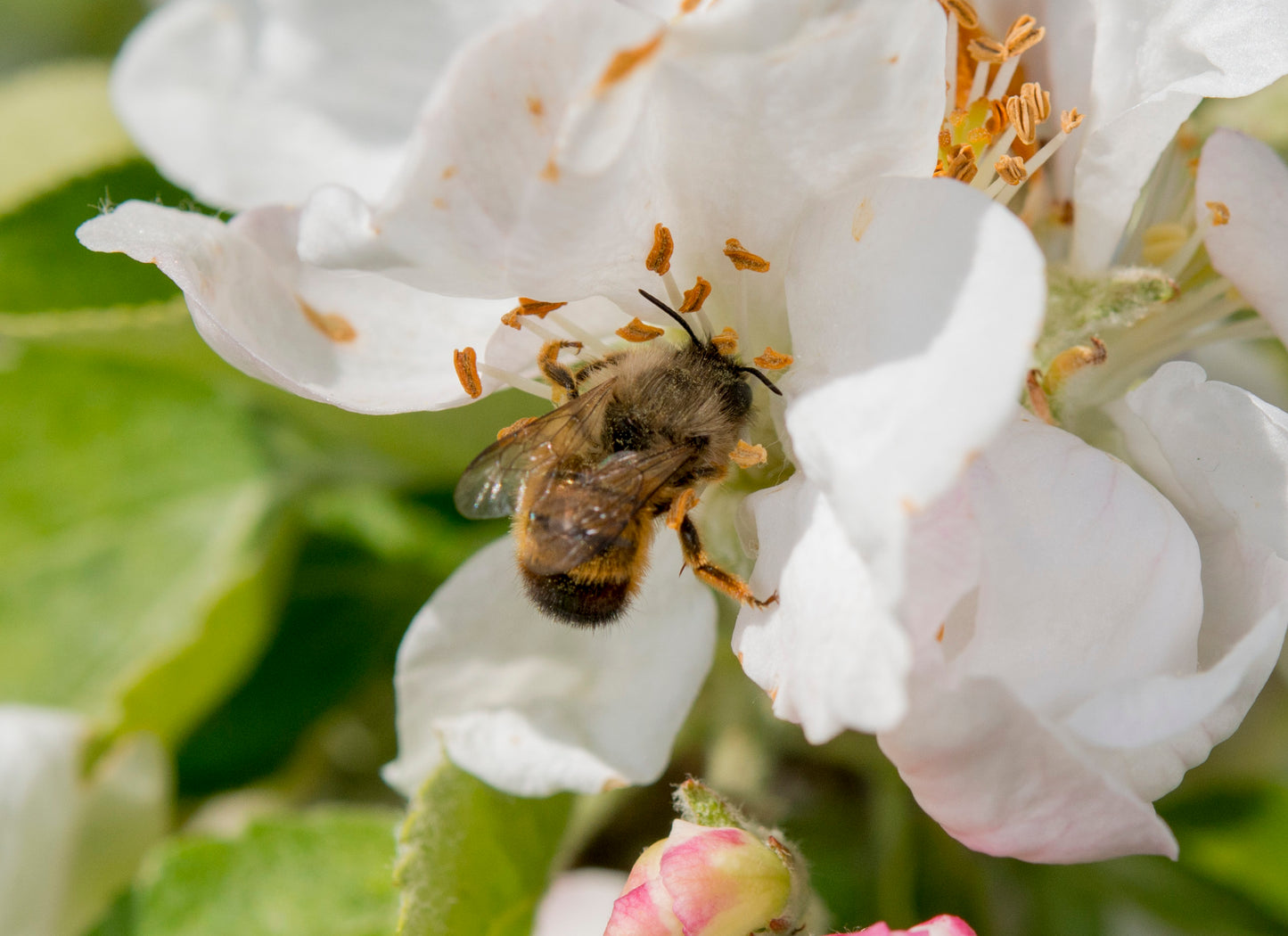
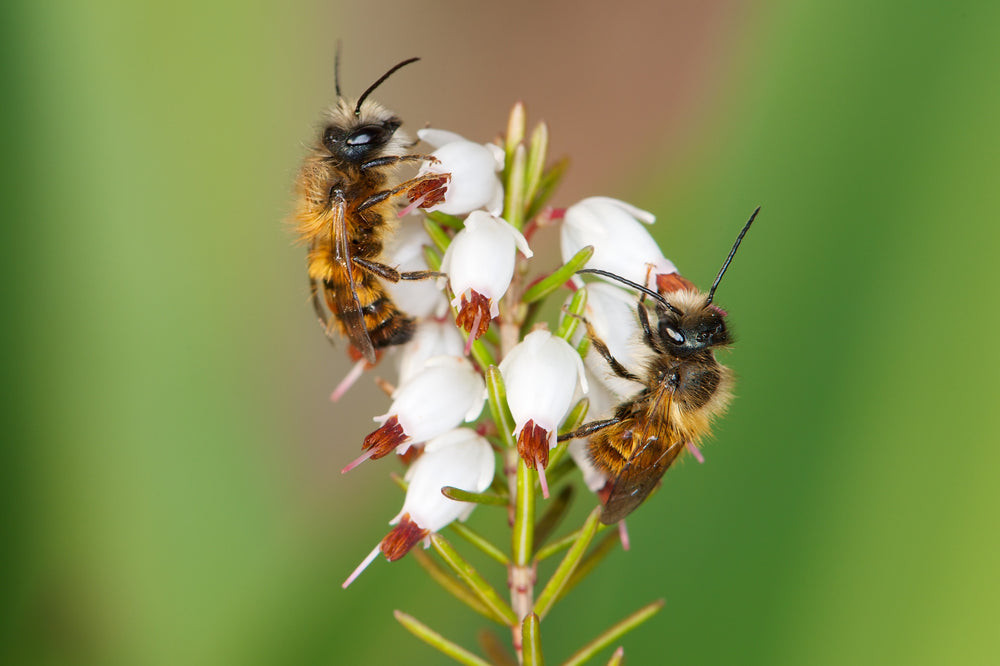
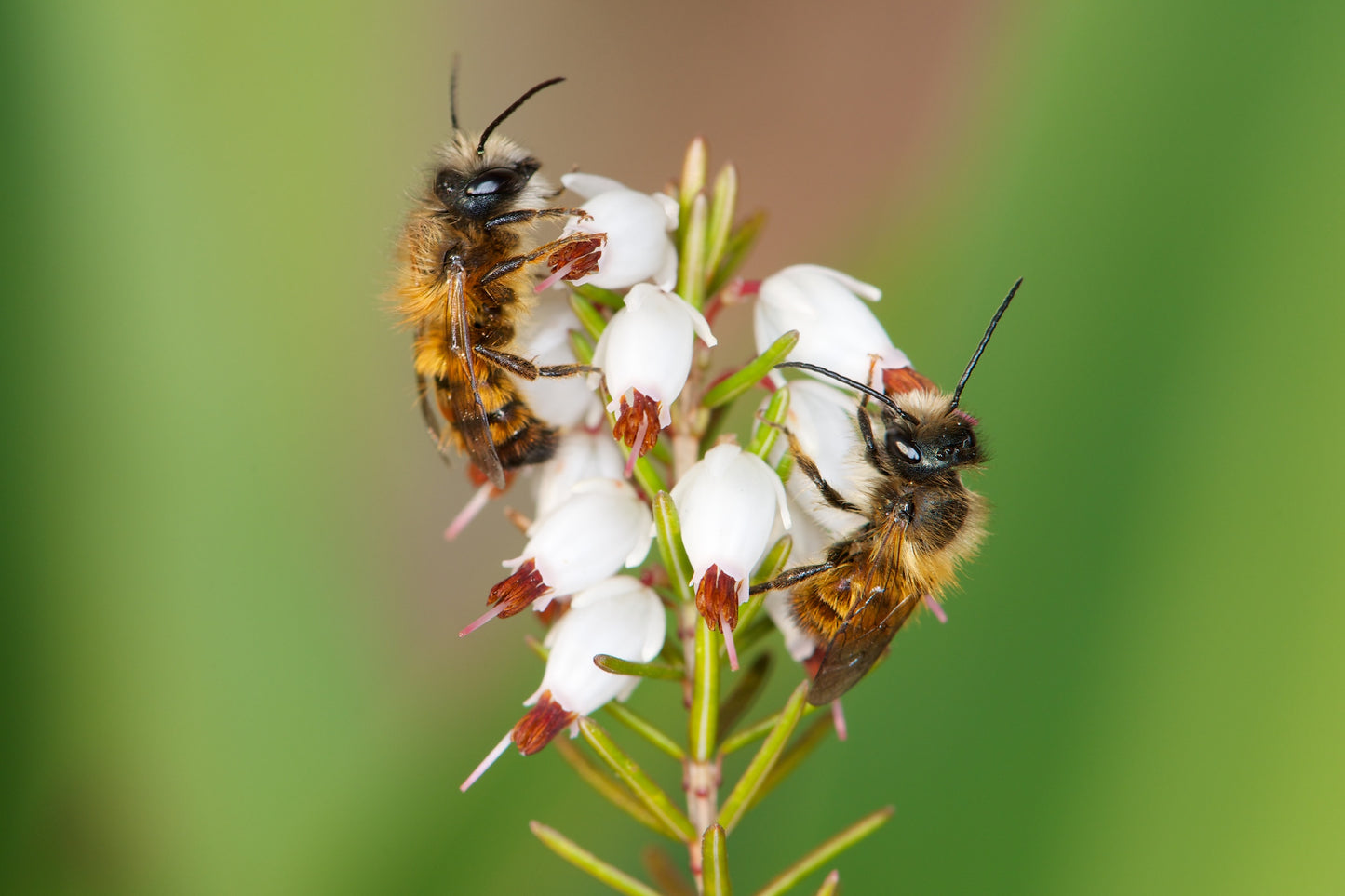
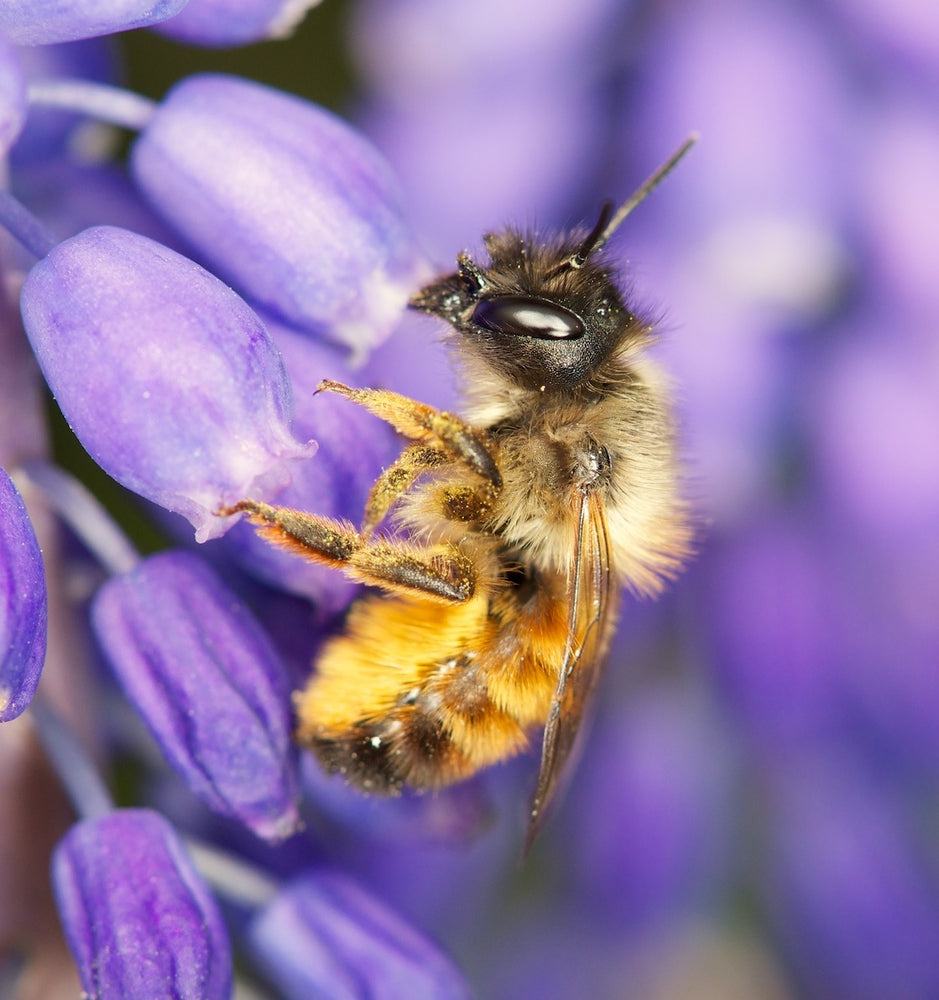
The red mason bee is 8–12 mm in size and its entire body is densely covered in hair. Its appearance is rather stocky, and in size and color, it resembles a honey bee. Female red mason bees have two horns on their heads. This is why their scientific name includes the epithet bicornis = two-horned. Females are black on the head and brown to fox-red on the rest of the body. The very end of their abdomen is black again. Males are brownish to fox-red and have striking white hairs on their clypeus. They are also considerably smaller than the females.


Flight duration
March to June. One generation per year.
Food Preferences
The Red Mason Bee is not particular about its choice of flowers and collects pollen from various herbs, bushes, and trees. It visits flowers from over 19 plant families, often preferring Rosaceae. These include the blossoms of apple, cherry, apricot, and other important cultivated plants. Other popular pollen plants are oaks, maples, buttercups, and wild mustard.
Flight duration
March to June. One generation per year.
Food Preferences
The Red Mason Bee is not particular about its choice of flowers and collects pollen from various herbs, bushes, and trees. It visits flowers from over 19 plant families, often preferring Rosaceae. These include the blossoms of apple, cherry, apricot, and other important cultivated plants. Other popular pollen plants are oaks, maples, buttercups, and wild mustard.
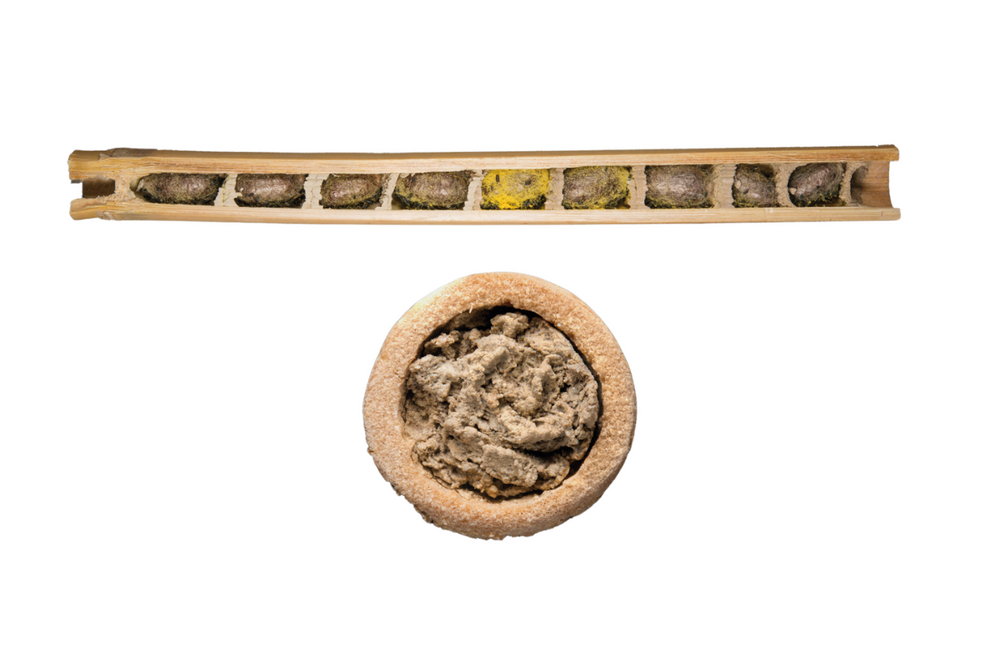
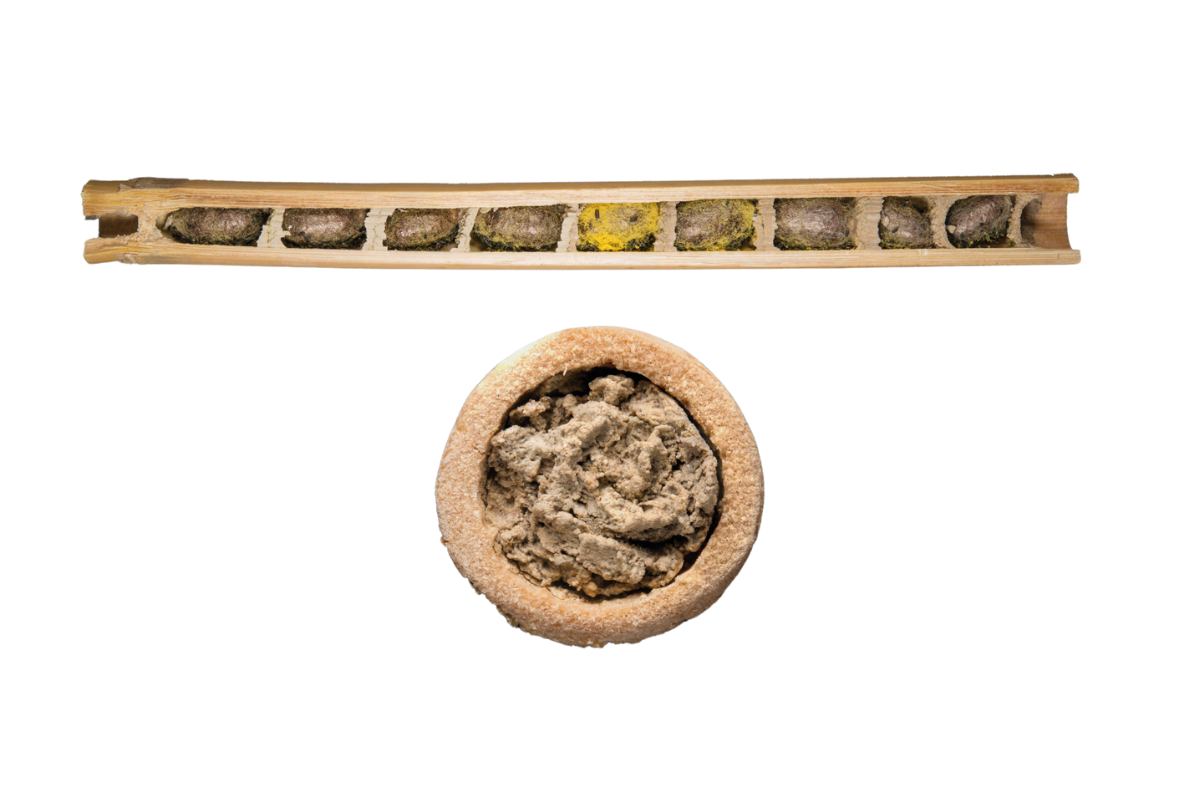
How do red mason bees nest?
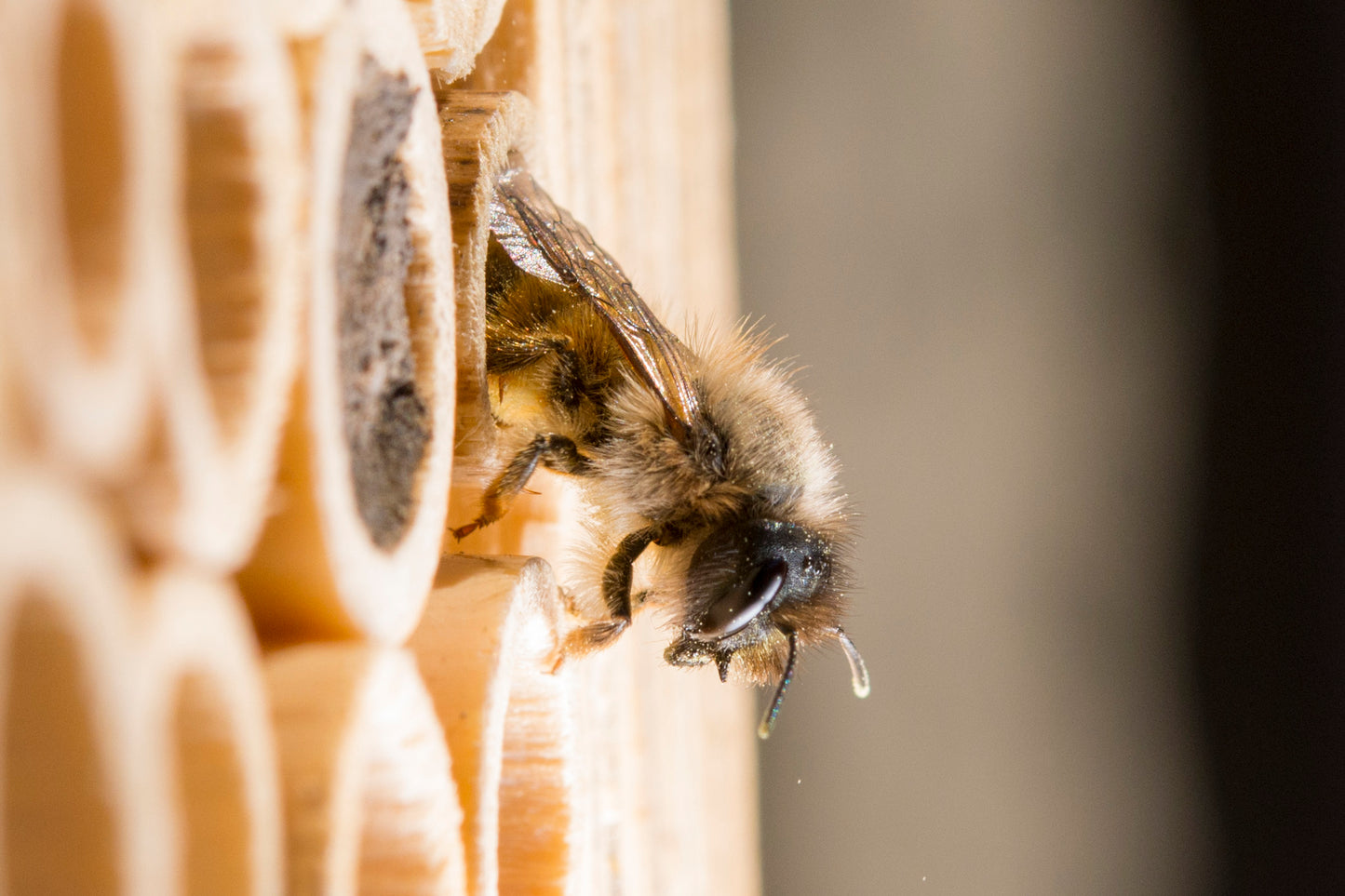
The red mason bee uses clay as building material for the cell partitions and nest plugs. In contrast to the nest plug of the horned mason bee, that of the red mason bee is less carefully crafted and crumbly rather than smooth.
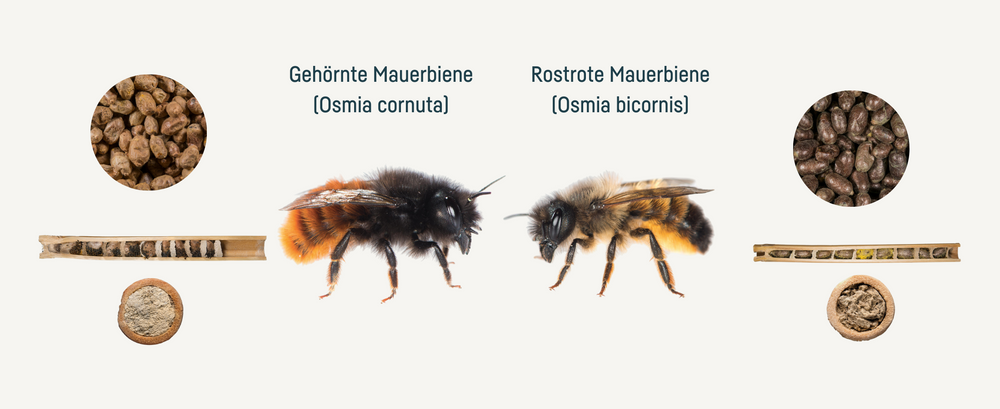
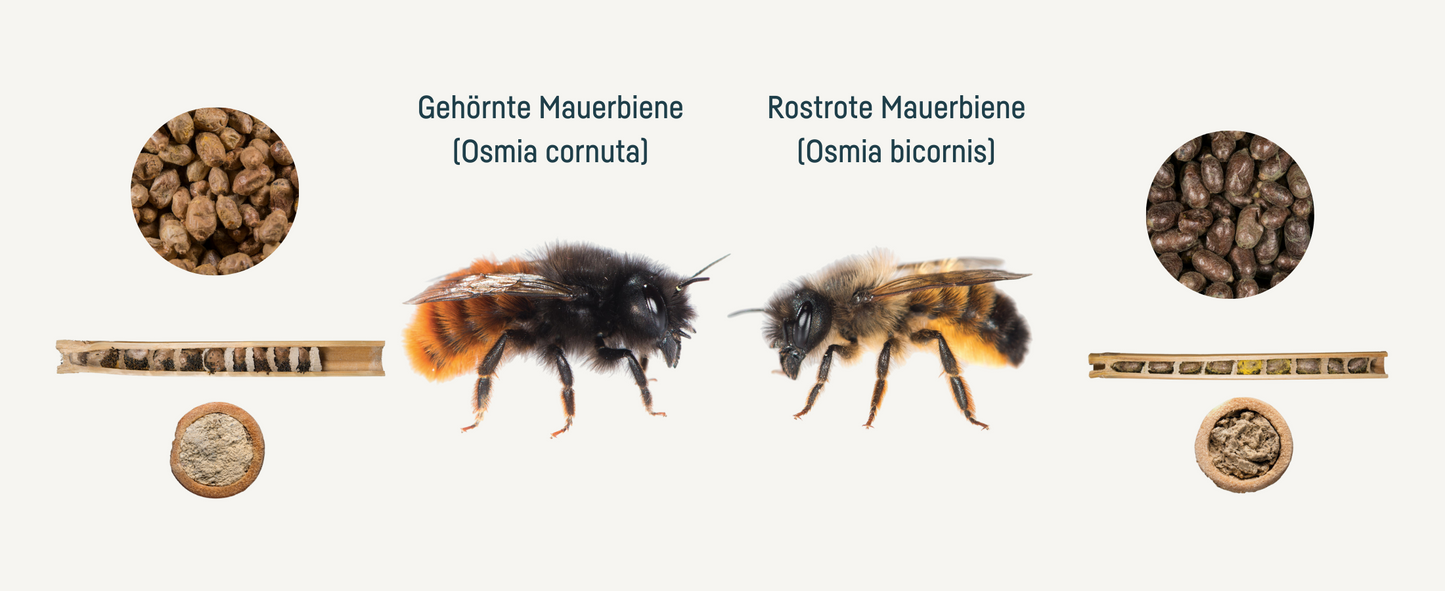
Difference between Red Mason Bees and Horned Mason Bees
The Horned Mason Bee (Osmia cornuta) is the somewhat more robust and fluffier species. It is active a few weeks before the Red Mason Bee in spring. In terms of pollen collection behavior, both species are very similar, with the Red Mason Bee having a slightly broader diet and the Horned Mason Bee showing an even stronger preference for fruit blossoms.
When it comes to nest building, the species can be easily distinguished by their nest closures: the nest closures of the Horned Mason Bee are characterized by a very fine and even texture, whereas the Red Mason Bee works a little more roughly and the closures have an irregular surface.
On this page we introduce you to the Horned Mason Bee.


