


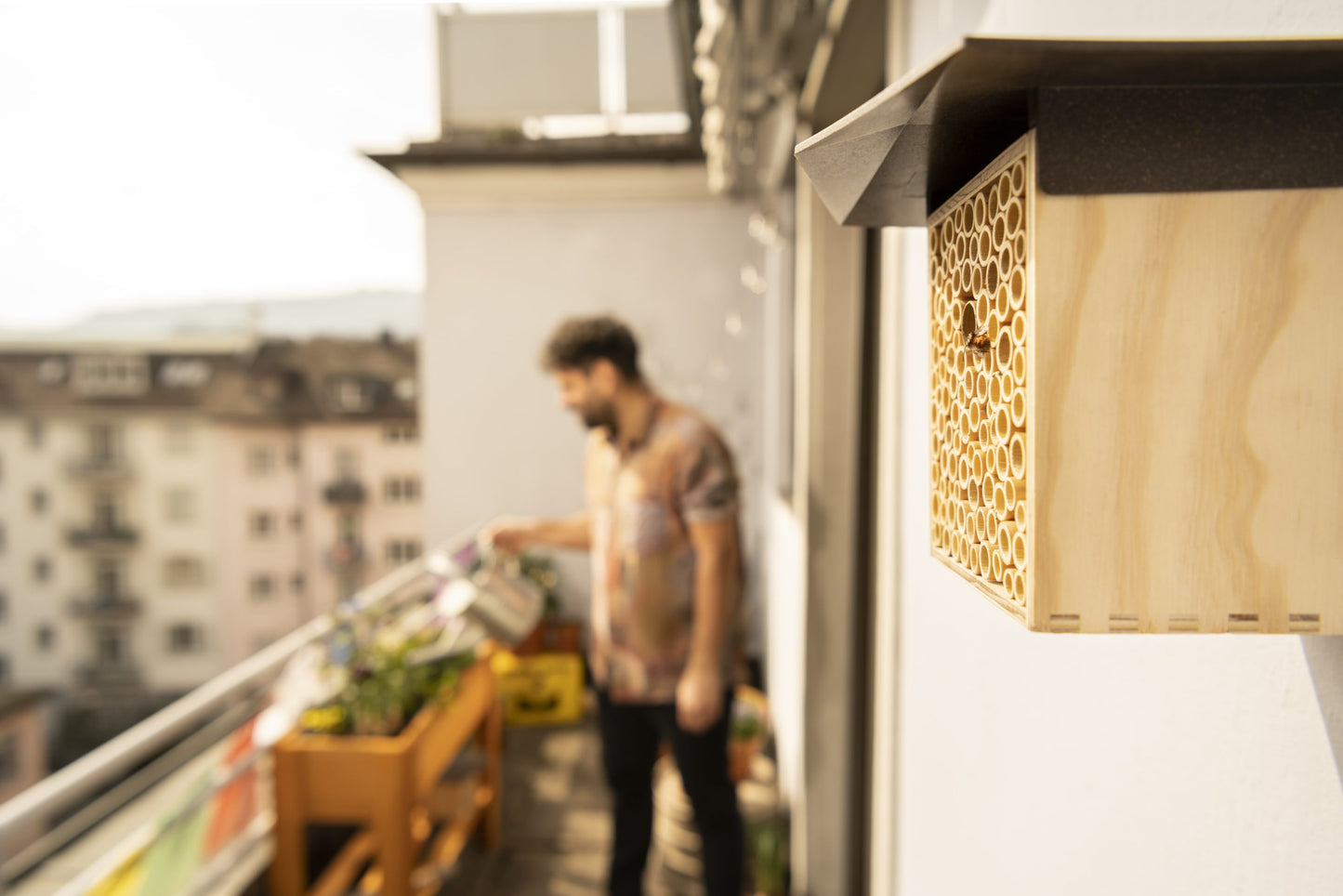
Anyone who wants to give wild bees a home with a BeeHome naturally wonders: Is my garden or balcony even suitable as a location for a wild bee house? You can find the answers here.
Wild bees, such as the red mason bee, primarily need three things to feel at home in the BeeHome.
1. Early blossoms in the vicinity

Wild bees have a great appetite for nectar and pollen. When the red mason bee emerges in March or April, it needs blossoms within a maximum radius of 200 to 300 meters around the BeeHome.
With these wildflowers, you offer red mason bees and other early-flying insects valuable sustenance: glory-of-the-snow, grape hyacinths, rock cress, lungwort, Christmas roses. You can also plant bulbs like glory-of-the-snow and grape hyacinths in the autumn.
Mason bees also love cherry trees or early-flowering shrubs like blackthorn or willows. We have summarized more planting tips for the right flowers for wild bees in our blog post "Gardening Tips: Part 1".
2. Dry, sunny location for nesting aids

3. Loose, loamy soil nearby
This condition is almost always met. They need loose, loamy soil in the vicinity of the BeeHome, with which they seal the brood chambers. If this is in short supply, you can simply set up a bowl with loose soil. Please remember to moisten it occasionally. Bees cannot work with soil that is too dry.


By the way: A sheltered windowsill can even be suitable as a location for a BeeHome. However, it should not be higher than the 4th floor. The same applies to balconies.
Can you offer wild bees all three points?
Then take a look at our Shop. With every BeeHome, you receive a free starter population of peaceful mason bees, so you can start your wild bee adventure right away. Please note, however, that the fluffy pollinators are active from February to June, depending on the weather.