


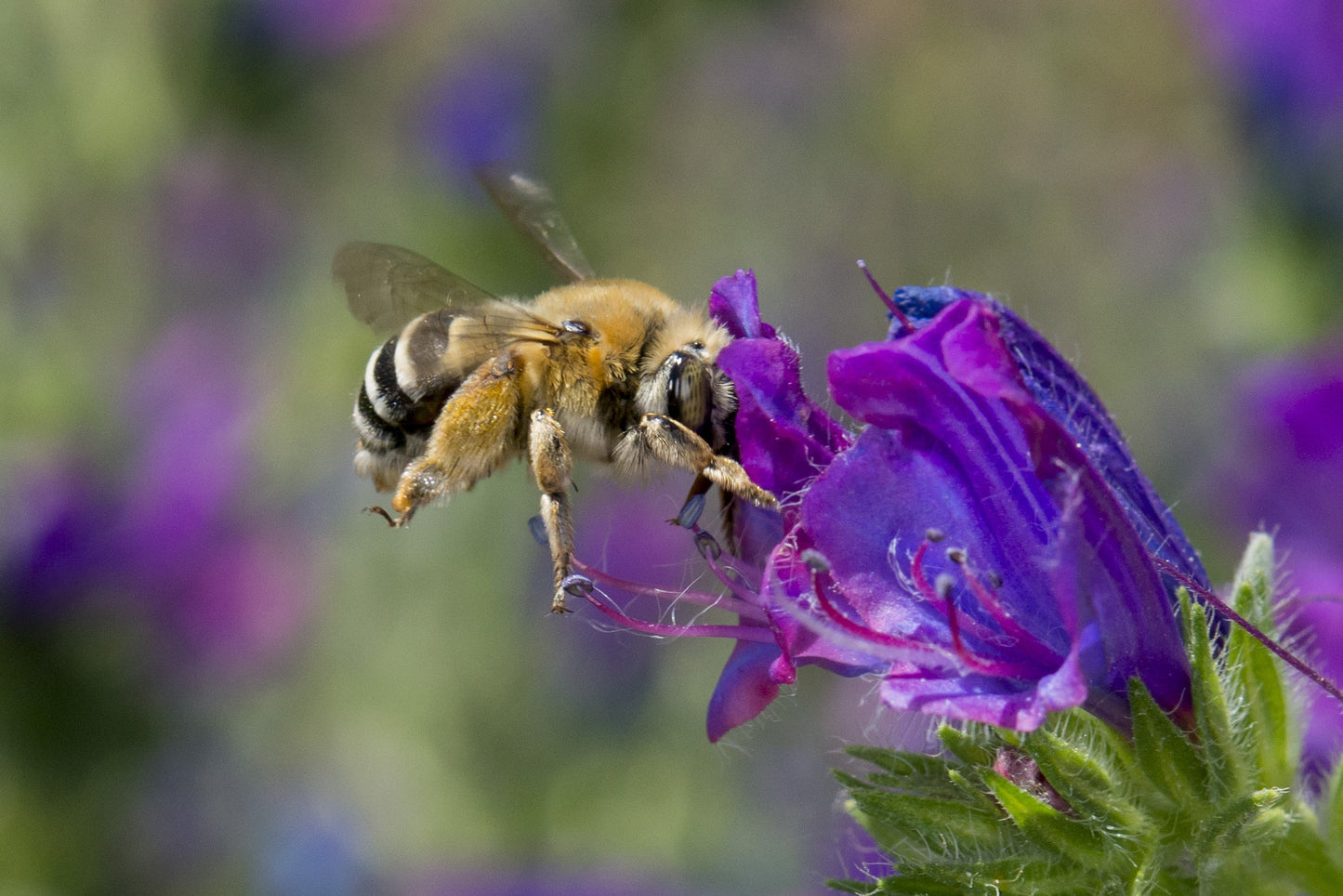
Wild bees play a central role in our ecosystem.
Wild bees play an important role in our nature, as they, as pollinators, play a crucial role in the reproduction of plants and the production of fruits and vegetables. Unfortunately, their numbers are declining in many parts of the world, and this phenomenon is known as "wild bee mortality."

Wild bee mortality has various causes
These include the destruction of habitats, the use of pesticides, and climate change. In this plea for biodiversity, you can find more information about climate change in the city.
If the number of wild bees continues to decline, this will have serious consequences for our food supply and biodiversity in general.
Impacts of wild bee mortality
If wild bees disappear, there will be less pollination, which can lead to a decline in crop yields and higher food prices. Furthermore, plant species that depend on wild bee pollination could become extinct, leading to a loss of diversity and ecosystem services.
Wild bee mortality also affects other animal species that rely on wild bees as a food source. For example, many birds depend on wild bees to feed their young, while other animals such as hedgehogs and bats use wild bees as an important source of protein.
Your contribution against wild bee mortality
The loss of biological diversity is the third largest global risk. But there's no reason to fall into shock over it, says our co-founder and biologist Tom Strobl.

"All of us, you and I, have it in our hands to do something against species extinction. Everyone can create habitat at home and work to ensure that more habitat is created than destroyed," Strobl encourages.
To stop wild bee mortality, we must commit to...

...protecting and restoring habitats for wild bees
...reducing or eliminating pesticides
...taking measures to combat climate change.
By advocating for the protection of wild bees , we can ensure that they continue to play an important role in our nature and help maintain a healthy environment and a stable food supply .