


What threatens people the most? According to the World Economic Forum's (WEF) Global Risk Report: climate policy failure, extreme weather, and species extinction. This assessment comes from 1000 experts surveyed. It's high time to counteract this.
Many may currently consider Covid-19 to be humanity's greatest threat. In the short term, this might even be true. But the long-term dangers come from a completely different corner. At least, that's the assessment of 1000 experts and leaders worldwide interviewed by the World Economic Forum (WEF) for its Global Risk Report 2022.
Long-term risks are global threats within the next 5 to ten years. Here, the surveyed experts almost exclusively name environmental issues:
- Failure in climate policy
- Extreme developments
- Loss of biodiversity
- Raw material crises
- Environmental destruction
One million of the eight million animal and plant species are threatened with extinction, warns the Intergovernmental Science-Policy Platform on Biodiversity and Ecosystem Services. The rate of species extinction is currently ten to one hundred times higher than the average over the past ten million years, and it is accelerating. For example, if fewer and fewer insect species ensure pollination, there will be difficulties with food production.
Species loss is a massively underestimated threat to our planet and people. But there's no reason to fall into a state of shock over it, says biologist Tom Strobl. On the contrary. “All of us, you and I, have

it in our hands to do something about species extinction. Everyone can create habitats at home and work to ensure that more
habitat is created than destroyed,” encourages Strobl. The 40-year-old is co-founder of the company Wildbiene + Partner, which actively propagates wild bees in Switzerland and Germany and creates biodiverse habitats in cities with insect paradises.
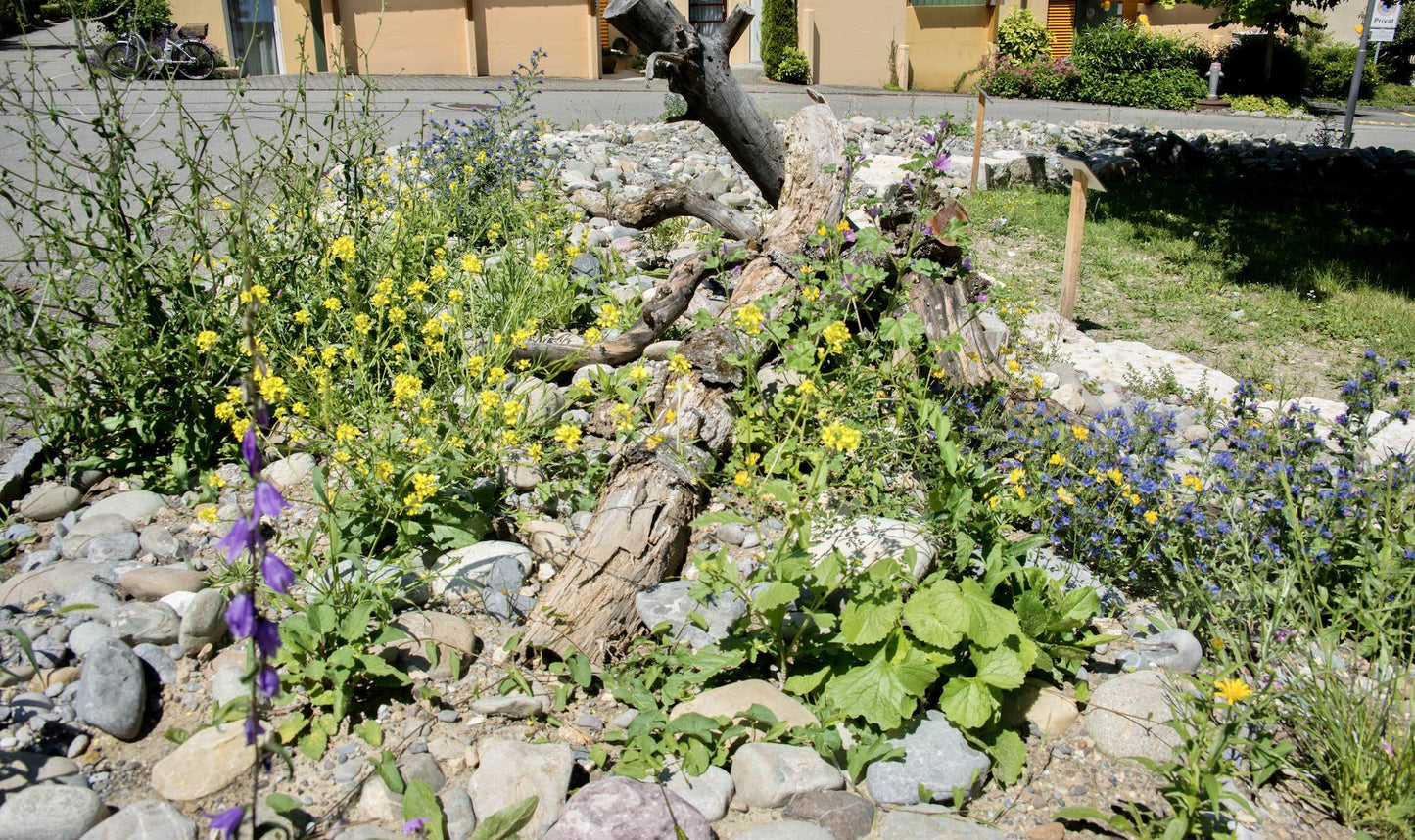
Because as great as the threat of global species extinction is - if everyone creates a small piece of habitat for themselves, we can jointly re-strengthen the web of biodiversity and hopefully prevent it from tearing. Among other things, everyone can promote important insects, especially wild bees, at home with simple means: just a few native plants on the city balcony, nesting aids, and wild corners in the garden create valuable habitats for many species.
The network for more biodiversity is growing denser week by week. Together with over 172,000 wild bee fans in Switzerland and Germany, Strobl and his team have already created habitats for many millions of wild bees.
"Even a small garden with wildflowers can have a big impact on insects. The main thing is to do something now. Many small steps lead to the goal,” Tom Strobl is convinced. Instead of idly lamenting species extinction, active animal and plant lovers can enjoy colorful flowers at home, on which dozens of different insect species find food. A buzzing world for all!