


In five blog posts, we give you valuable tips on how you can easily promote wild bees and many other insects in your area. Our first post is about wildflowers: Which ones grow best where? What should you consider when planting them? And which flying guests visit their blossoms?
Would you like to support wild bees in their start to spring? Then, when purchasing plants for your balcony or garden, consider the needs of these industrious insects: many wild bee species depend on a wide range of native wildflowers for their survival.
Wild bees find pollen and nectar on the blossoms, which they need to feed their offspring. Since many native wild bee species specialize in the pollen of certain flowering plants, the choice of plants is very important. However, there are also some non-native or cultivated plants with which you can support wild bees.
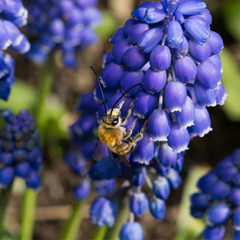
Early bloomers – wildflowers for our mason beesWith the first rays of sun in March, the first wild bees already hatch. These early risers include the Red Mason Bee, the residents you can order as a starting population for our BeeHome. When wild bees awaken from their hibernation, they immediately search for pollen and nectar. With the following wildflowers, you offer the Red Mason Bees and other early fliers, such as the queen of the common bumblebee or the spring mining bee, valuable sustenance:
- Siberian Squill (Scilla siberica)
- Grape Hyacinths (Muscari armeniacum)
- Aubrieta (Aubrieta deltoidea)
- Lungwort (Pulmonaria obscura)
- Christmas Roses (Helleborus niger)
- Stinking Hellebore (Helleborus foetidus)
- Spotted Dead-Nettle (Lamium maculatum)
- Hollowroot (Corydalis cava)
Tip: You can also plant bulbous plants like Siberian squill and grape hyacinths as bulbs in autumn.
Perennial Wildflowers – multi-year blossoms
The largest selection is among the so-called perennial wildflowers. These are biennial to perennial native flowering plants, many dozens of species of which are particularly important for our wild bees.
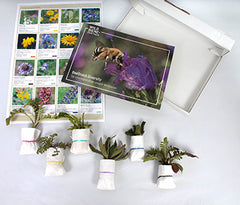
We have selected 16 of the most important perennial wildflowers for you and thus created our BeeSnack Diversity. The selection criteria, in addition to their importance for wild bees, are the beauty of the flowers, their suitability as balcony plants, and their ease of care. Our BeeSnack contains six young plants each.
The BeeSnack can be purchased with a few clicks each spring on our online shop and conveniently ordered to your home.
Annuals from seed packets – caution when sowing
Some native wildflowers are so-called annual plants. They germinate, grow, bloom, and then put all their energy into the seeds. After that, the mother plant dies, and the seeds survive in the soil until they usually germinate again the following year.
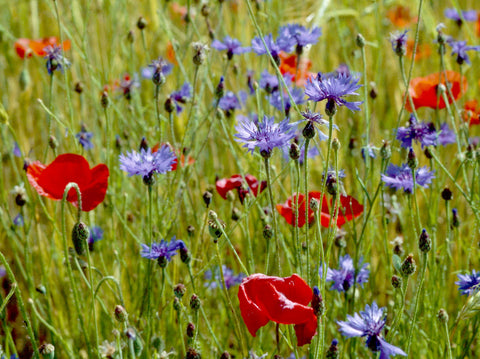
Since they bloom shortly after sowing, they are particularly suitable for seed mixtures. Make sure that these particularly beautiful and valuable pollen and nectar providers are included:
- Cornflower (Centaurea cyanus)
- Common Poppy (Papaver rhoeas)
- Wild Carrot (Daucus carota)
- Chamomile (Matricaria chamomilla)
- Wild Mustard (Sinapis arvensis)
Tip 1: Less is more! Don't sow too many seeds per area. Otherwise, the seedlings will smother each other and become weak and weedy.
Tip 2: Never sow seeds in the lawn or meadow. The seedlings cannot compete with the grass and will wither. Always scatter the seeds on an open patch of ground or in a flower bed.
Around the pond
Most wild bees like it dry and sunny. However, some species exclusively visit wildflowers that occur in wetlands. If you create a pond in your garden or have a very moist bed, the following plants are an absolute must for you:
- Purple Loosestrife (Lythrums salicaria)
- Yellow Loosestrife (Lysimachia vulgaris, Lysimachia punctata)
- Sneezewort (Achillea ptarmica)
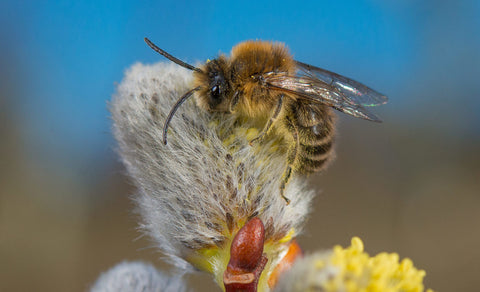
- Eared Willow (Salix aurita)
- Meadowsweet (Filippendula ulmaria)
- Devil's-bit Scabious (Succisa pratensis)
On the sunny gravel area
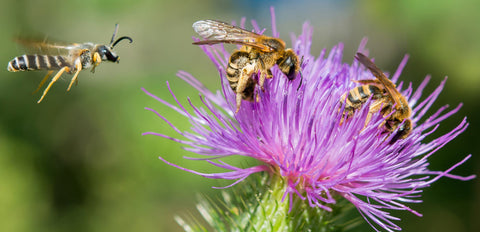
A grey gravel area can be transformed into a colorful wild bee paradise in no time. Many wildflowers that are particularly important for wild bees specialize in such barren, dry, and sunny areas – so-called ruderal areas. Here is a list of these particularly valuable wildflowers:
- Viper's Bugloss (Echium vulgare)
- Dyer's Chamomile (Anthemis tinctoria)
- Bird's-foot Trefoil (Lotus corniculatus)
- Round-leaved Bellflower (Campanula rotundifolia)
- Panicled Knapweed (Centaurea paniculata)
- Chicory (Cichorium intybus)
- Wild Carrot (Daucus carota)
- Horseshoe Vetch (Hippocrepis comosa)
- Spiny Restharrow (Ononis spinosa)
- Spring Cinquefoil (Potentilla neumanniana)
- Yellow Reseda (Reseda lutea)
- Pigeon Scabious (Scabiosa columbaria)
- Upright Germander (Stachys recta)
- Wall Germander (Teucrium chamaedrys)
- Creeping Thistle (Cirsium vulgare)

In the shade
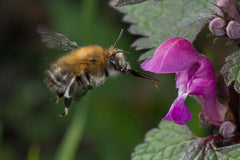
Those with a shadier garden can also do a lot for wild bees. Forest plants that specialize in shady locations are particularly suitable here.
- Columbine (Aquilegia vulgaris)
- Nettle-leaved Bellflower (Campanula trachelium)
- Stinking Hellebore (Helleborus foetidus)
- Forest Scabious (Knautia dipsacifolia)
- Perennial Honesty (Lunaria rediviva)
- Dark Lungwort (Pulmonaria obscura)
- Large Yellow Foxglove (Digitalis grandiflora)
- Spotted Dead-Nettle (Lamium maculatum)

Promoting wild bees in the vegetable patch
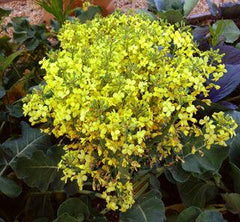
Many vegetable varieties also offer our wild bees a rich meal when they come into bloom. Onions, leeks, and cauliflower; radishes, lettuce, and fennel; broccoli, Brussels sprouts, and arugula are all a feast for the eyes and for wild bees.
- Onions
- Leeks
- Chives
- Cauliflower
- Broccoli
- Brussels sprouts
- Kale
- Radishes
- Lettuce
- Fennel
- Arugula

What suits my garden? Floretia helps with the decision
The Floretia association offers useful guidance in the wild plant jungle: On this website, you can easily create a list of suitable wild plants for your garden. In addition, you will also be given the nurseries where you can buy the corresponding wild perennials: Discover this ingenious new website from Floretia, which supports you from A to Z in the selection and procurement of native wild plants! The Floretia label guarantees that the native wild plants come from local populations. This ensures site-appropriate planting.