


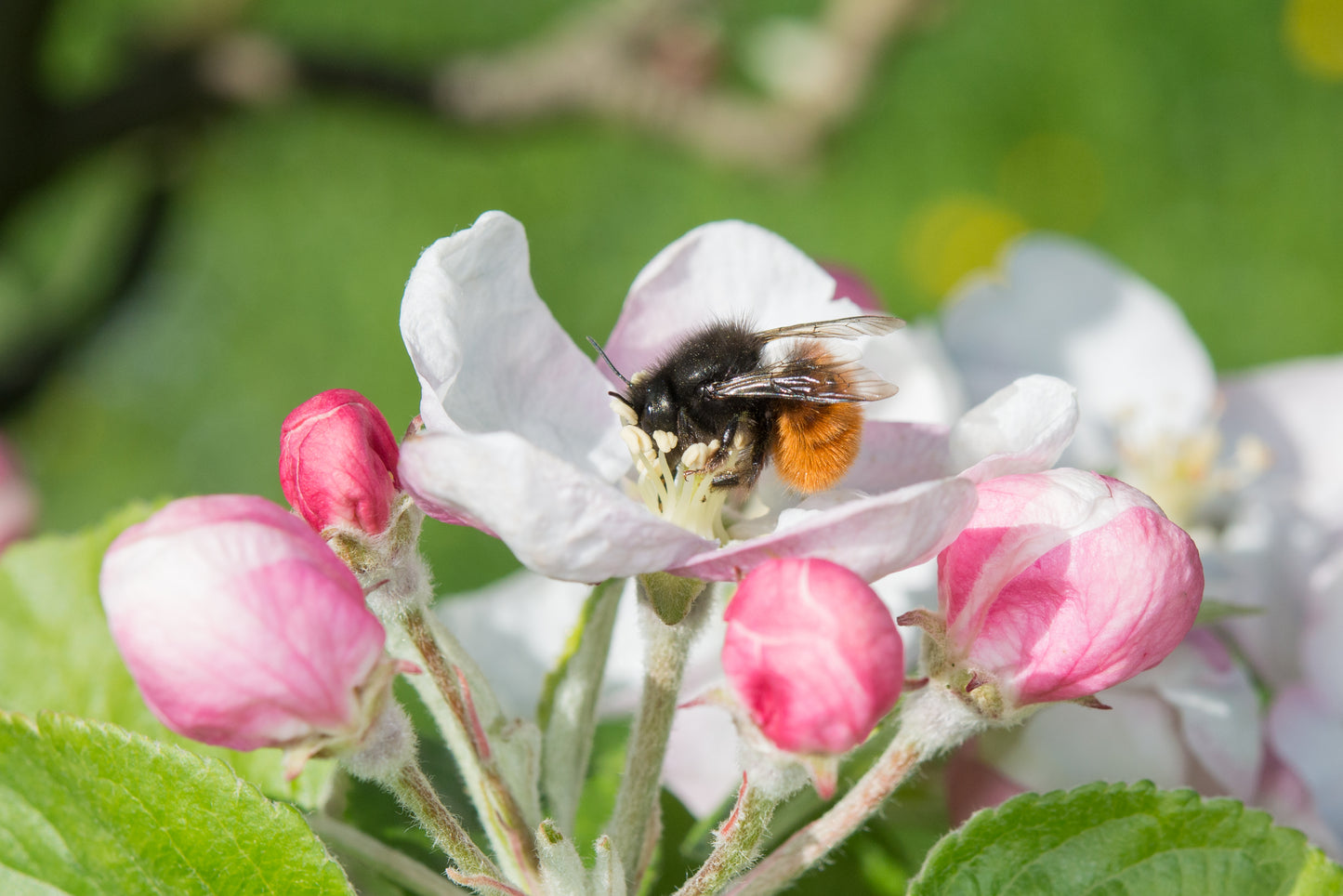
The importance of wild bees for biodiversity and the ecosystem is often underestimated. Although honey bees are generally considered the more well-known pollinators, wild bees are actually even more important. In this blog post, we will explore why wild bees are so important and how we can protect them.
Why Wild Bees Are So Important

Wild bees play a crucial role in the pollination of cultivated and wild plants, which make up a large part of our food chain. In fact, about 150 different cultivated plants and around 80% of wild plants in Europe depend on insect pollination. Without pollination by wild bees, many plants would simply not flower and produce fruits or seeds.
Wild bees are also important indicators of the health of ecosystems. Since they are more sensitive to changes in their environment than honey bees, they can serve as warning signs for environmental problems such as pesticide use, habitat loss, and climate change.
Differences between Honey Bees and Wild Bees
Although honey bees are often considered the more well-known pollinators, there are some important differences between them and wild bees. For example, wild bees are more efficient pollinators than honey bees. With the same number of flower visits, they often achieve twice the fruit set. In addition, wild bees are usually better adapted to environmental conditions than honey bees. They also fly out in low sunlight and colder temperatures, while honey bees remain in the hive.
The Threat to Wild Bees
Wild bee populations are severely threatened due to pollution, the loss of natural habitats and intensive agriculture. Many species of wild bees rely on specific habitats and food sources that have been destroyed by human activities. This has led to many species of wild bees declining sharply or even becoming endangered.

How to Help Wild Bees
There are many ways in which individuals can contribute to protecting and supporting wild bees. One way is to create niches and spaces for wildflowers and plants in gardens and public areas. This can be achieved by creating flower strips, avoiding pesticides, or providing nesting sites for wild bees. Another option is to install BeeHomes to observe and protect wild bees.
Conclusion
Wild bees are crucial for biodiversity and the ecosystem. They play an important role in pollinating cultivated and wild plants and are indicators of ecosystem health. However, wild bees are severely threatened and suffer from pollution, habitat loss, and intensive agriculture.
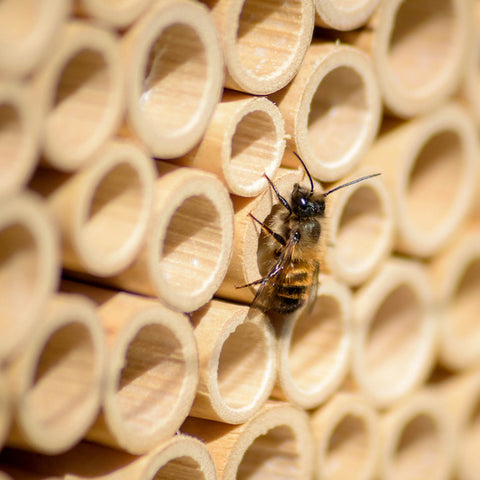
By contributing to supporting wild bees in gardens and public areas, each individual can help ensure their survival. Whether by creating flower strips, avoiding pesticides, or providing nesting sites - there are many ways to help wild bees. BeeHomes also offer a great way to observe and protect wild bees.
By becoming aware of how important wild bees are for our ecosystem, we can help ensure their protection and survival.