

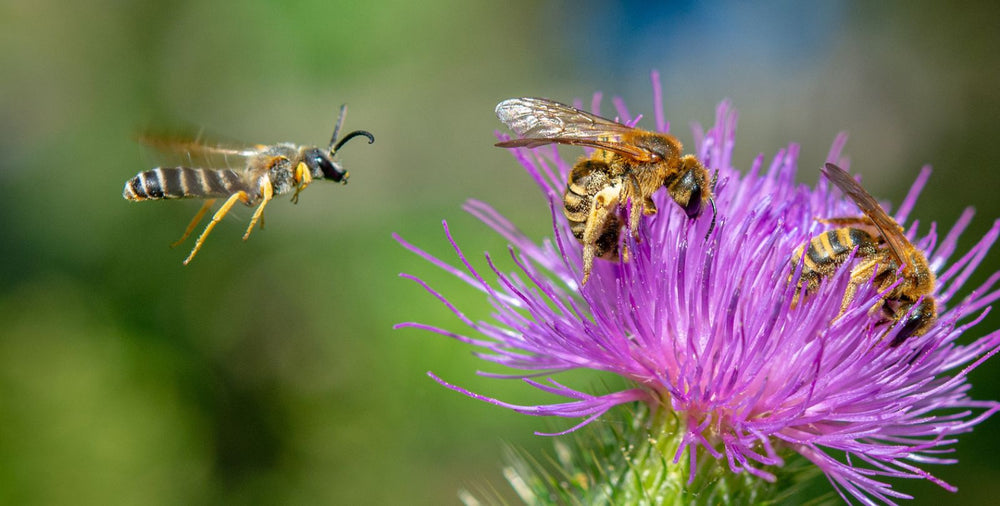
Wild bees
Why are wild bees important for our biodiversity?
Insect mortality is on everyone's lips, and the loss of biodiversity, alongside climate change, is being declared one of the greatest risks to humanity. What do wild bees have to do with this, and why are they so important for our ecosystems?
Wild bees for our ecosystems
As diverse and highly efficient pollinators, wild bees play a key role in many of our ecosystems. They ensure that countless native wild plants are pollinated, which then produce fruits and seeds to reproduce. Without wild bees, many wild plants would soon die out, leading to an enormous loss and a severe impoverishment of biodiversity.
What would a world without wild bees look like?
That's hard to say. In any case, there would be a completely impoverished plant diversity due to the lack of pollination. This, in turn, would have catastrophic effects on the diversity of animals that ensure the ecological balance of nature. A mass extinction could follow with unpredictable consequences for humans and nature.
A direct consequence for us humans would be a massive drop in agricultural output. 85 percent of human-planted crops are pollinated by bees, with honeybees making up only a part of that. The disappearance of wild bees would lead to a massive thinning of our diet.
How endangered are wild bees?
In fact, there are few scientific studies on this. However, the existing studies paint a very bleak picture. Why? It's not just that many once common species have become rare. Almost all species have declined sharply in number. There is evidence that the total insect biomass in Switzerland has decreased by over 70 percent since the 1970s. Of the good 700 Central European wild bee species, almost half are on the Red List of threatened species.
On this page you will find reasons for the vanishing habitat of wild bees.
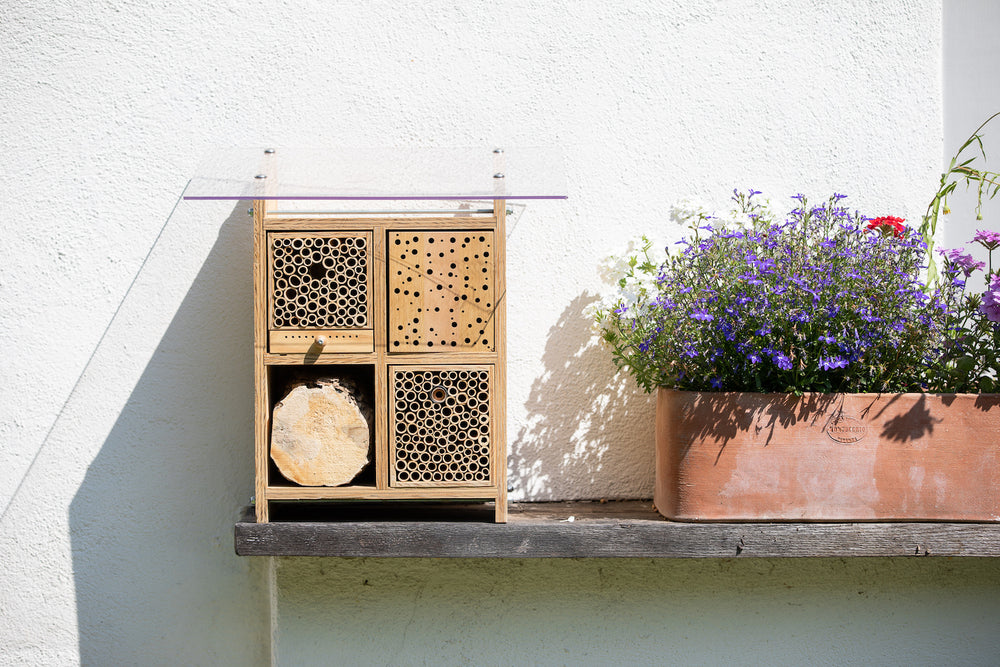
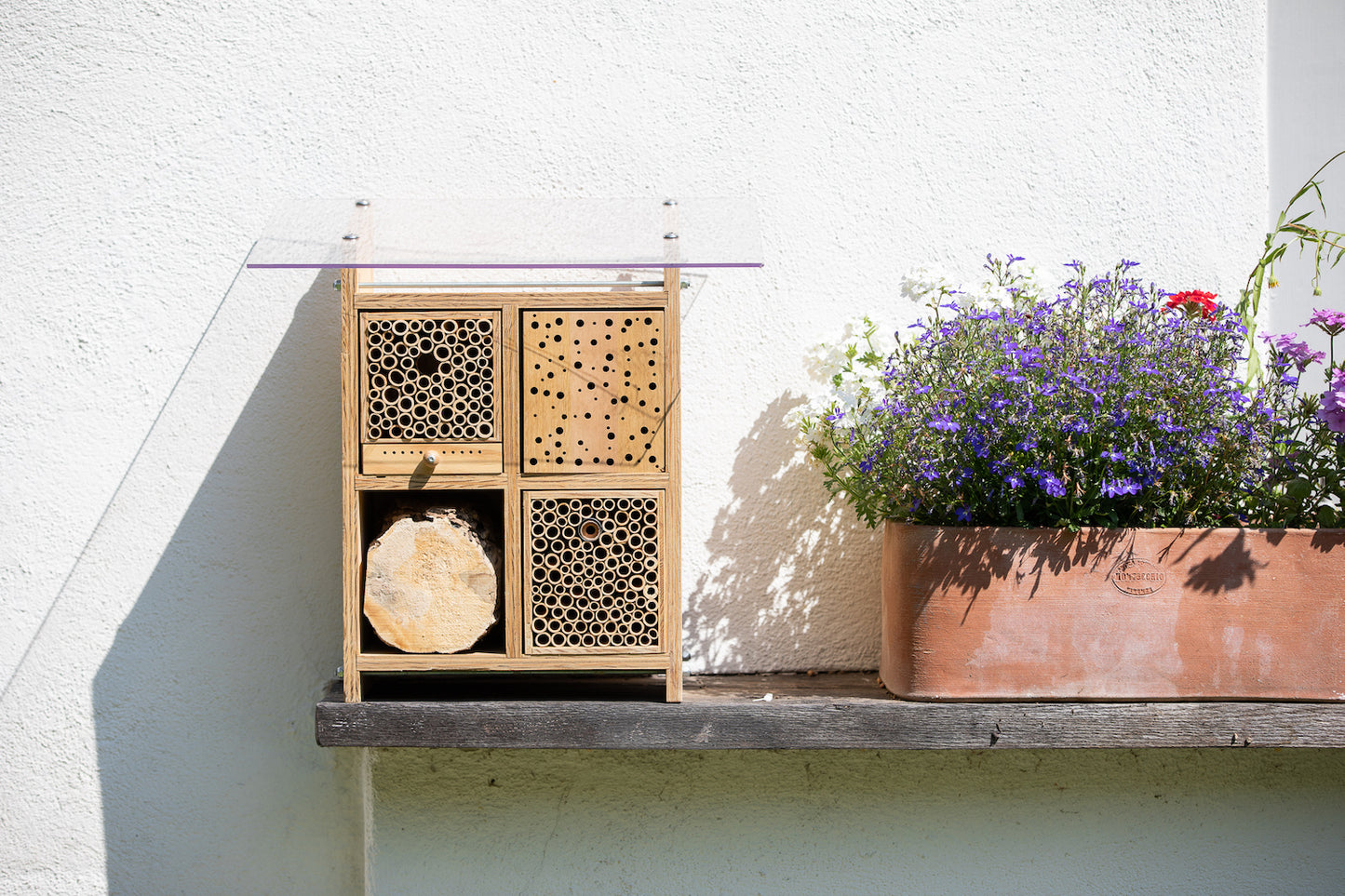
How effective is it to set up an insect hotel in the garden or on the balcony?
Many extremely fascinating and beautiful wild bee species can be bred relatively easily in your own garden or on your balcony in a BeeHome. The great thing about it: wild bees can be observed wonderfully. Since wild bees do not sting and are not interested in food, humans and wild bees can coexist very well in close proximity. The BeeHome offers an excellent substitute for natural nesting structures, such as dead trees, for some species.