First, you will find educational materials that can be used in educational institutions. To get started with the BeeHome, please visit this page.
Here you will find a list of educational institutions that have received one or more BeeHome Observers as part of "Bees for Education" (as of 24.04.2024).


For the Little Ones
Playful Introduction (Cycle 1)
To introduce young nature explorers, for example in kindergarten, to the topic of wild bees, we have created the little mason bee "Corni" (derived from Osmia Cornuta).
Here you will find two articles in which Corni describes her world in a child-friendly way:


Research Tour & Puzzle Fun
A research tour in nature or at the BeeHome is ideal for getting to know these important insects better. What did the bee look like, what color was the flower it was sitting on? A template for observations can be downloaded via this link.
And if it's raining and no insects are flying? You can download some fun puzzles via this link to test your new knowledge about wild bees.
Workbook (Cycle 1) for Children
Our workbook, with simple information & small puzzles, is suitable as an introduction for children aged approximately 5-10 years.
Teaching Materials (2nd Cycle) for Middle School
For middle school, we recommend the extensive teaching materials from wildbee.ch with the guiding question "Does my environment provide habitats for me and wild bees?". It includes lesson suggestions, didactic information, factual information, and much more.
Yes. There are around 9 bee species in the world that belong to the genus of honey bees (Apis). All of them store honey as a food reserve, and most are only native to Asia.
However: Typically, when we refer to honey bees, we mean the domesticated Western Honey Bee (Apis mellifera), which was deliberately kept by humans for honey production many thousands of years ago and thus, in this context, can no longer be called a wild animal or wild bee. Honey bees exhibit one of the most complex social behaviors in the bee world, forming colonies with up to 40,000 bees and typically producing the beloved honey as food for their brood.
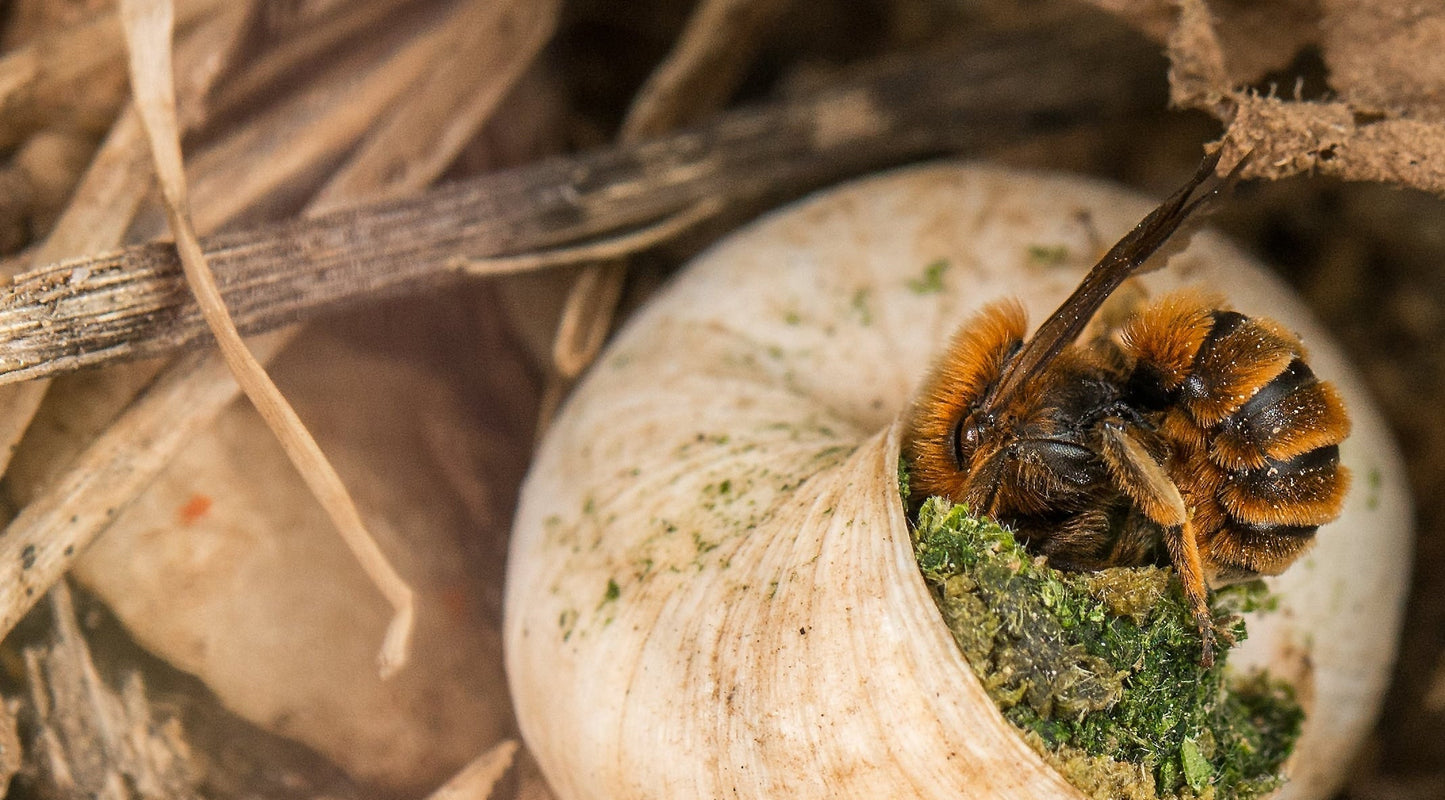
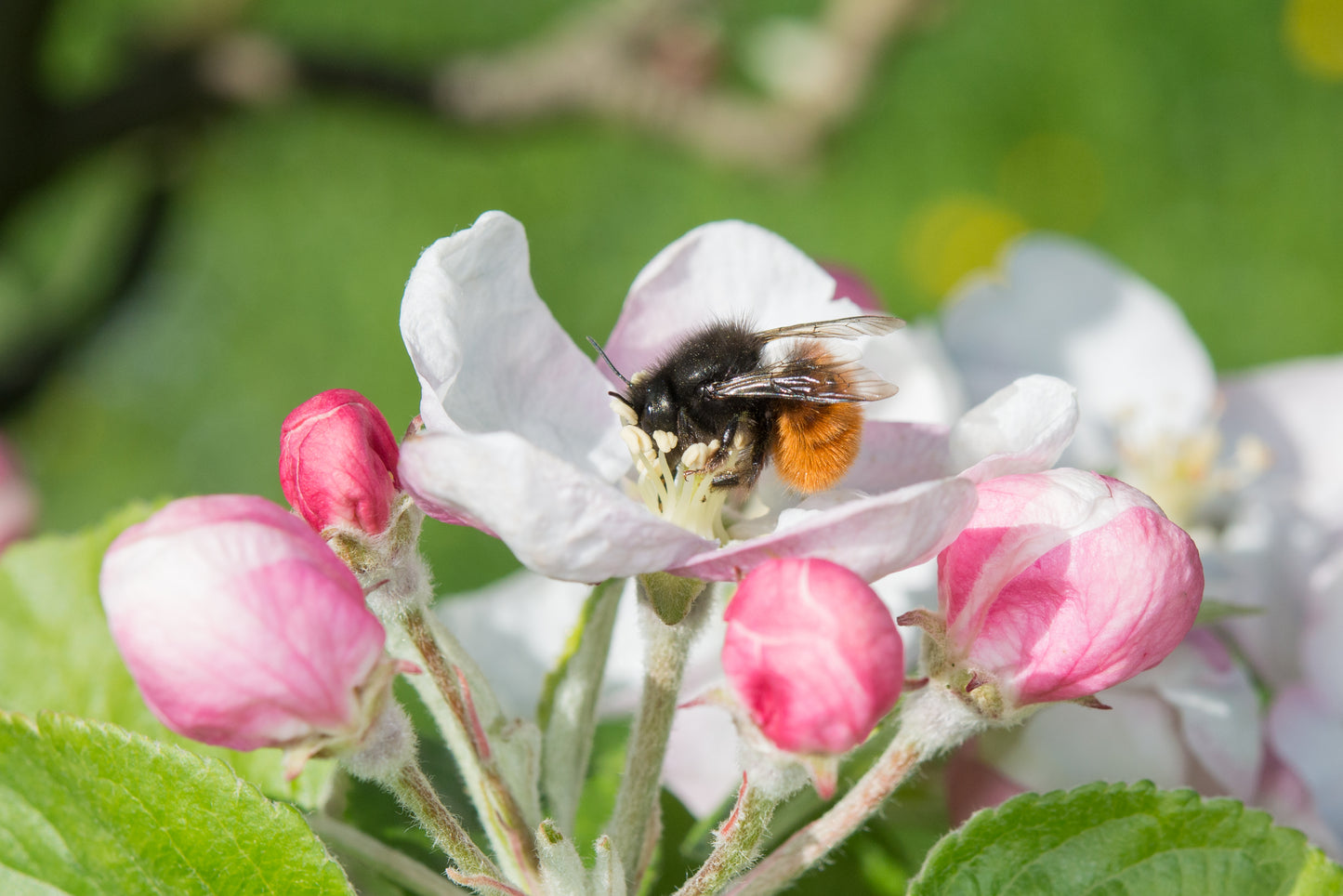
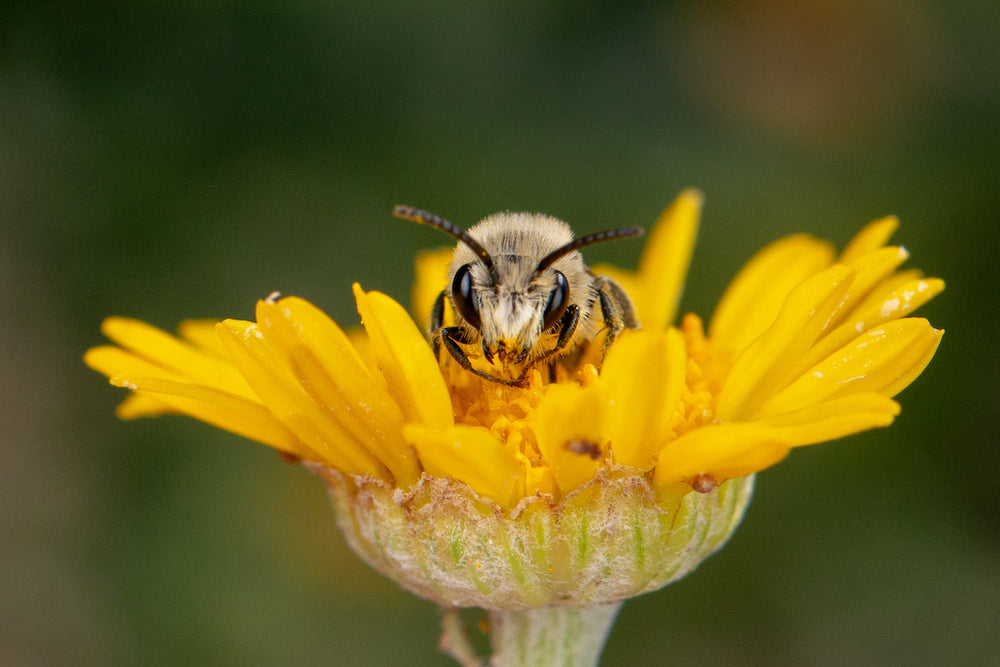
Wild bees, on the other hand, refers to all bee species that occur "wild" in nature and are not kept by humans. There are over 30,000 different wild bee species in the world, which have adapted to various habitats. The majority of wild bees build their nests in the ground, while others transform rotten pieces of wood, plant stems, or even empty snail shells into dwellings for their larvae. There are also wild bees that form colonies similar to honey bees, such as the various bumblebee species. However, most wild bees live solitarily, with each female able to lay eggs. She takes care of raising her brood alone, such as the Red Mason Bee (Osmia bicornis). From the complex colony-forming species to the solitary species, there are also many transitional forms. Today, there are only a few fragmented populations of wild honey bees left in the forests of Europe, as their habitat, among other things, has steadily decreased over the last hundred years due to the severely decimated old tree populations.
No, during mason bees' flight time in spring, there is an enormous supply of pollen and nectar, so mason bees do not get in the way of honey bees. If anything, honey bees pose more of a threat to mason bees, as a honey bee colony can number up to 40,000 bees, and a beekeeper usually has around 5−10 colonies, which are often placed at the same location.
Although the females of our mason bees have a small sting, they hardly ever use it and it is so soft that it practically cannot penetrate our skin. Above all, mason bees show no aggressive behavior whatsoever: one would literally have to crush the animals with one's hand to risk a sting. However, a sting would hardly be painful and not comparable to stings from honey bees or wasps.
The flight window for mason bees is between March and June, depending on weather conditions.
Males live for about 2−3 weeks after hatching and females for about 4−7 weeks.
Development of the European orchard bee
How mason bees live


The mason bees are hatching
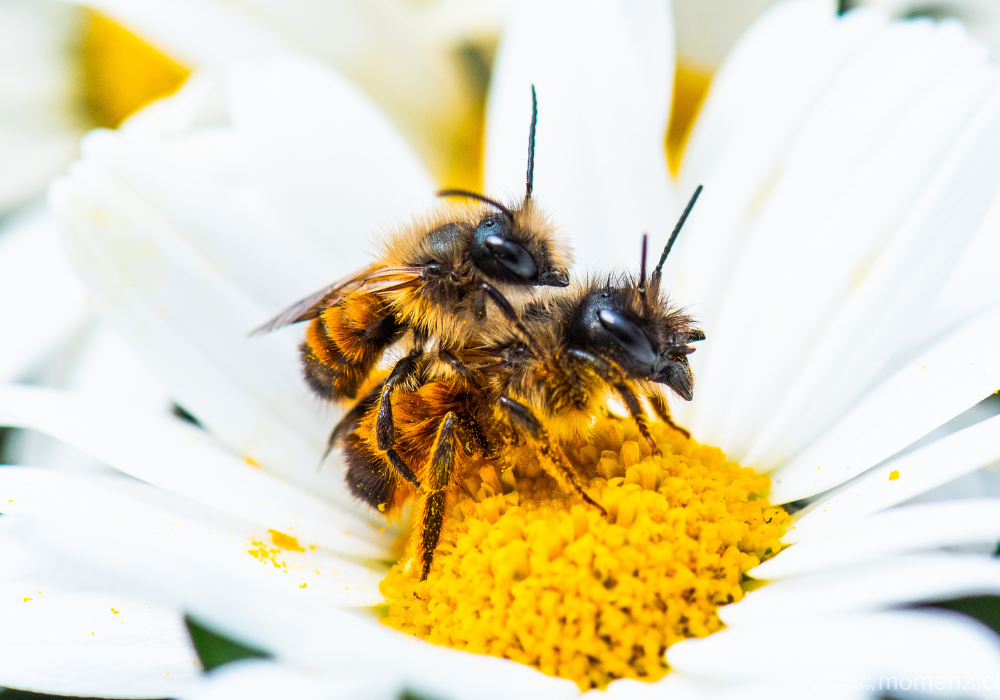
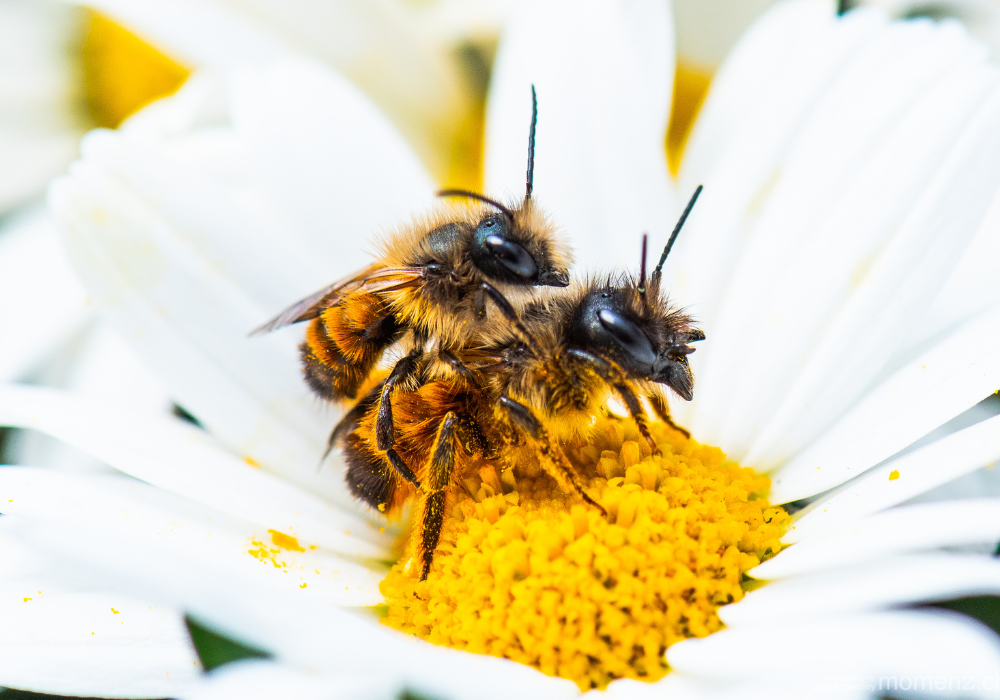
Depending on the weather conditions, mason bees emerge between March and June. Now begins the mating season of these completely harmless wild bees.


The mason bees pollinate
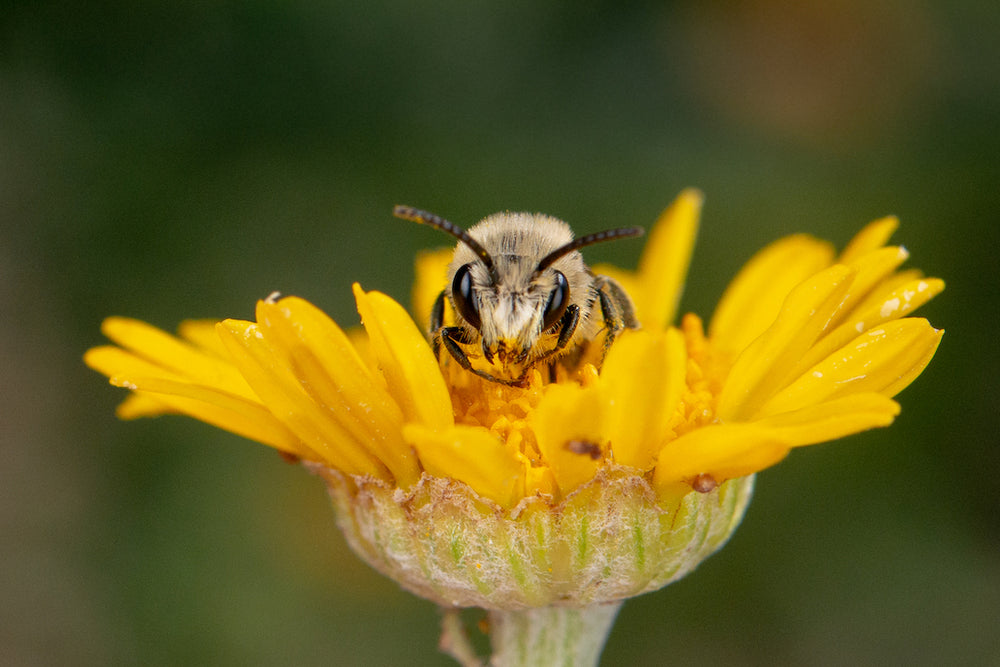
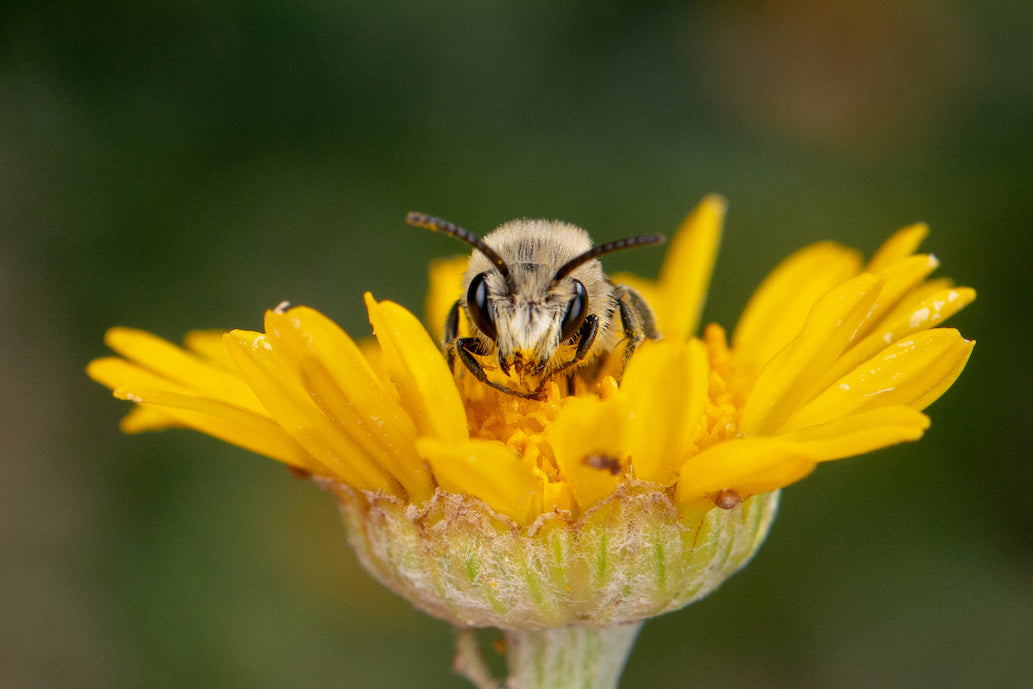
After mating, the females build their nests. They collect pollen and nectar and pollinate up to 40,000 flowers in their vicinity.


The mason bees are nesting
The females seal the nests with a mud wall. The offspring develop into adult mason bees by autumn.