

Our colorful wild bee seed mix with organic quality seeds is wonderful for your garden, balcony, parks, or green spaces along buildings and paths.
In our video, Sarina shows you how to sow the wildflower seed mix to create a flower-rich environment for spring. Enhance your green oasis with varying aspects and offer wild bees and other insects a delicious nectar and pollen buffet from spring to autumn.
These flowers can bloom with you
Summer Pheasant's-eye (Adonis aestivalis), Chives (Allium schoenoprasum), Dyer's Chamomile (Anthemis tinctoria), Black Horehound (Ballota nigra), Willow-leaved Oxeye (Buphthalmum salicifolium), Spreading Bellflower (Campanula patula), Creeping Bellflower (Campanula rapunculoides), Rampion Bellflower (Campanula rapunculus), Nodding Thistle (Carduus nutans), Cornflower (Centaurea cyanus), Scabious Knapweed (Centaurea scabiosa), Chicory (Cichorium intybus), Wild Carrot (Daucus carota), Viper's-bugloss (Echium vulgare), Field Eryngo (Eryngium campestre), Horseshoe Vetch (Hippocrepis comosa), Motherwort (Leonurus cardiaca), Common Bird's-foot Trefoil (Lotus corniculatus), Sainfoin (Onobrychis viciifolia), Spiny Restharrow (Ononis spinosa), Common Poppy (Papaver rhoeas), Dyer's Rocket (Reseda luteola), Small Scabious (Scabiosa columbaria), White Stonecrop (Sedum album), Upright Hedge-nettle (Stachys recta), Tansy (Tanacetum vulgare), Wall Germander (Teucrium chamaedrys), Dark Mullein (Verbascum nigrum), Forking Larkspur (Consolida regalis Gray), Meadow Sage (Salvia pratensis)
In this table you will find specifications for each of the wildflowers included.


More About Our Seeds
Our organic quality seeds have been carefully curated and include 30 varieties of native wildflowers, comprising annual, biennial, and perennial species. This diversity ensures a continuous supply of pollen and nectar from spring to autumn, specifically tailored to the needs of various wild bee species, both specialists and generalists. Since the seed mix contains many perennial species, it may take some time for a diverse floral display to establish itself.
The seeds were developed in close collaboration with our wild bee whisperer Yannick and the organic nursery Syringa. They are ideal for anyone who wants to promote a biodiverse and bee-friendly garden.
All plants are organic quality from the Syringa herb nursery, which is certified by the ABCERT inspection body and meets the requirements of organic farming DE-ÖKO-006.
Important Notes on Sowing
Timing:
The optimal sowing time for most seeds is in spring, ideally after the last severe frosts between February/March and early May. If the seeds are sown in summer, care must be taken to water the soil regularly. However, some wild perennials benefit from autumn sowing between August and the end of September, as they require frost for germination.
Location:
Choose a sunny to semi-shady location for sowing. Our seed mix thrives best in lean, nutrient-poor soils. However, it is also possible to sow the seed mix in more nutrient-rich soil. The seed mix can also be planted in a pot and on the balcony.
Soil preparation:
Prepare the soil to be finely crumbled and remove existing vegetation, including small roots. For small areas, it may also be advisable to spread a 5-10 centimeter thick layer of garden soil or gravel from the hardware store over the area before sowing your seed mix. This will prevent existing seeds in the soil from germinating.
Sowing:
Distribute the seeds evenly at a sowing rate of about 1.5 grams per square meter and remember: less is more. If you spread too many seeds over a small area, the plants will hinder each other's growth. To facilitate this, the seeds can be mixed with fillers such as corn grits, sand, or sawdust. The seeds should be lightly pressed down or rolled, but not covered with soil, as most of our seeds are light germinators. After sowing, you should water the area carefully so as not to wash away the seeds. Initially, it is important to keep the area moist. It can take up to three months for the seeds to germinate.
Care:
After sowing, the seeds need water. So keep the area nice and moist at the beginning. It's a good idea to cut back faded plants so that the other plants get more light. Many plants will sprout again and bloom once more.
With a little care and patience, your garden can be transformed into a diverse and colorful sea of flowers that is not only a joy for the eye but also a valuable resource for our wild bees.
The Right Nesting Opportunity for Your Wild Bees


Further tips on wild bees and bee-friendly plants
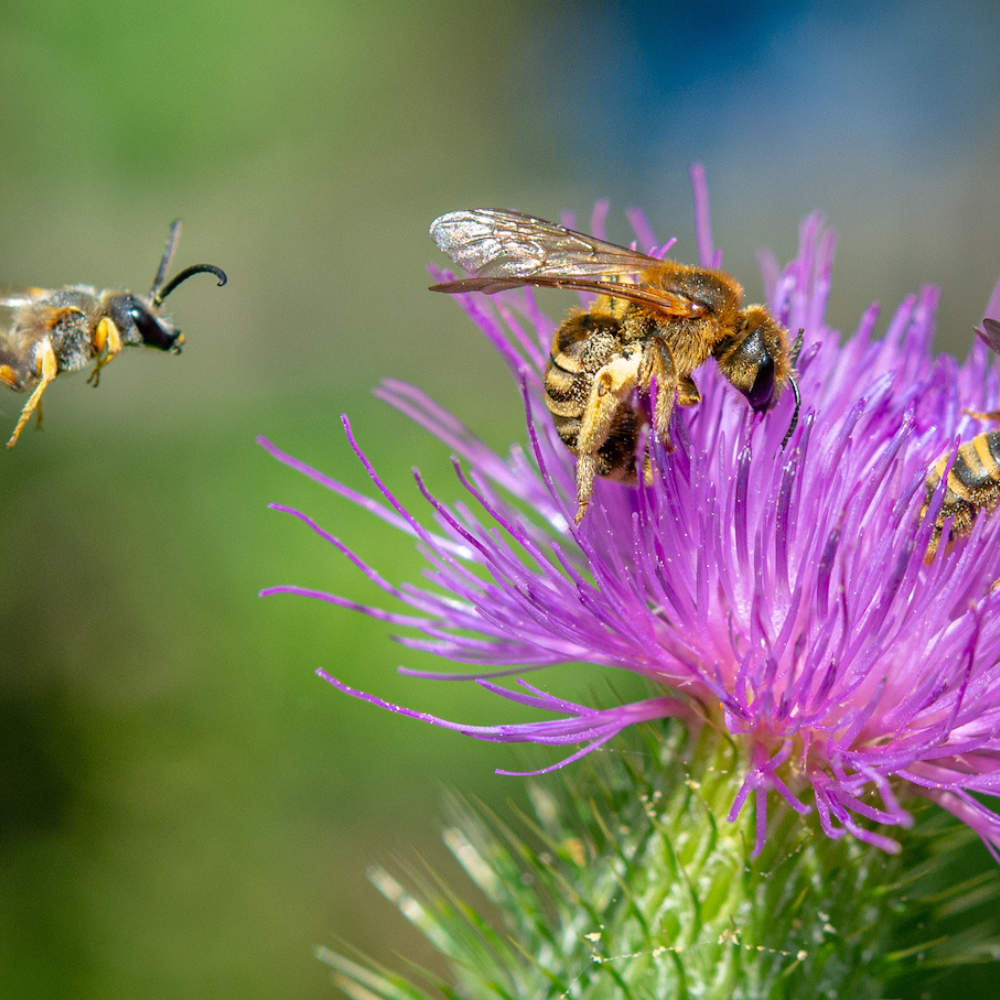
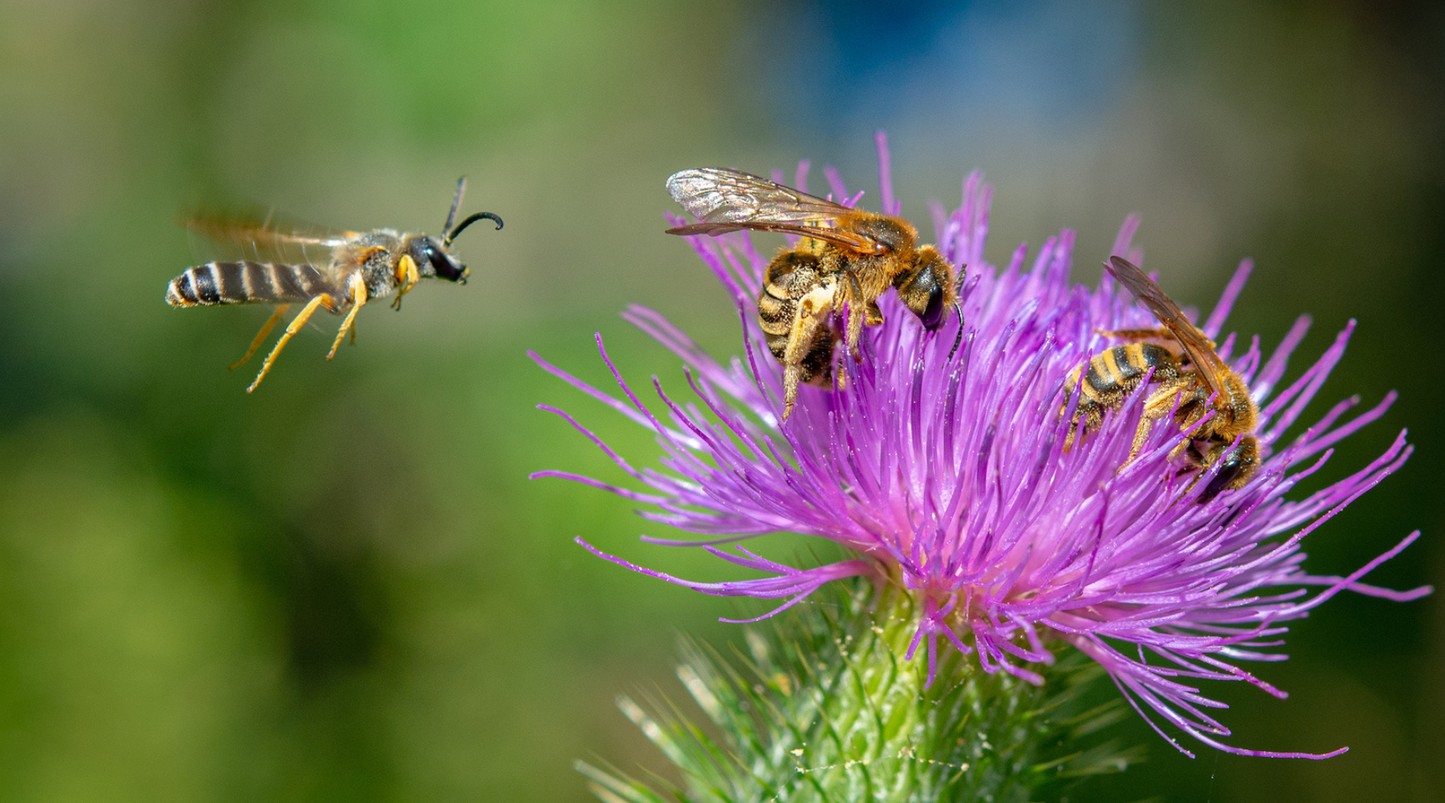
Bee-Friendly Plants for Your Balcony and Garden
Native plants such as wildflowers, perennials, shrubs, and trees are an important basis for the survival of wild bees. On this page, you will find tips on how to create wildflower meadows and beds, and how to plant and care for shrubs, hedges, and trees.
Your post's title
Your store hasn’t published any blog posts yet. A blog can be used to talk about new product launches, tips, or other news you want to share with your customers. You can check out Shopify’s ecommerce blog for inspiration and advice for your own store and blog.

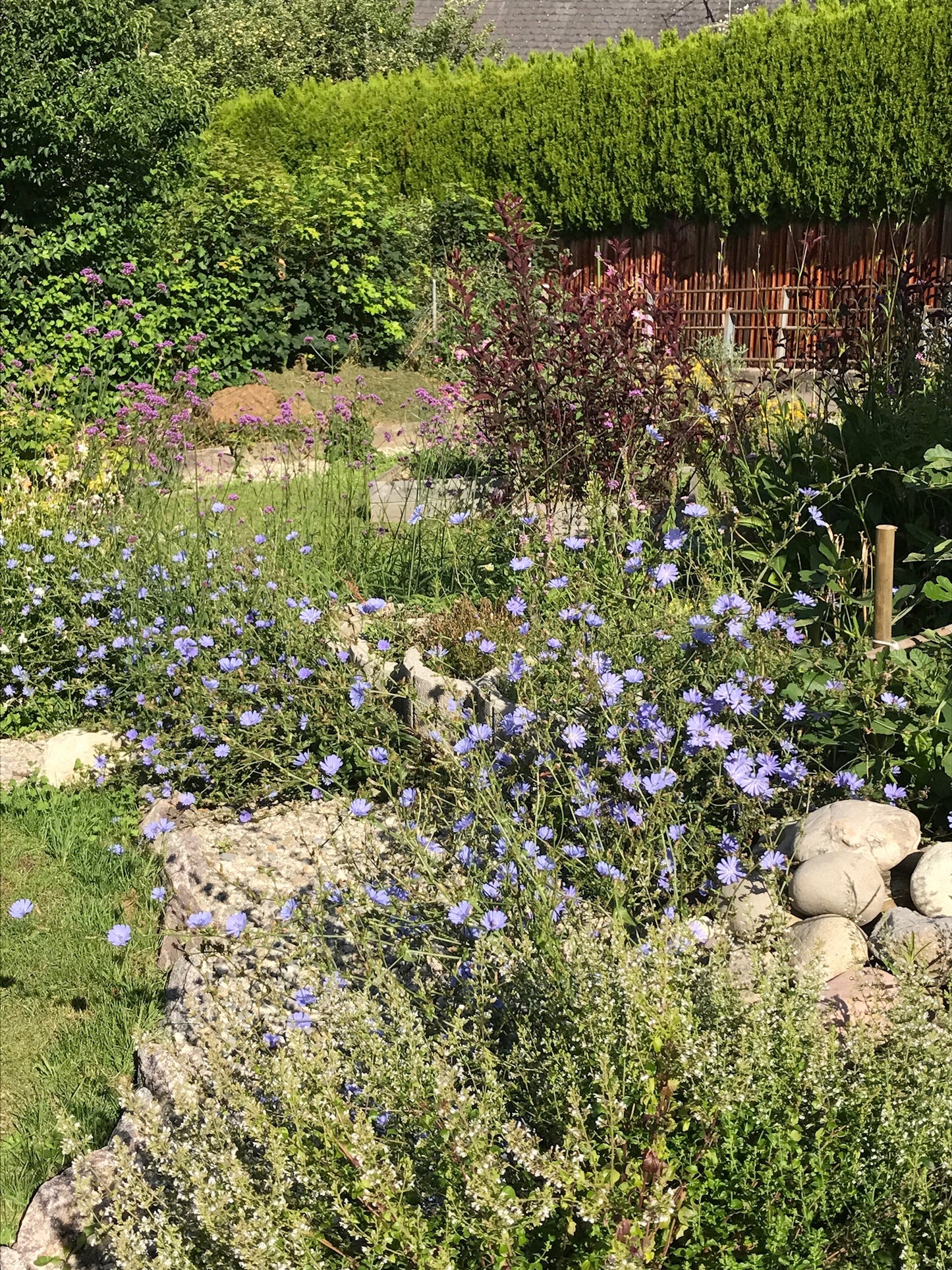
5 practical tips for a buzzing wild bee garden
Do you have a garden and want to turn it into a paradise for wild bees? Then you've come to the right place! In 5 clear blog posts, we'll tell you how you can create habitats for wild bees in your area without much effort. You don't need any special prior knowledge and you don't have to spend a fortune at the garden center. The best part: it feels so good to watch these peaceful little pollinators that wild bee gardening quickly becomes a beloved hobby. 🌸🐝 Let's go: 5 Tips for your wild bee paradise 1. The right wildflowers for wild bees If we want to protect wild bees, we must protect plants: Which wildflowers your protégés need and when and where you can plant or sow them, you can find out in the first part of our gardening tips. 2. Special nesting aids While some wild bee species fly to your BeeHome, there are also those with very specific requirements, such as the snail shell mason bee. Setting up the right nesting aid for them is not only easy; it's also fun - go to the article. 3. Shrubs and trees for wild bees (Early-)flowering shrubs and trees are also on the wild bees' menu. But not everything that blooms beautifully tastes good to them. We'll tell you which species will make them hum. Let yourself be surprised… 4. Nesting sites for wild bees Would you like to do even more? Then read on here. Here you will learn how you can invite ground-nesting species into your small garden with deadwood and sand areas. 5. Less care, more life Make it easy for yourself and the wild bees and opt for a low-maintenance garden! Because the less you mow and spray, the better for biodiversity. Practical tips and planting recommendations can be found here.
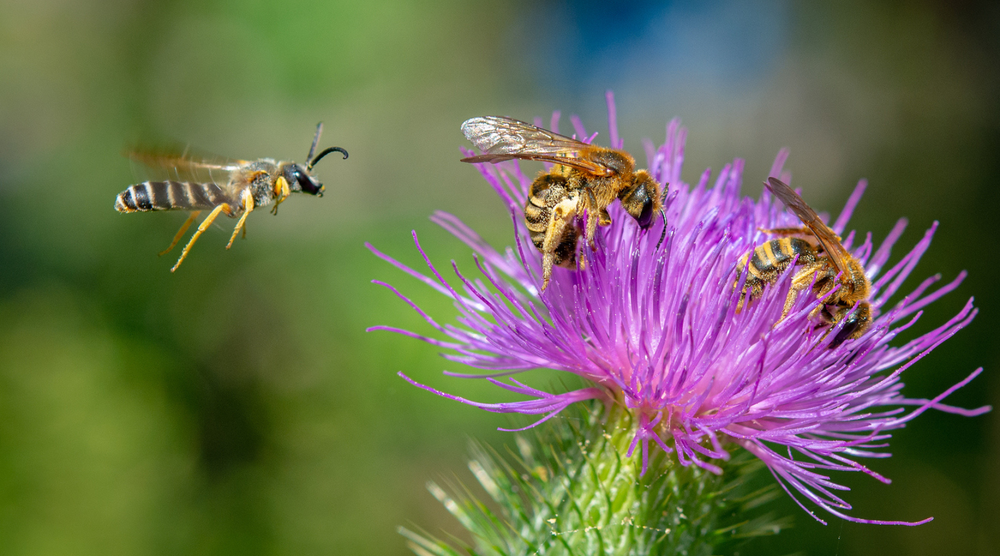
Bee-Friendly Plants for Your Balcony and Garden
Native plants such as wildflowers, perennials, shrubs, and trees are an important basis of life for wild bees. On this page, you will find tips on how to create wildflower meadows and beds, as well as how to plant and care for shrubs, hedges, and trees.

5 practical tips for a buzzing wild bee garden
Do you have a garden and want to turn it into a paradise for wild bees? Then you've come to...