

Large-scale wild bee habitats
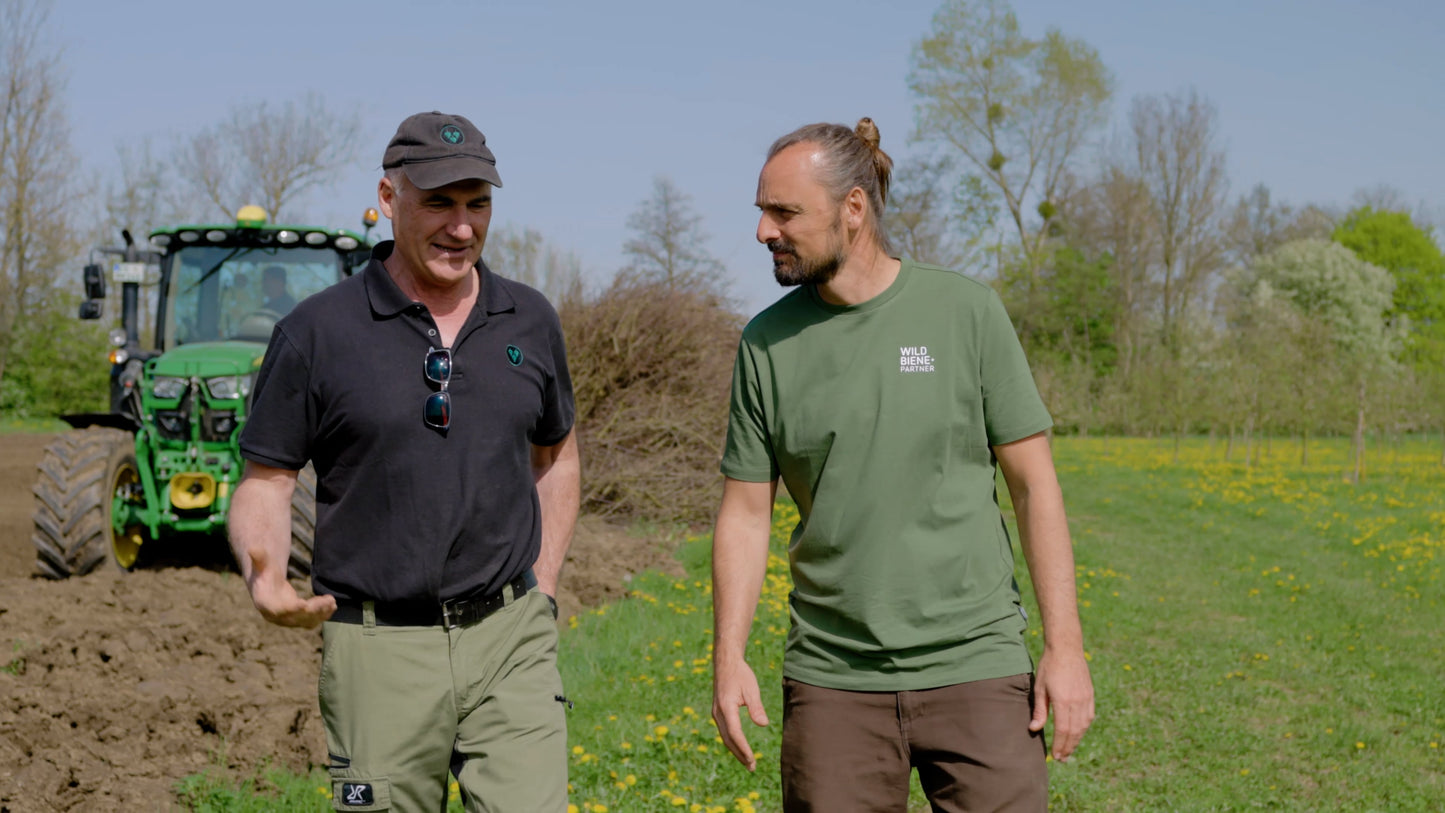
In the video, Tom shows you what measures are being taken to promote as many wild bees and other pollinating insects as possible.
Holistic Approach to Wild Bee Habitat:
Native Wildflowers
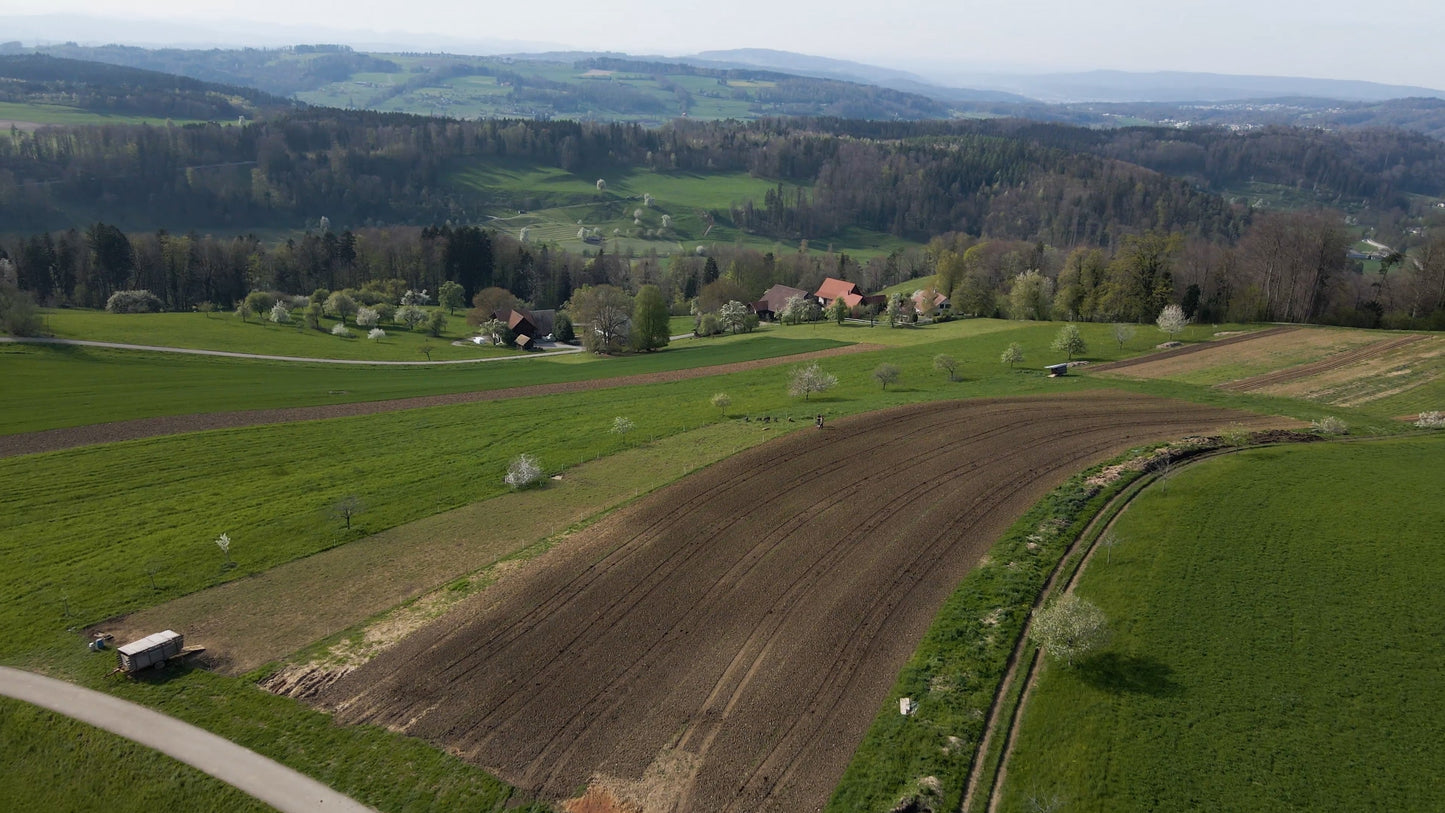
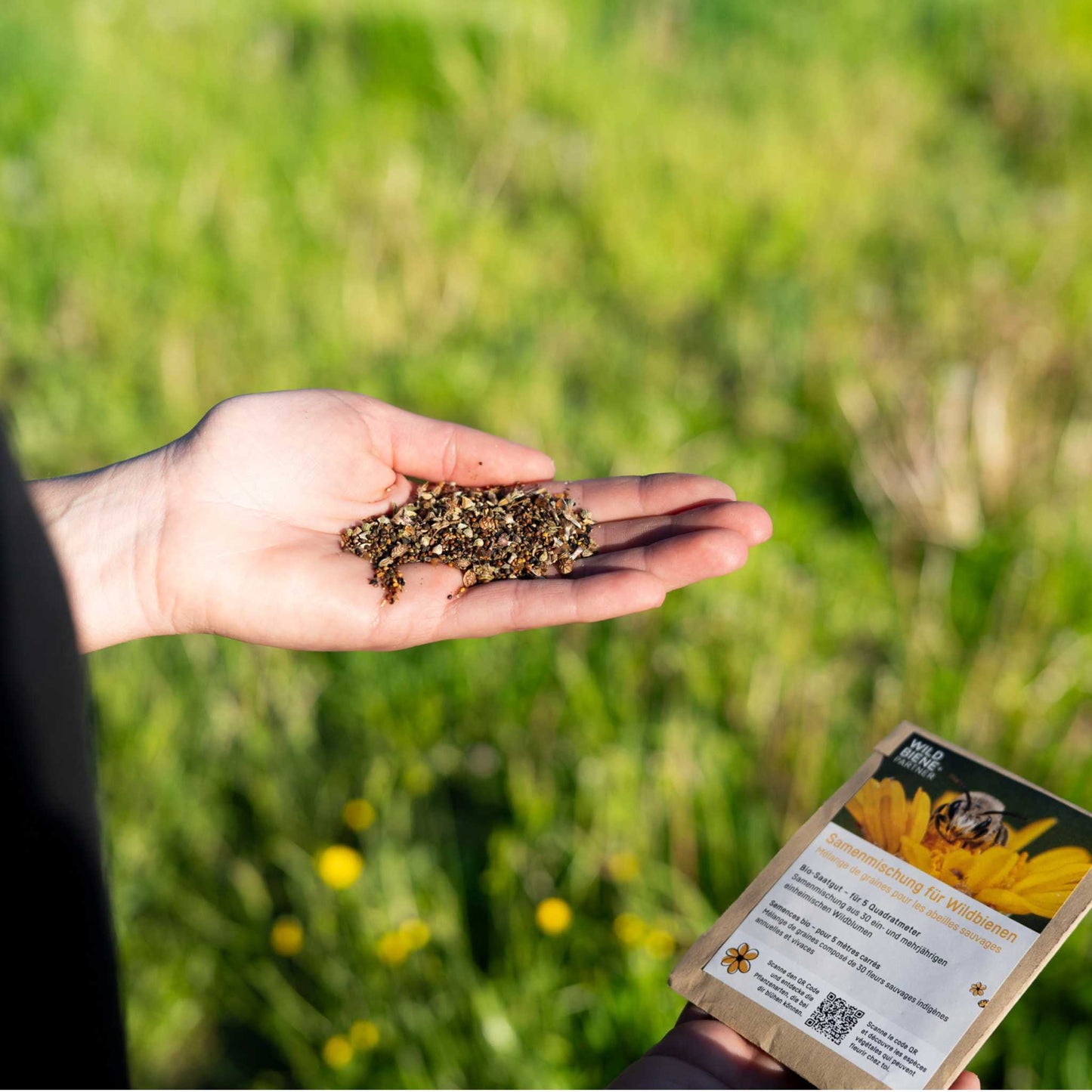
A wide variety of native wildflowers forms the food base for wild bees and their offspring. Therefore, a large-scale wildflower meadow with up to 40 different native plant species is the key aspect of this wild bee habitat. The diversity guarantees a continuous supply of pollen and nectar from spring to autumn. Through the combination of annual, biennial, and perennial plant species, the dynamic meadow community solidifies after a few years.
In collaboration with agricultural enterprises and other partner organizations, Wildbiene + Partner controls the quality of these areas through reseeding and targeted care management. Where possible, old grass strips and herb borders are also considered for the most diverse habitat possible.




Nesting Structures
For wild bee populations to establish themselves successfully, they need not only the right food supply but also the right nesting sites. Depending on the species, these can be found in areas with sparse vegetation in the ground, in sandy areas, cavities, dead wood, or other structures. It is important that the nesting sites are created near flower-rich habitats.
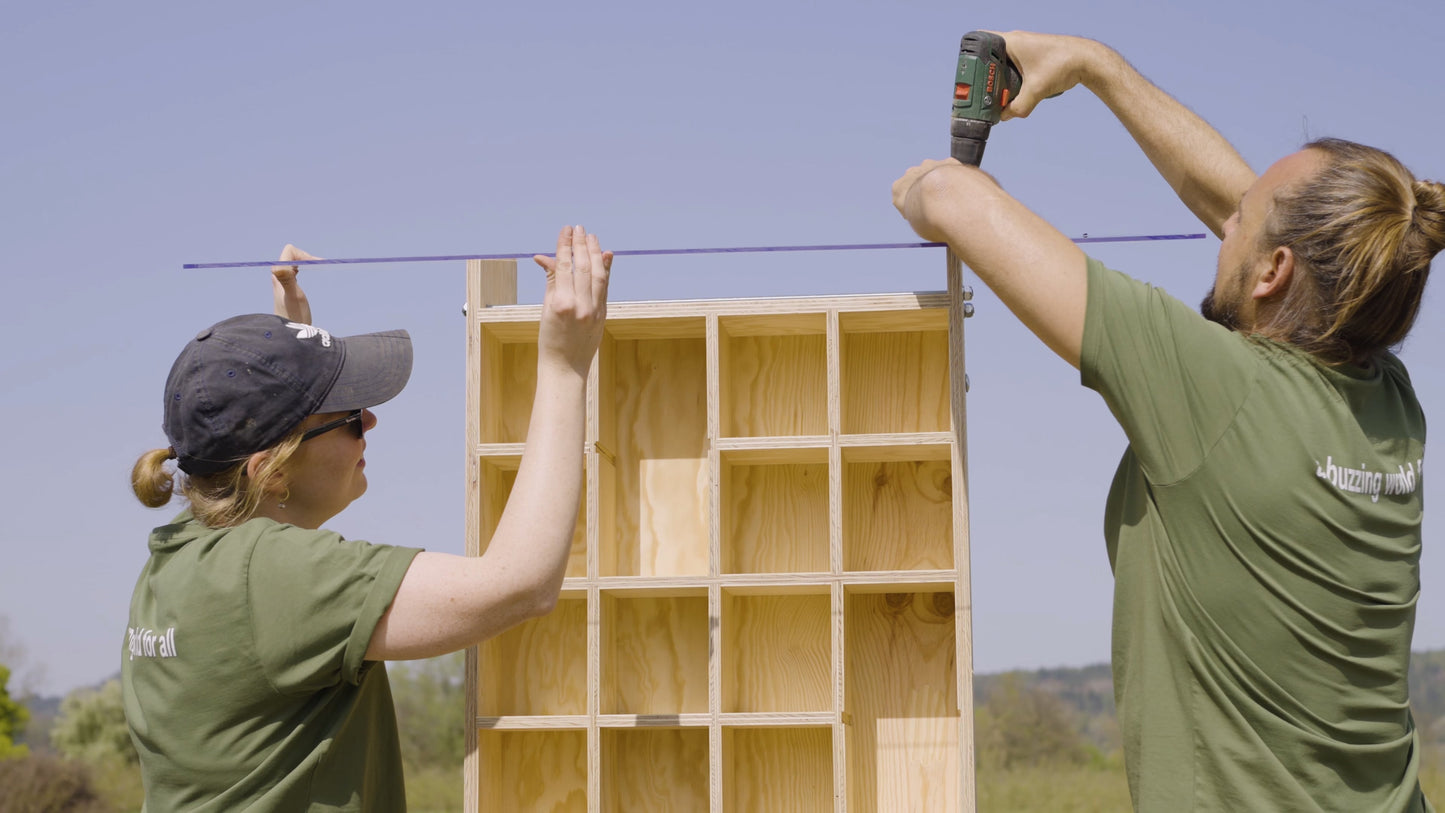
A diverse "BeeHome Premium" wild bee house will be installed in selected wild bee habitats. The BeeHome Premium is a wild bee house specially developed for native wild bees. It features various nesting structures for a wide range of wild bee species and helps to promote and experience the fascinating diversity of wild bees.
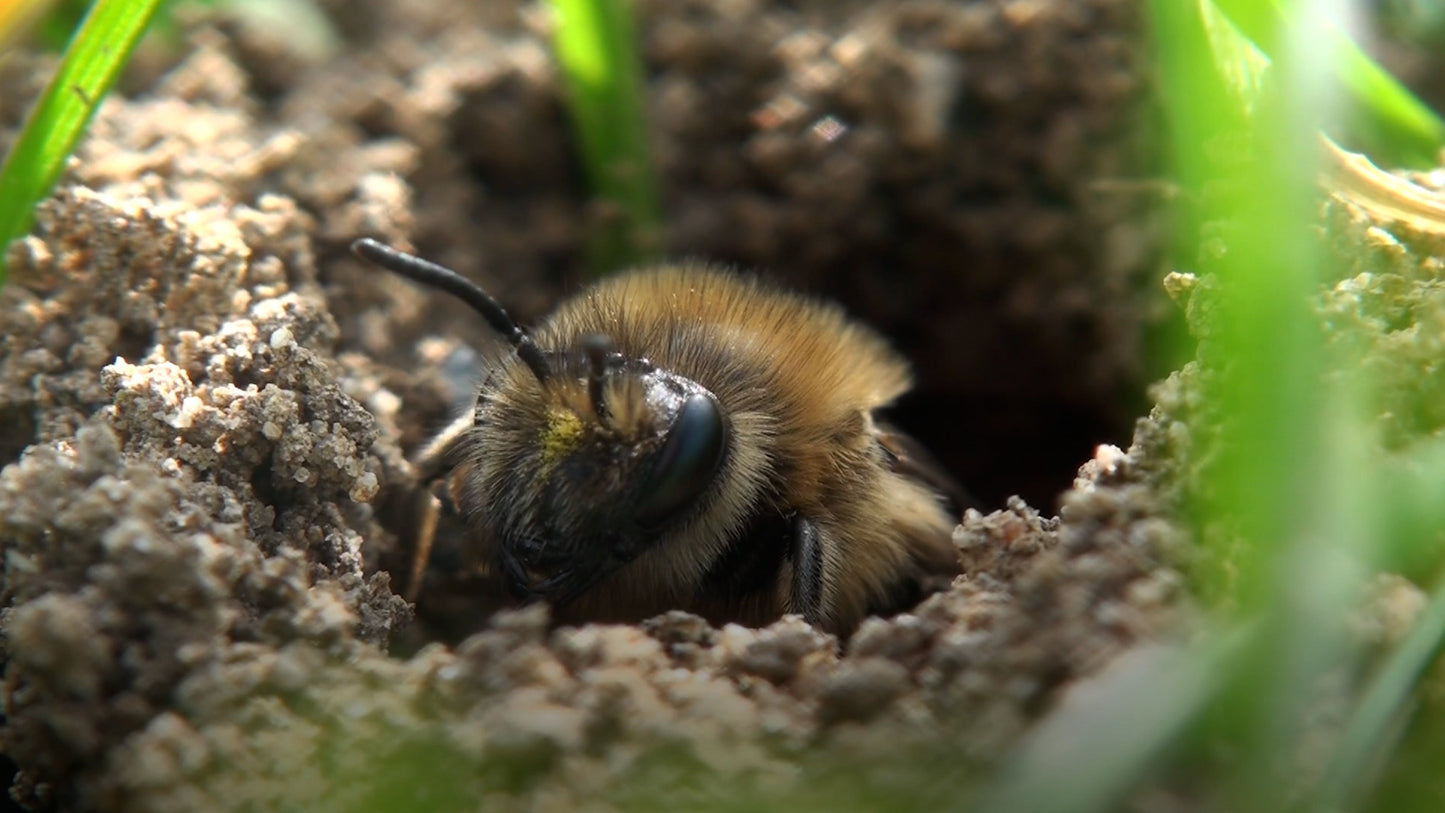
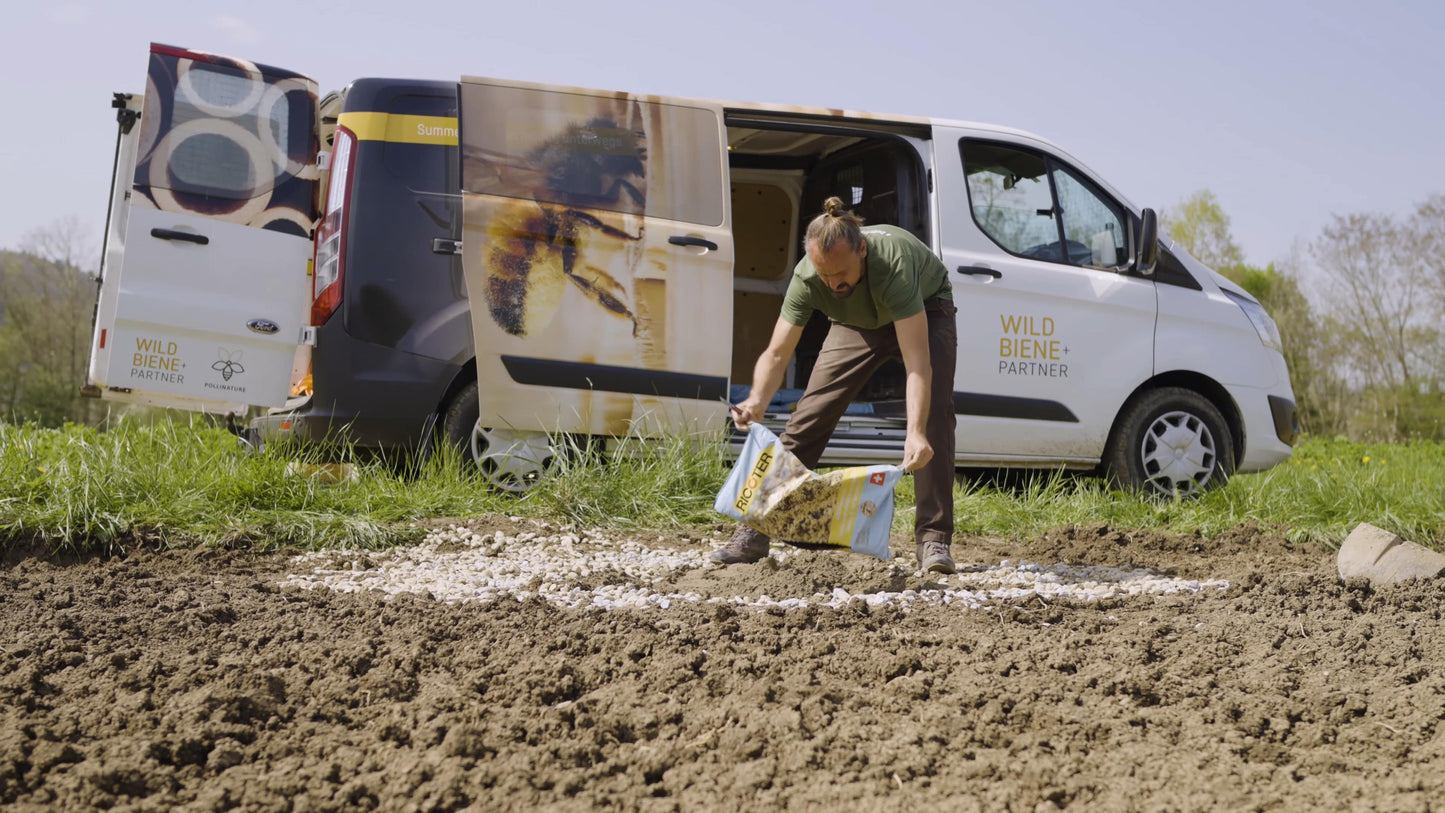
To promote wild bee species and other insects that use the soil as a nesting site and require specific conditions for this, a sandy area has also been created. While our BeeHomes are the ideal home for so-called cavity-nesting bees, sand lenses offer a nesting opportunity for ground-nesting wild bees. Since many of the endangered wild bee species belong to this group, it is of great importance to promote their habitats. For the sandy area, we use wild bee sand from RICOTER, which was developed in cooperation with us.



Monitoring
To increase the transparency and accessibility of environmental data for research purposes, the success of the implemented measures is measured annually. The development of wild bee populations in this newly created habitat is monitored by observing the nesting closures at the "BeeHome Premium" wild bee house and documented along with plant records.
This is how our plant monitoring works for real biodiversity
Visit our habitats
We warmly invite you to visit the habitats we have created. You can find the locations on our map: Click on the respective location to open relevant information.
Converted areas
Thanks to the supporters of our Beegnetten initiative, over 30,000 m² of valuable habitats for wild bees and other insects have already been created since 2022. The locations were carefully selected to enable maximum ecological connectivity while also giving our wild bee community the opportunity to visit these areas in person. Here you will find an overview of our projects. In the coming weeks, we will supplement individual project pages with detailed documentation on the progress and the positive effects on local biodiversity.
You can also find the locations on our map. Click the button to view the map on Google Earth or scroll to the very bottom of this page. You can click on the individual locations to open associated information.


