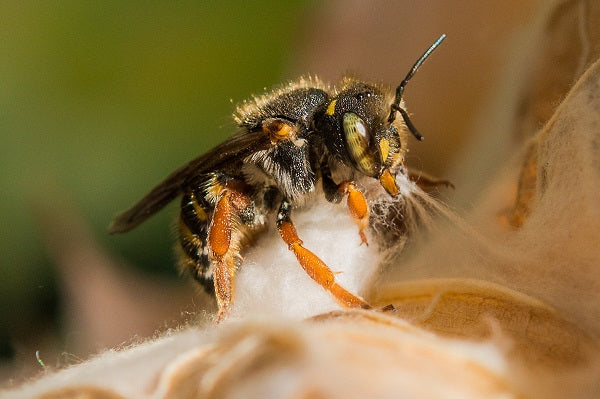
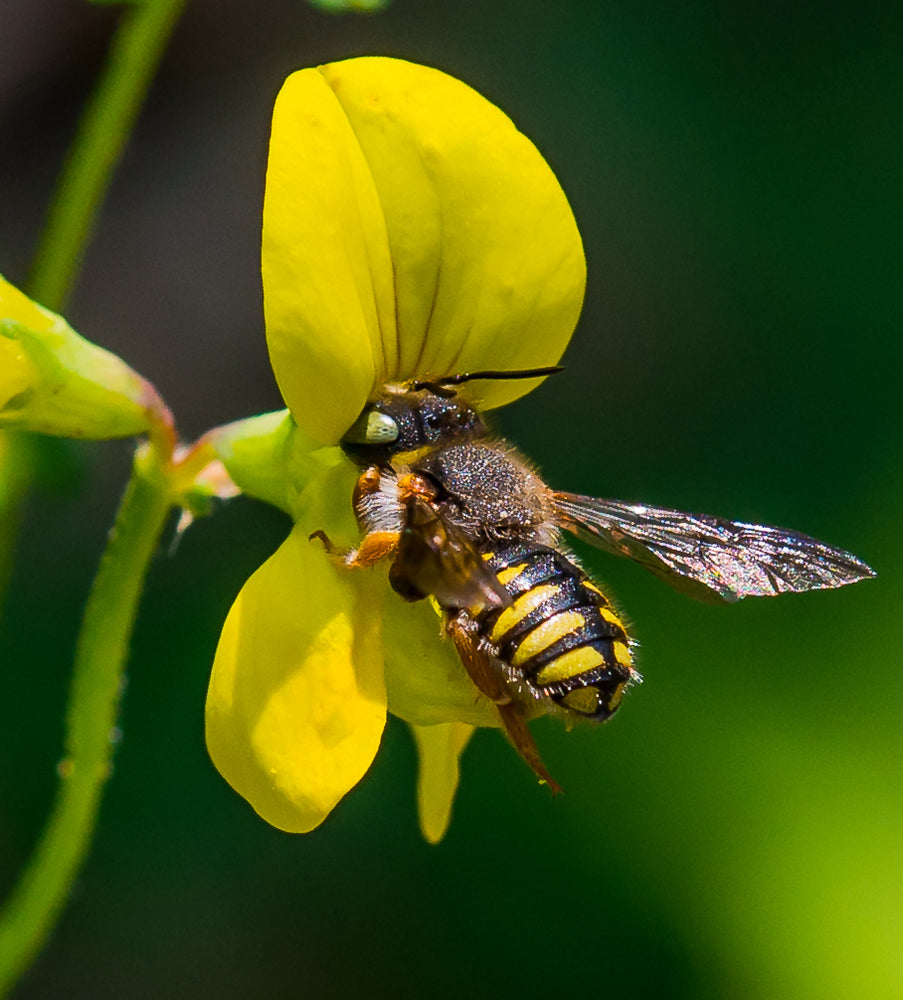
Wool carder bees are interesting to observe. The males display pronounced territorial behavior around suitable food plants, vehemently defending their territory. Sometimes veritable aerial battles break out between rival males; honeybees and other insects are also chased away. Females are observed during hovering flight and – if they are willing to mate – are grabbed and copulated with.

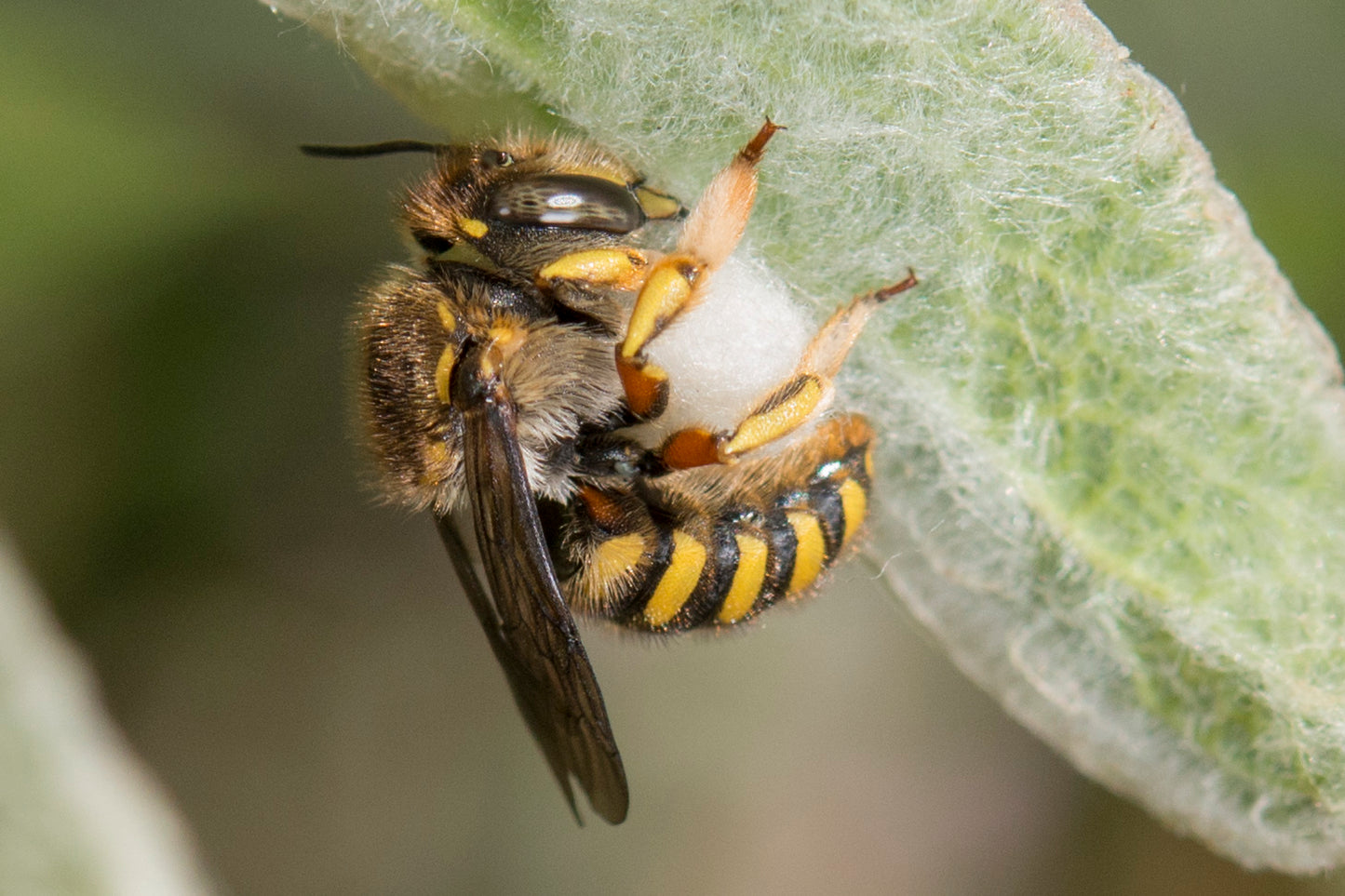
What do European wool carder bees look like?
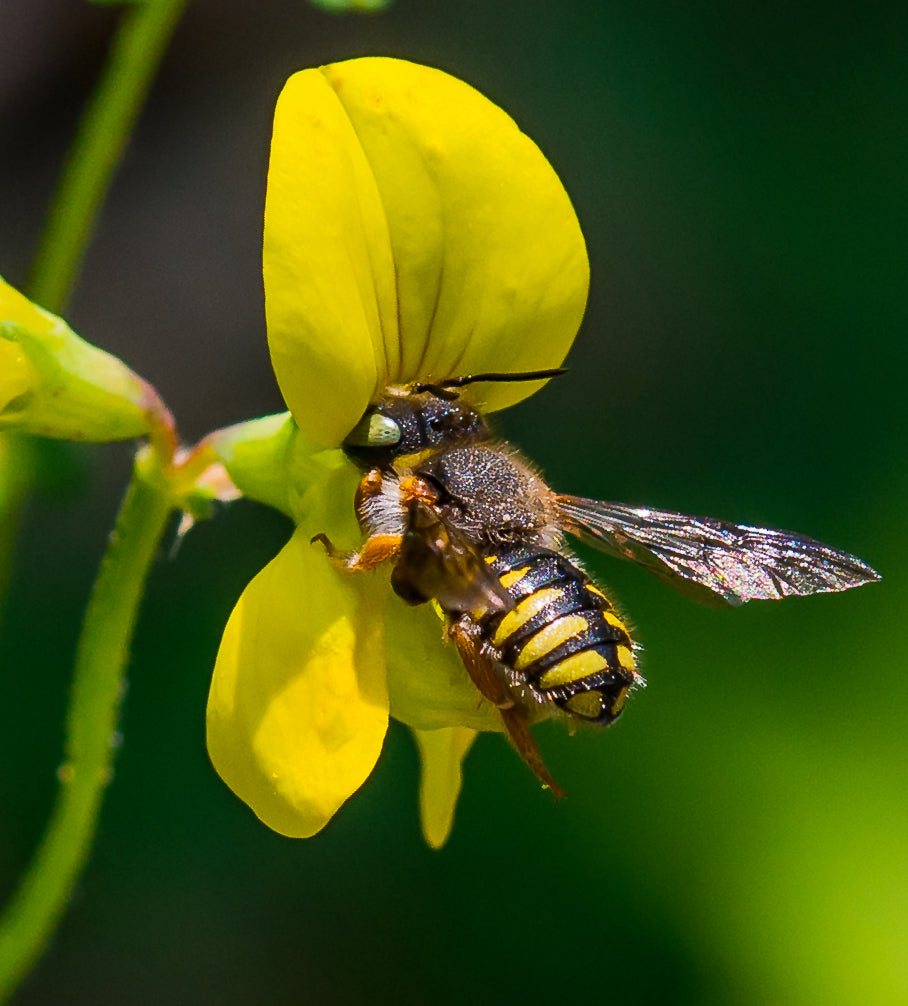
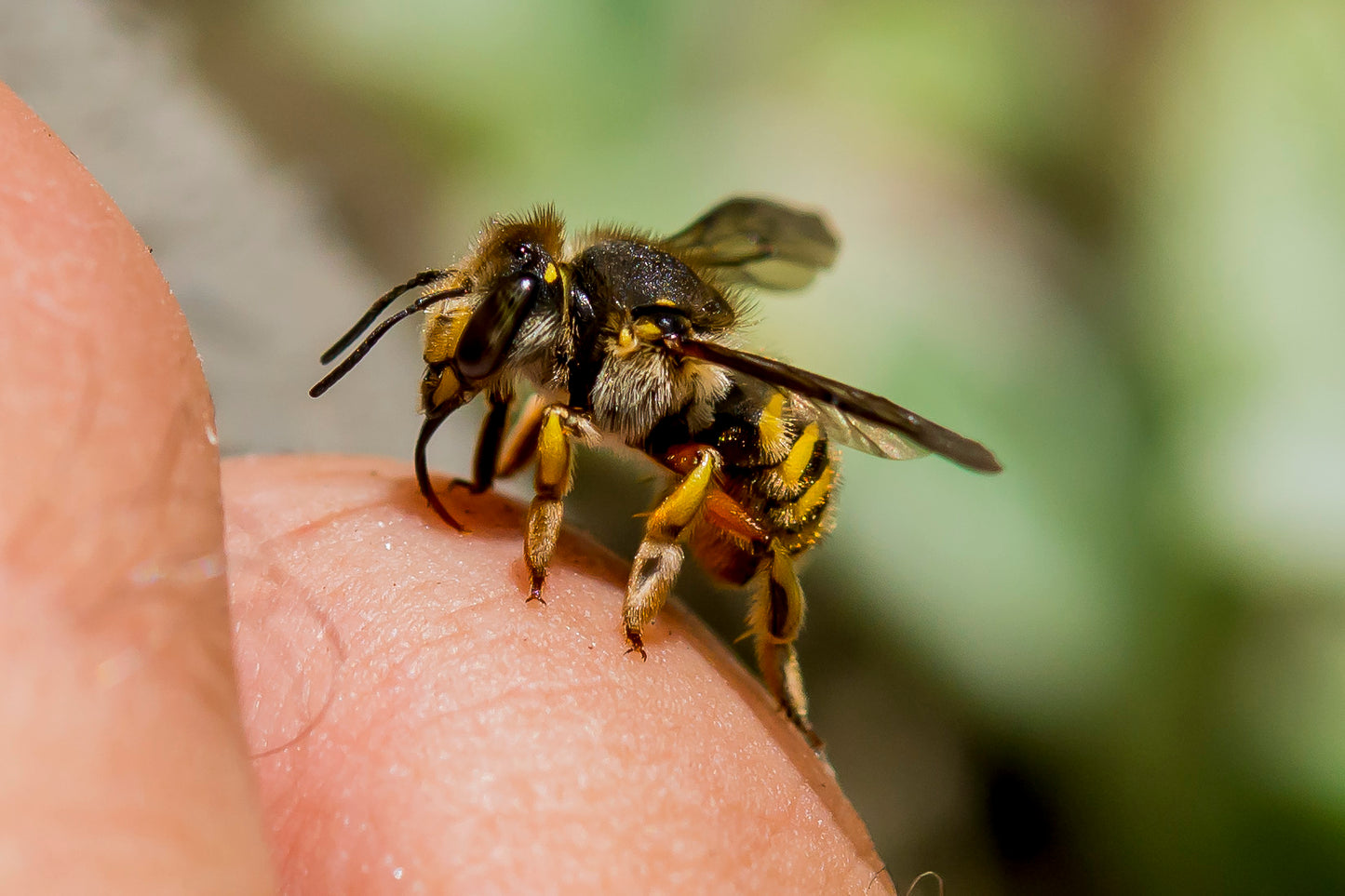
The European wool carder bee (Anthidium manicatum) has a stout, robust body and measures 10–16 mm in length. Its abdomen is only sparsely hairy and features a characteristic black and yellow wasp-like pattern. Unlike most wild bee species, male wool carder bees are larger than females.
Flight time
May to September. One generation per year.
Food Preferences
Garden wool carder bees can be observed mainly on plants of the mint and pea families. Less frequently, they also visit foxglove and other plantain species. Especially popular are bird's-foot trefoil, sainfoin, woundwort, and common motherwort.
Nesting behavior
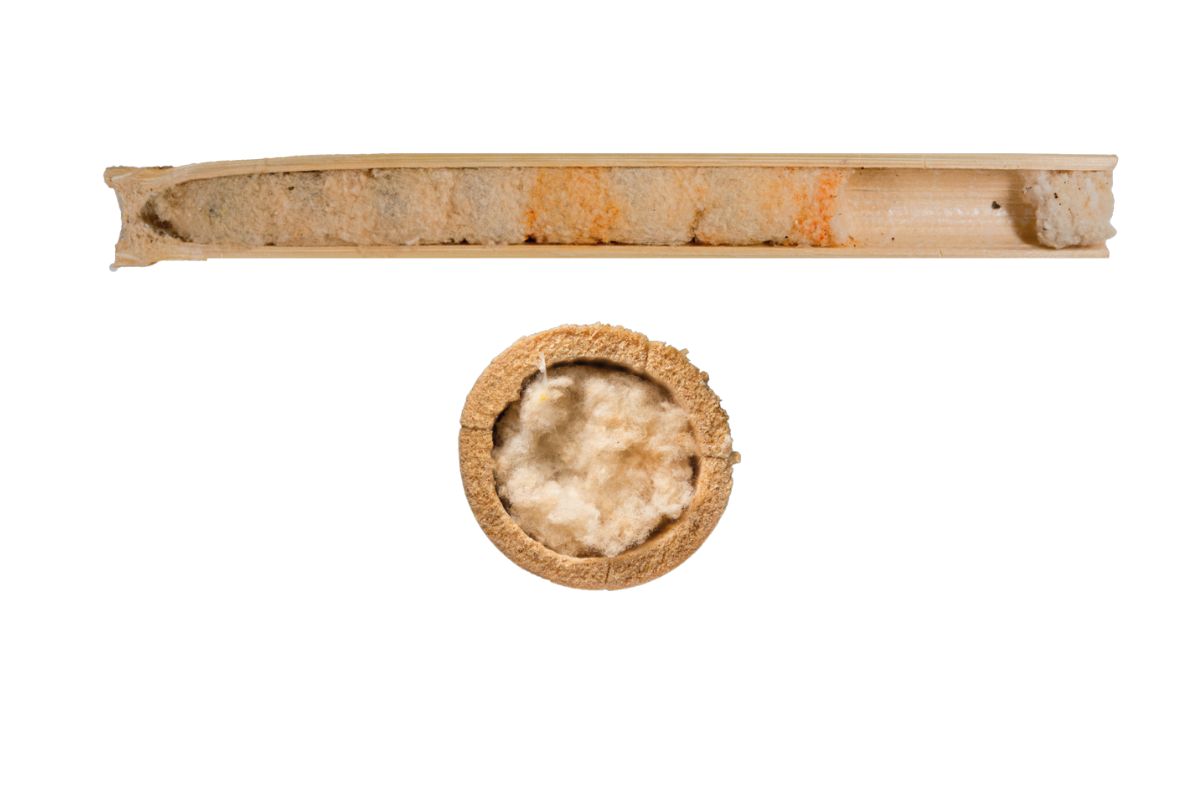
As the name suggests, the wool carder bee uses plant wool as building material for its nest. It collects this plant wool from the leaves and stems of heavily hairy plants such as lamb's ear, Scotch thistle or mullein. The cavity between the nest and the nest closure is additionally plugged with small stones and twigs.
Flight time
May to September. One generation per year.
Food Preferences
Garden wool carder bees can be observed mainly on plants of the mint and pea families. Less frequently, they also visit foxglove and other plantain species. Especially popular are bird's-foot trefoil, sainfoin, woundwort, and common motherwort.
Nesting behavior
As the name suggests, the wool carder bee uses plant wool as building material for its nest. It collects this plant wool from the leaves and stems of heavily hairy plants such as lamb's ear, Scotch thistle or mullein. The cavity between the nest and the nest closure is additionally plugged with small stones and twigs.

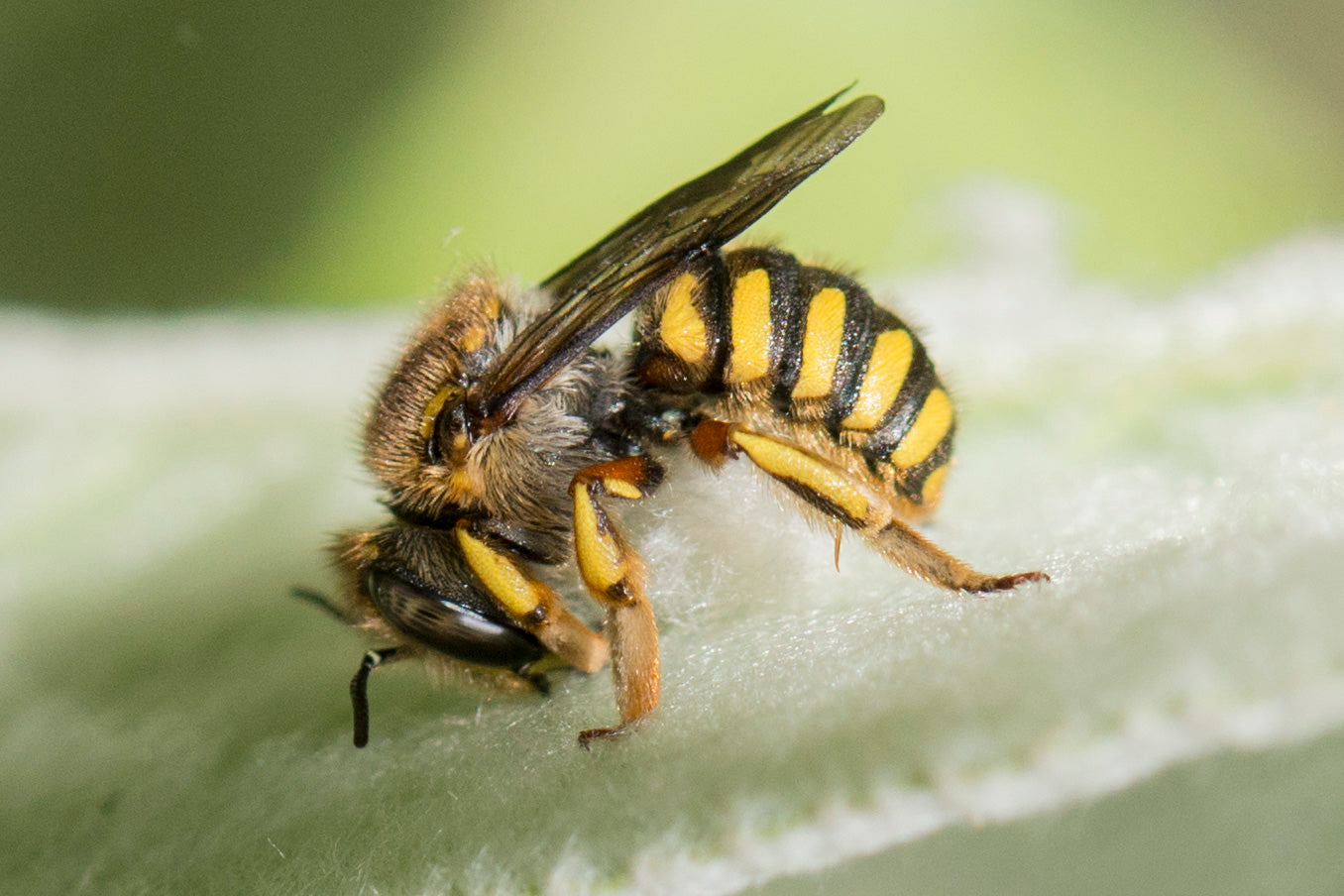

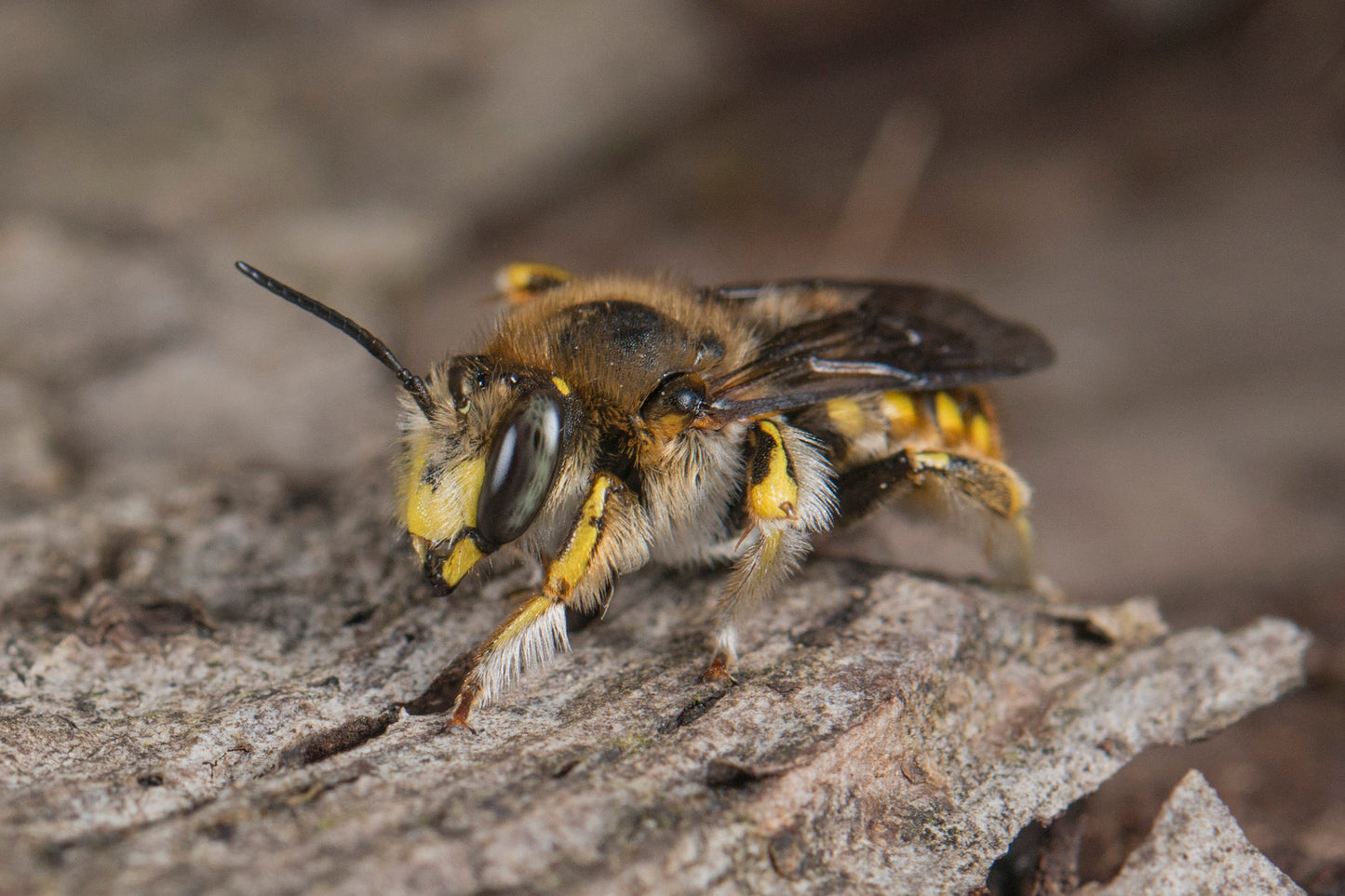




Why are these wild bees called wool carder bees?
This is due to their way of building nests. Wool carder bees lay their eggs on a type of wool. However, this wool does not come from sheep, but from plants. More precisely, from the hairs that grow on many leaves.
These serve the plants to ward off insects, but are specifically harvested by wool carder bees. For this purpose, wool carder bees only choose very hairy plants, such as lamb's ear or quince. These hairs are then brought into the nest and the pollen and egg are hidden inside (sometimes also in combination with other materials such as earth or small stones). Since wool carder bees cannot always collect pollen and wool from the same plant species, they need several plant species to feel comfortable.
Wool carder bees: sometimes cuddly soft, sometimes rock hard
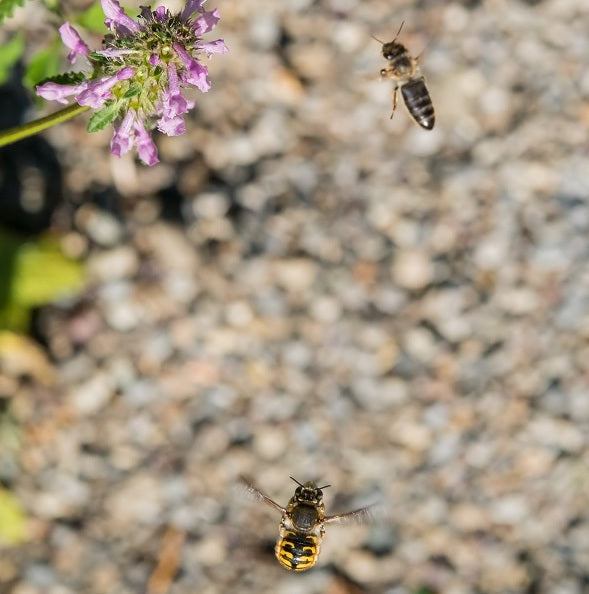
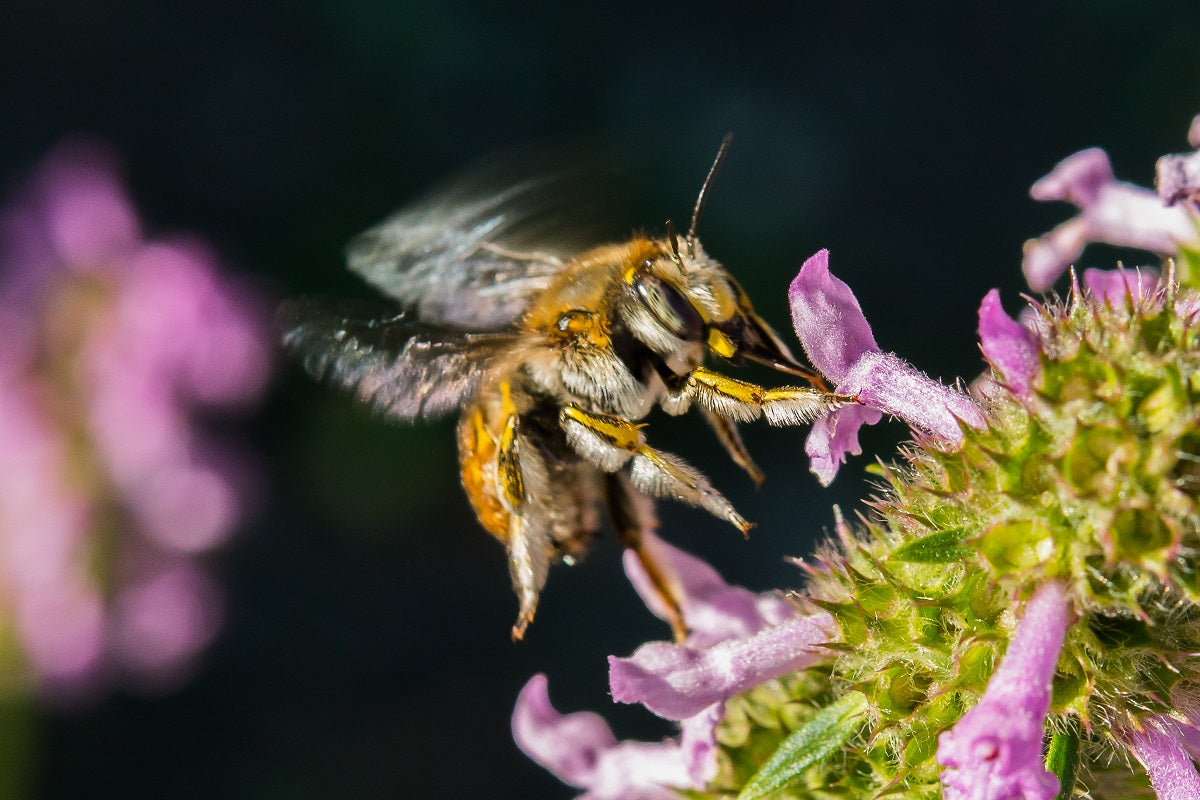
In addition to their unique building material, wool carder bees (especially Anthidium manicatum, the European wool carder bee) are known for their territorial behavior. The males occupy small territories – often less than a square meter in size with plants like woundwort or sage – and vigorously defend them against other insects. They constantly patrol up and down, repeatedly hovering in one spot in the air (which is very rarely observed in bees). Wool carder bees immediately attack other insects that enter their territory. They ram large insects like honeybees and bumblebees from the side and attack them with their mandibles or the three pointed spines on their abdomen. In the picture, you can see a male wool carder bee chasing a honeybee out of its mating zone.
This can certainly lead to injuries to other insects. Other male wool carder bees are caught in mid-air, leading to a kind of wrestling match in flight. The males only give up when they have driven away the intruder. Only the female wool carder bees are exempt from these attacks. Sometimes, several males even share a territory. But there is a clear hierarchy with a dominant male who is the only one allowed to mate with the females. The rest have to hope that the boss is occasionally distracted. This behavior is probably why male wool carder bees are larger than females. In most bee species, it's the other way around. A large, strong male simply wins more fights.
Observe the wool carder bee at home
Wool carder bees have a high need for warmth, even for bees, and are only active at temperatures above 16°C. Therefore, they usually only fly from late June to August. Compared to scissor bees, for example, this genus is not very specialized and can collect pollen from very different plants. However, there are certain preferences for legumes and labiates.
3 tips to observe the wool carder bee at home:
- Suitable food plants: Garden wool carder bees can mainly be observed on labiates and legumes. Less frequently, they also visit foxglove and other plantain species. Particularly popular are bird's-foot trefoil, sainfoin, woundworts, and motherwort.
- Suitable plants as a source of wool: Lamb's ear (Stachys byzantina), downy woundwort (Stachys germanica), silver wormwood (Artemisia latiloba), quince
- Nesting holes, for example in a BeeHome. Since wool carder bees are quite large, they only accept the largest tubes.