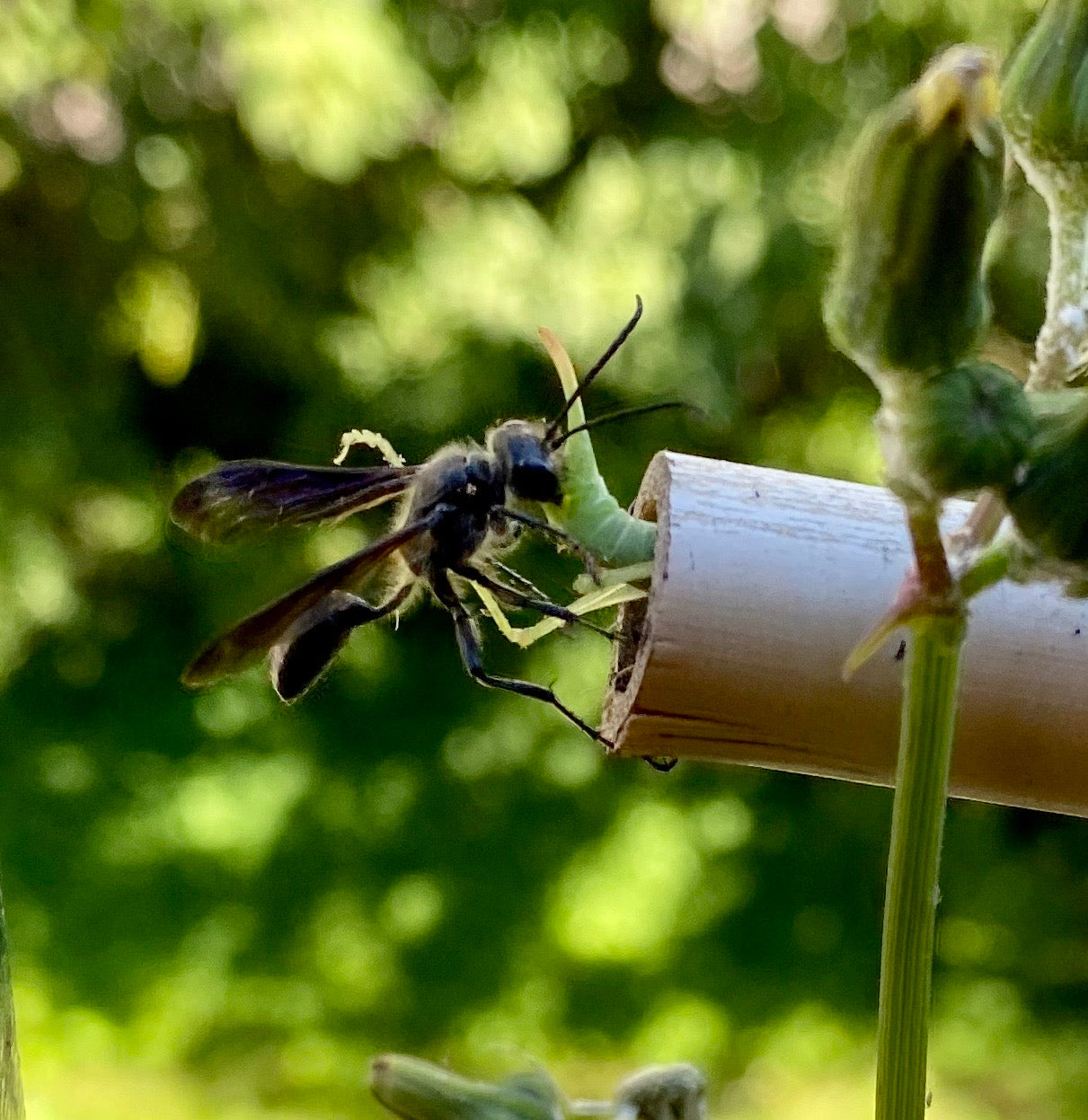
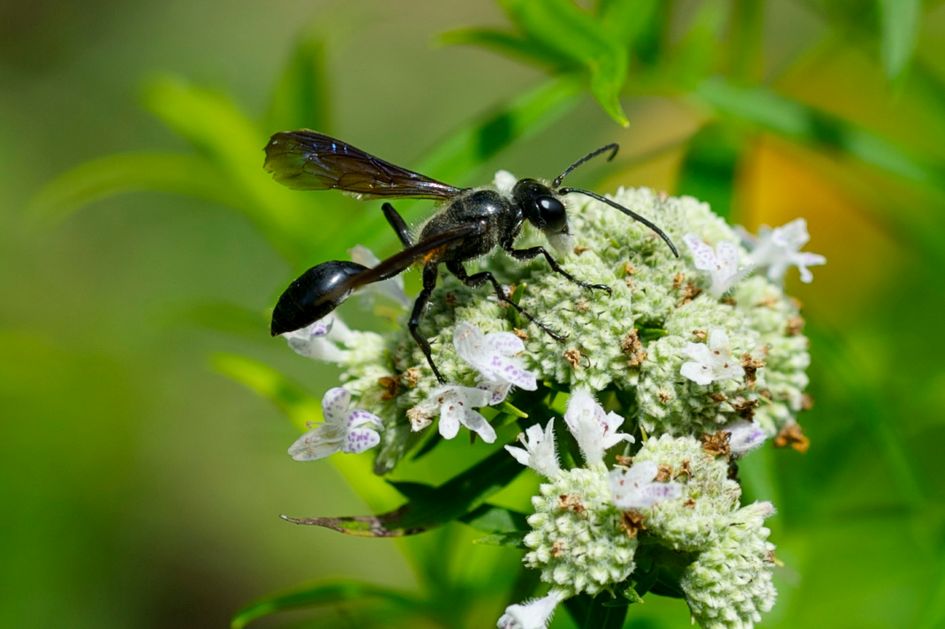
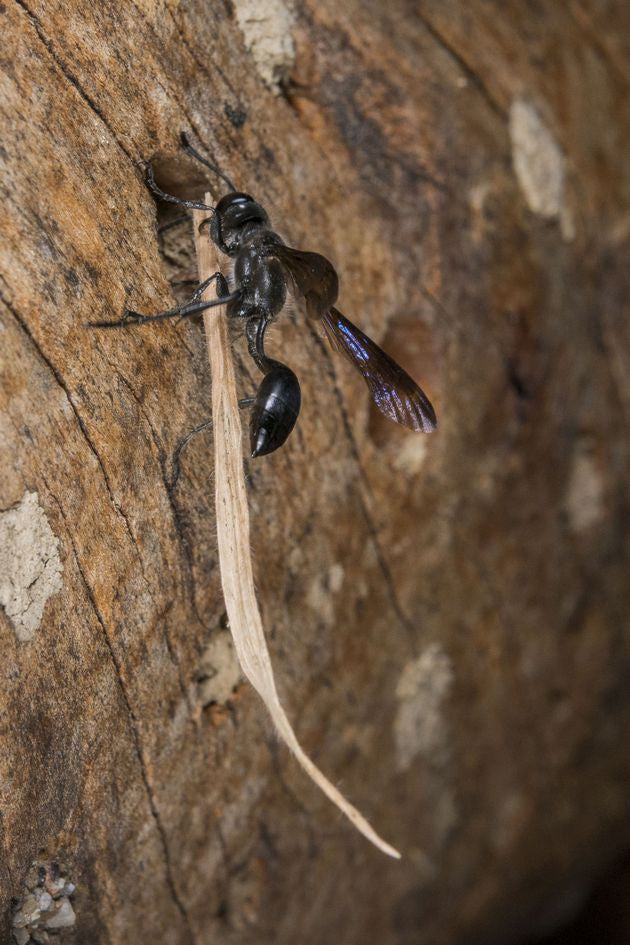
This wasp species has only been native to our region since the 1960s, having been introduced from America. It is now widespread and can be observed more and more frequently on nesting aids. With a bit of luck and patience, you can watch them collecting straw fragments in the vicinity of their nest.

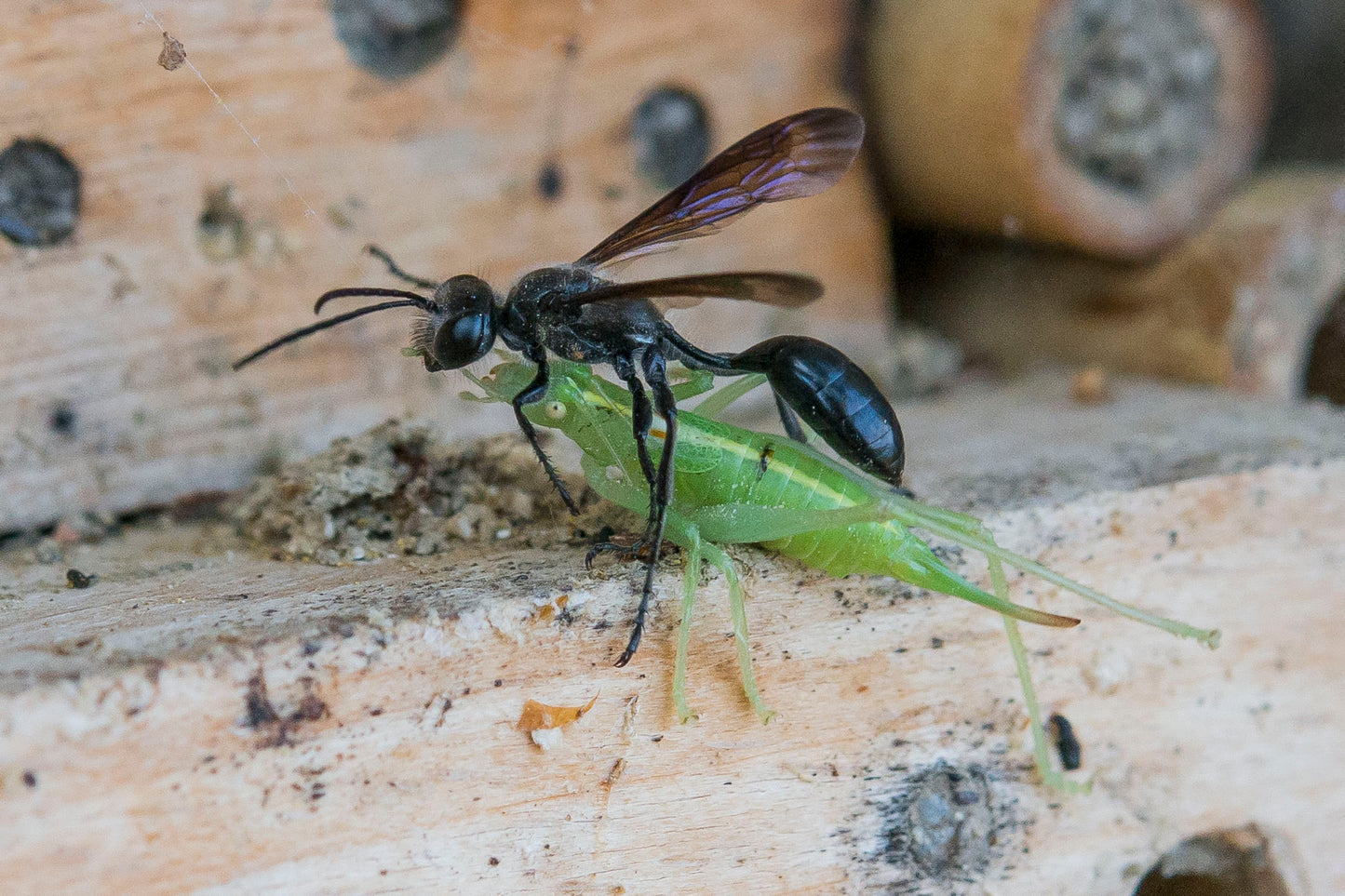
What do steel-blue cricket hunters look like?
The steel-blue cricket hunter is a species of digger wasp. It is 15–20 mm long and deep black with a strong wasp waist and bluish shimmering wings. Despite its impressive size, it is absolutely harmless to humans.
Flight time
June to September. Usually one, but sometimes two generations per year
Food Preferences
Adult animals feed predominantly on nectar. As representatives of wasps, however, they are carnivorous in the larval stage and feed on paralyzed grasshoppers. The females hunt small bush crickets, especially the common oak bush cricket, which they paralyze with their venomous stinger and drag into the nest.
Flight time
June to September. Usually one, but sometimes two generations per year
Food Preferences
Adult animals feed predominantly on nectar. As representatives of wasps, however, they are carnivorous in the larval stage and feed on paralyzed grasshoppers. The females hunt small bush crickets, especially the common oak bush cricket, which they paralyze with their venomous stinger and drag into the nest.

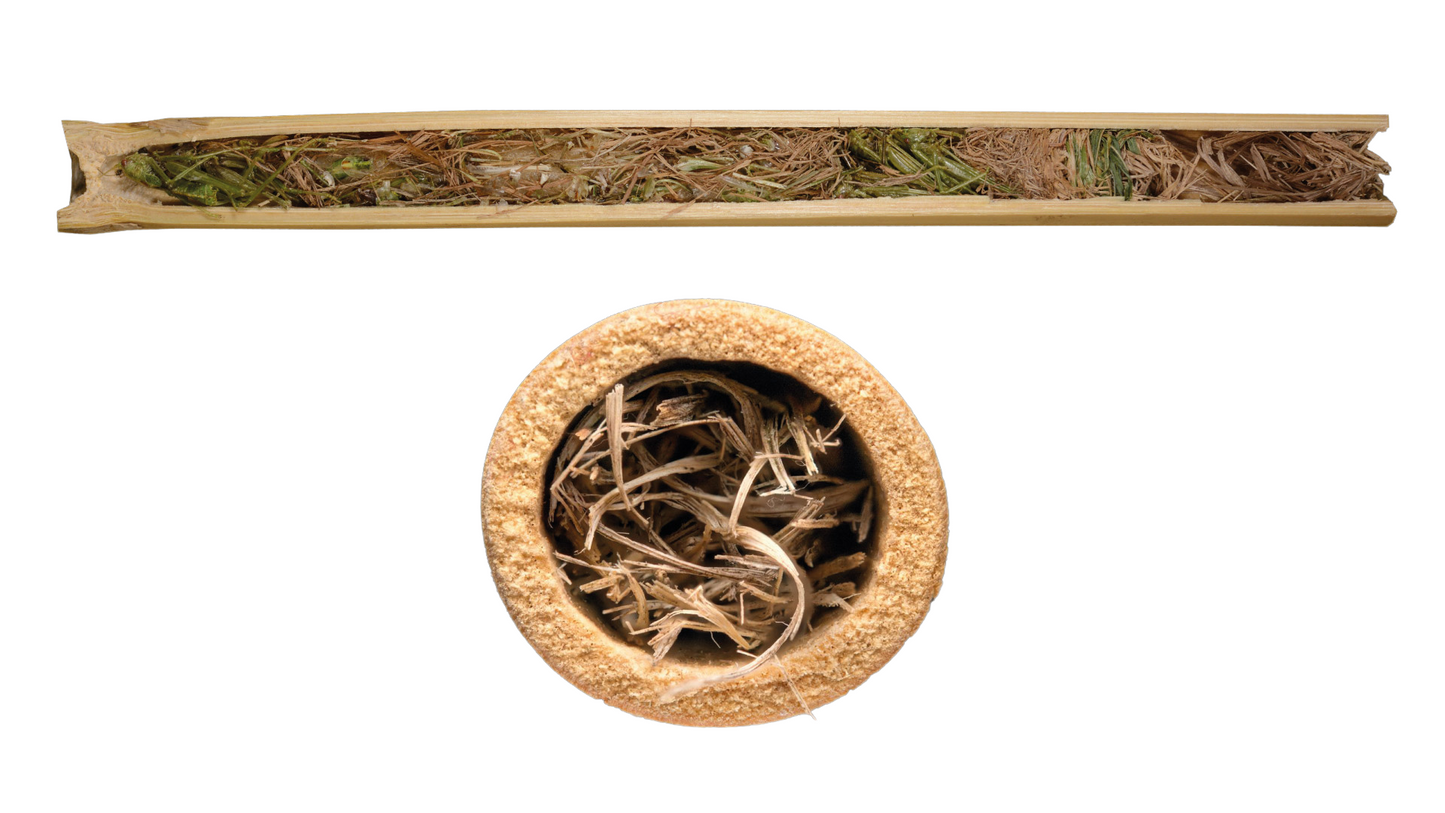
How do Steel-blue Cricket Hunters nest?
The Steel-blue Cricket Hunter builds its brood cells in a nest made of straw, which often protrudes several centimeters from the reed tubes. The partitions between the individual cells are also made of compactly compressed straw.
Wild bees in Switzerland: Steel-blue cricket hunters