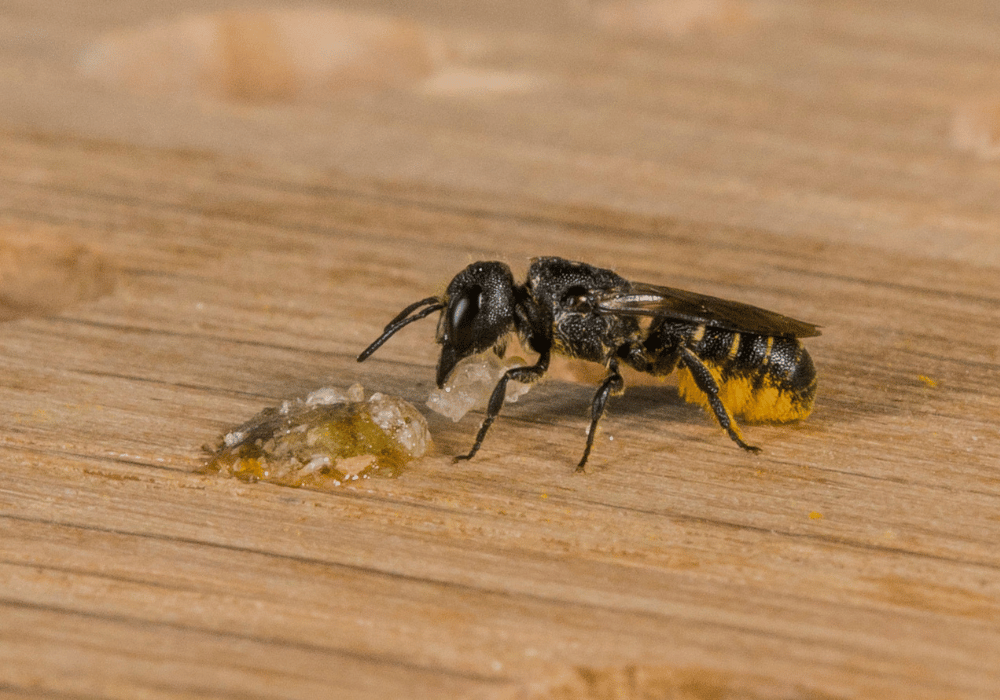
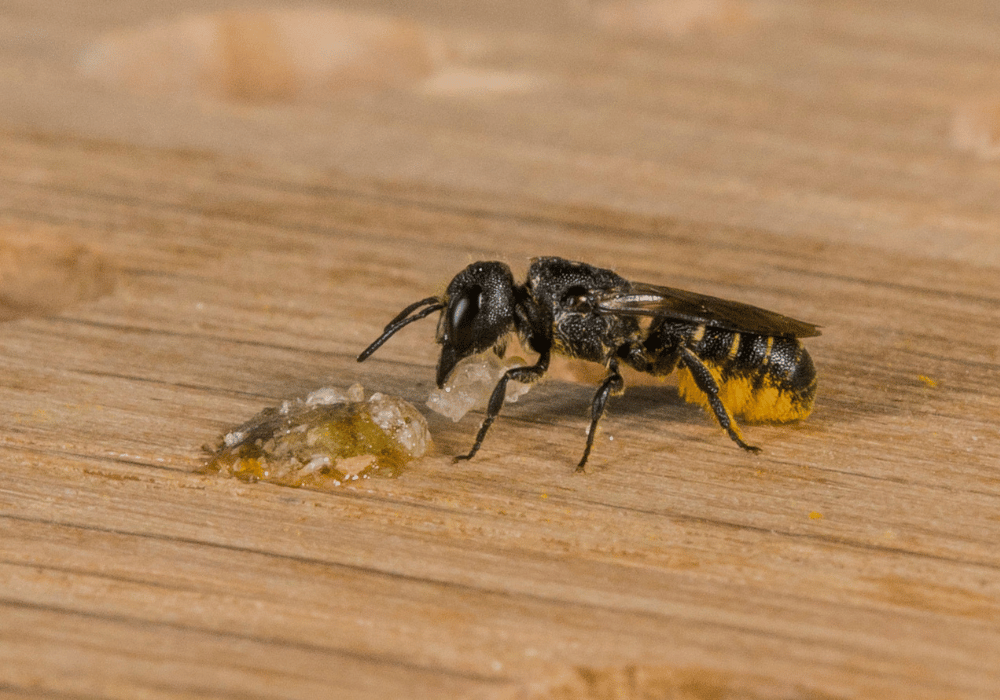
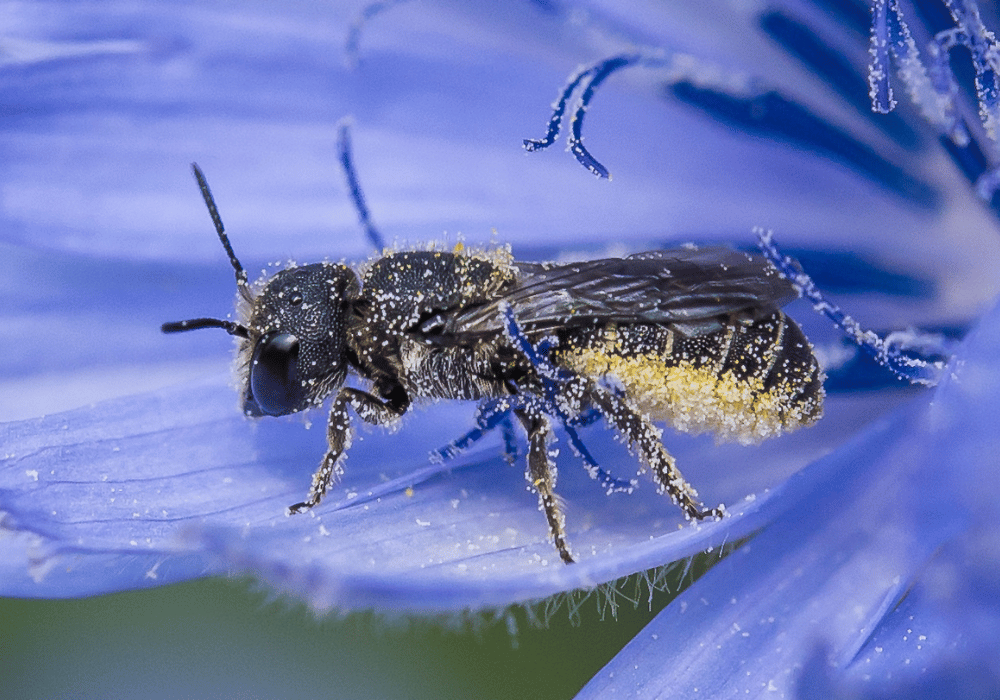
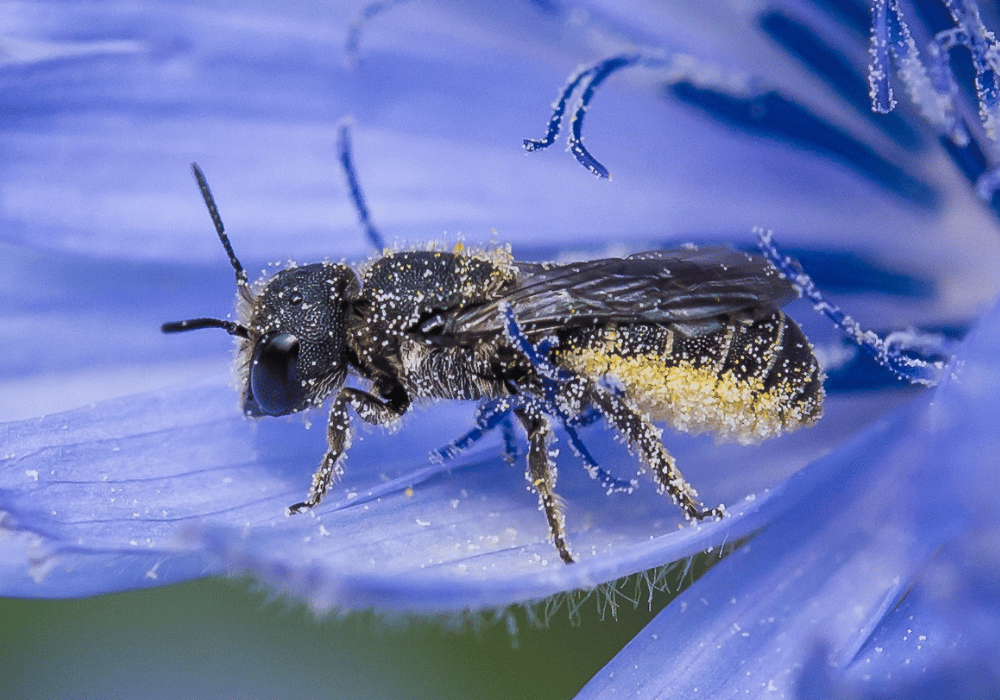
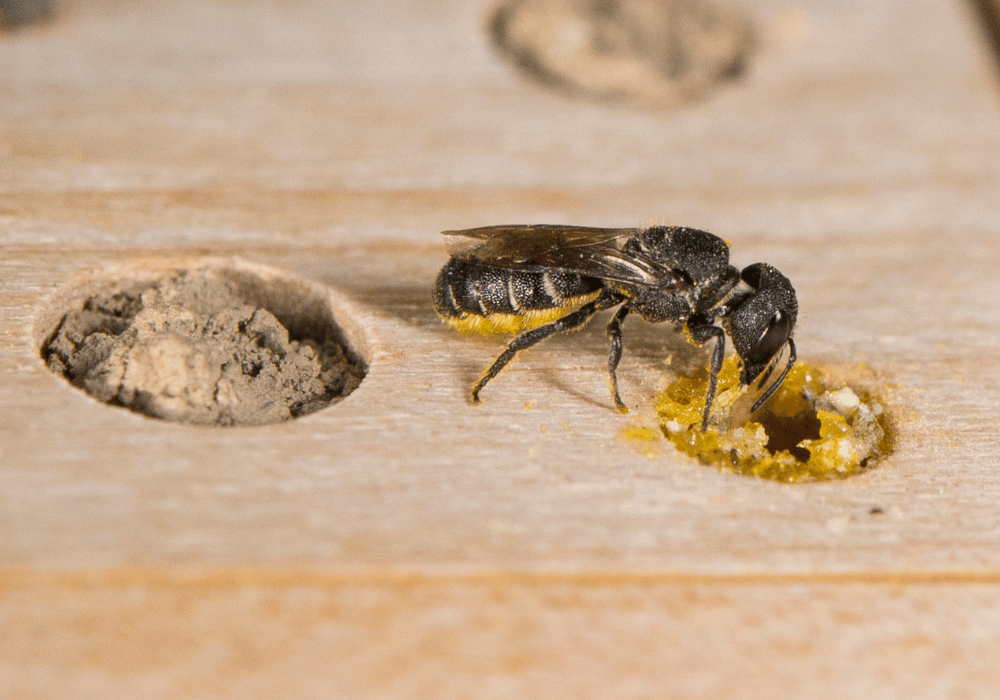
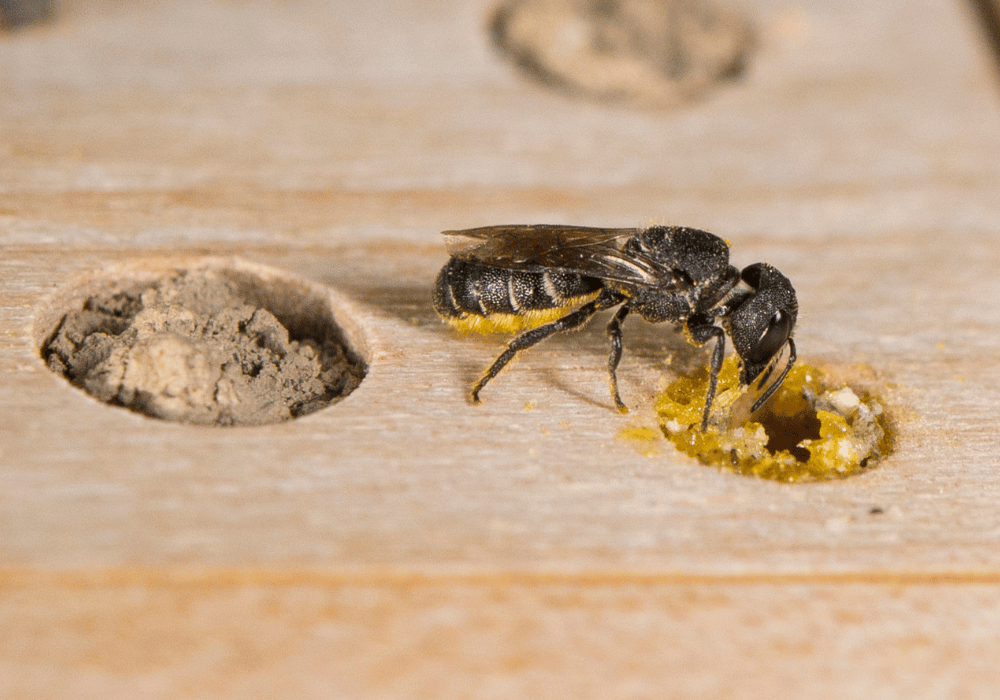
The large scissor bee is common and can be observed in many gardens. If you look closely, you can see how it collects pollen into its abdominal scopa with rocking movements on its host plants. As a nesting aid, it prefers cavities with diameters of 3–4 mm, but occasionally it also colonizes larger holes.
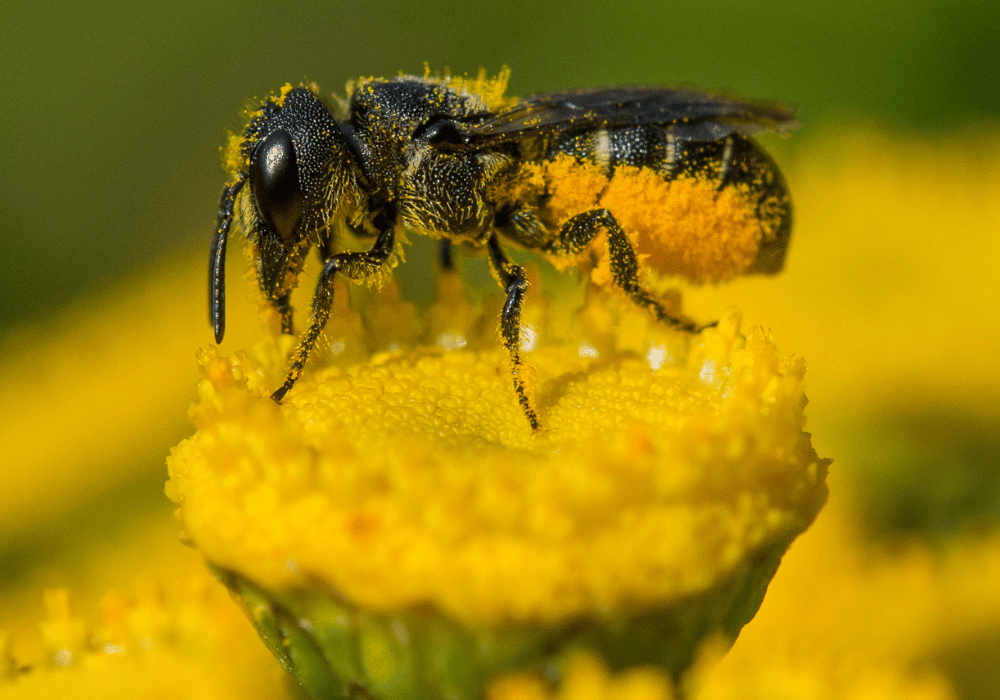
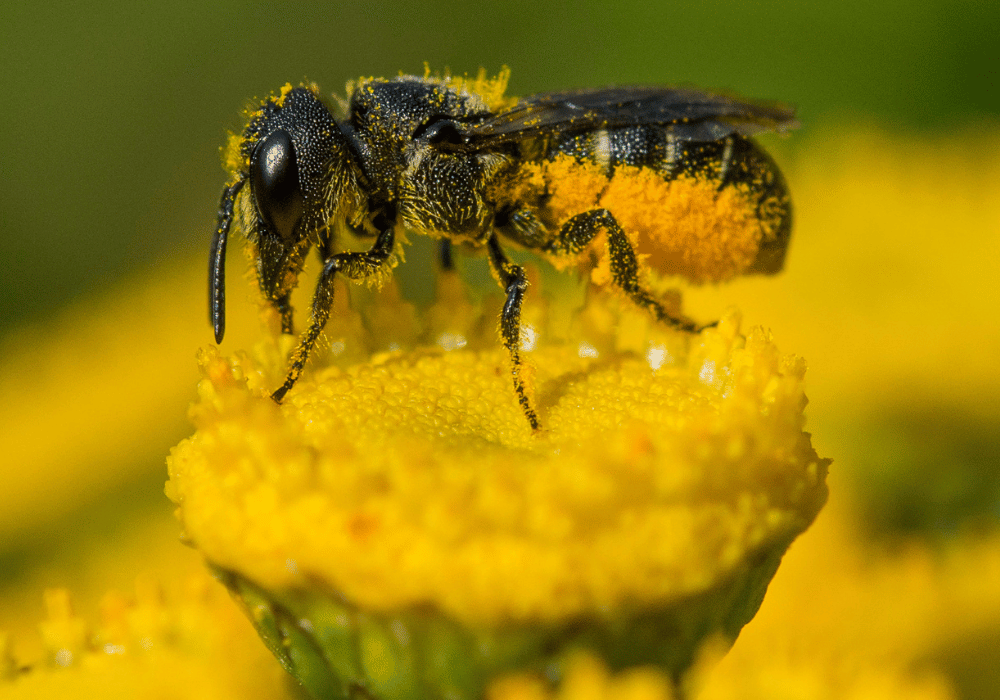
What do small resin bees look like?
The small resin bee is 6–8 mm long and has a shiny black and relatively slender body with weakly developed white hair bands on its abdomen. These small insects are often seen carrying strikingly yellow pollen on their abdominal scopa.
Flight duration
June to September. One generation per year
Food Preferences
This genus specializes in Asteraceae. Particularly popular are ox-eye daisy, dyer's chamomile, tansy, willow-leaved Inula, and chicory.
Flight duration
June to September. One generation per year
Food Preferences
This genus specializes in Asteraceae. Particularly popular are ox-eye daisy, dyer's chamomile, tansy, willow-leaved Inula, and chicory.
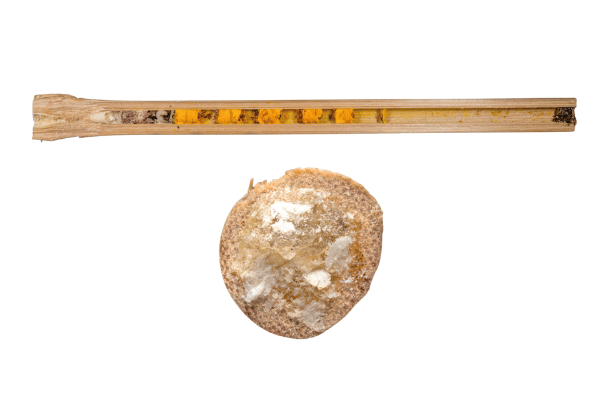
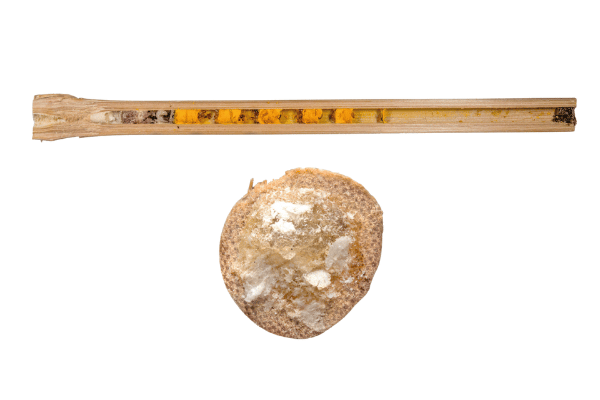
How do Resin Bees nest?
For nest building, the resin bee collects tree resin from conifers, which it uses to construct the cell partitions and the nest plug. The nest plugs are often additionally camouflaged with small stones or wood chips.
Wild bees in Switzerland: The Hole-nesting Bee