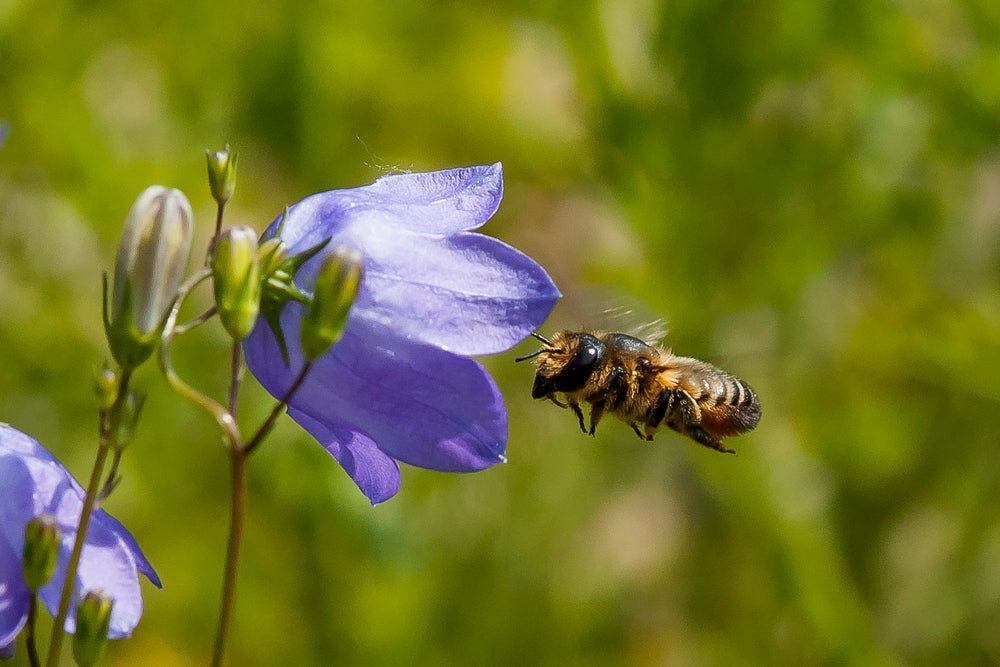
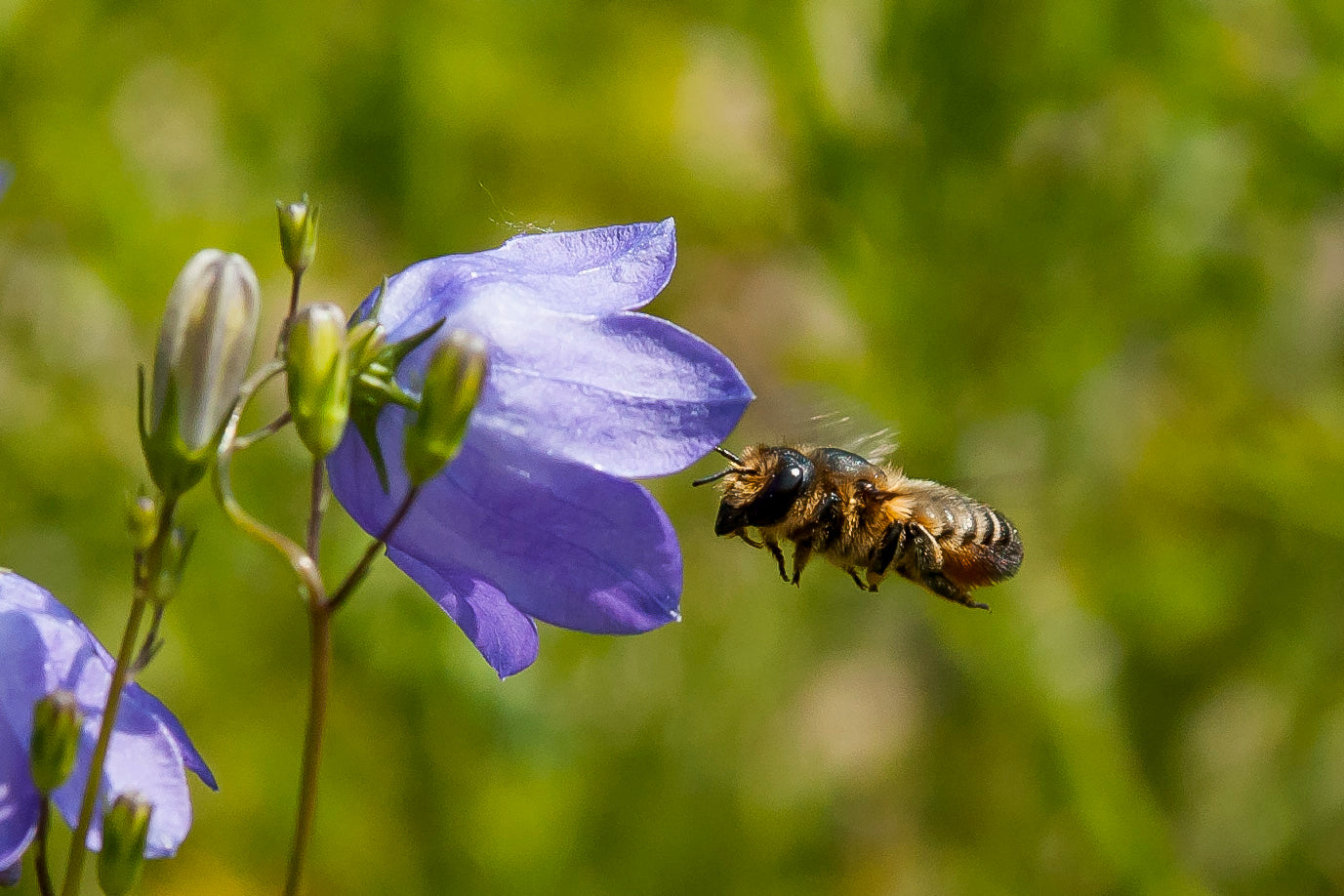
Her name says it all. Within seconds, the leafcutter bee cuts out a piece of leaf up to 2 cm in size and flies with it to the nest, as if riding on a saddle. There, she processes the leaf pieces into artfully designed brood cells, in which she deposits pollen and nectar. A total of over 20 species of this genus are known in Switzerland, but only a few of them can be found in nesting aids.
What do garden leafcutter bees look like?
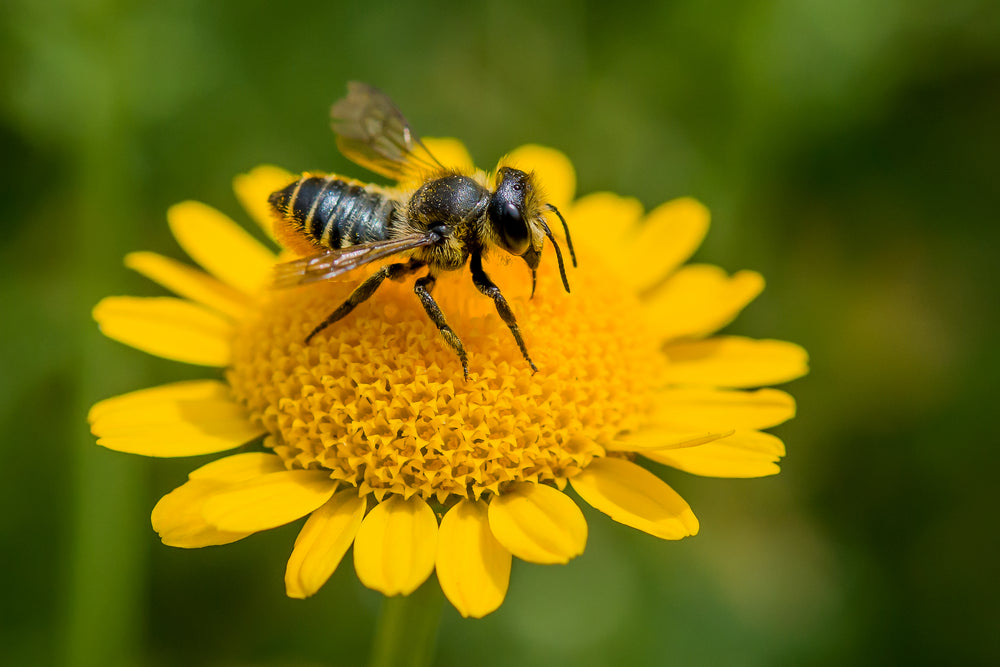
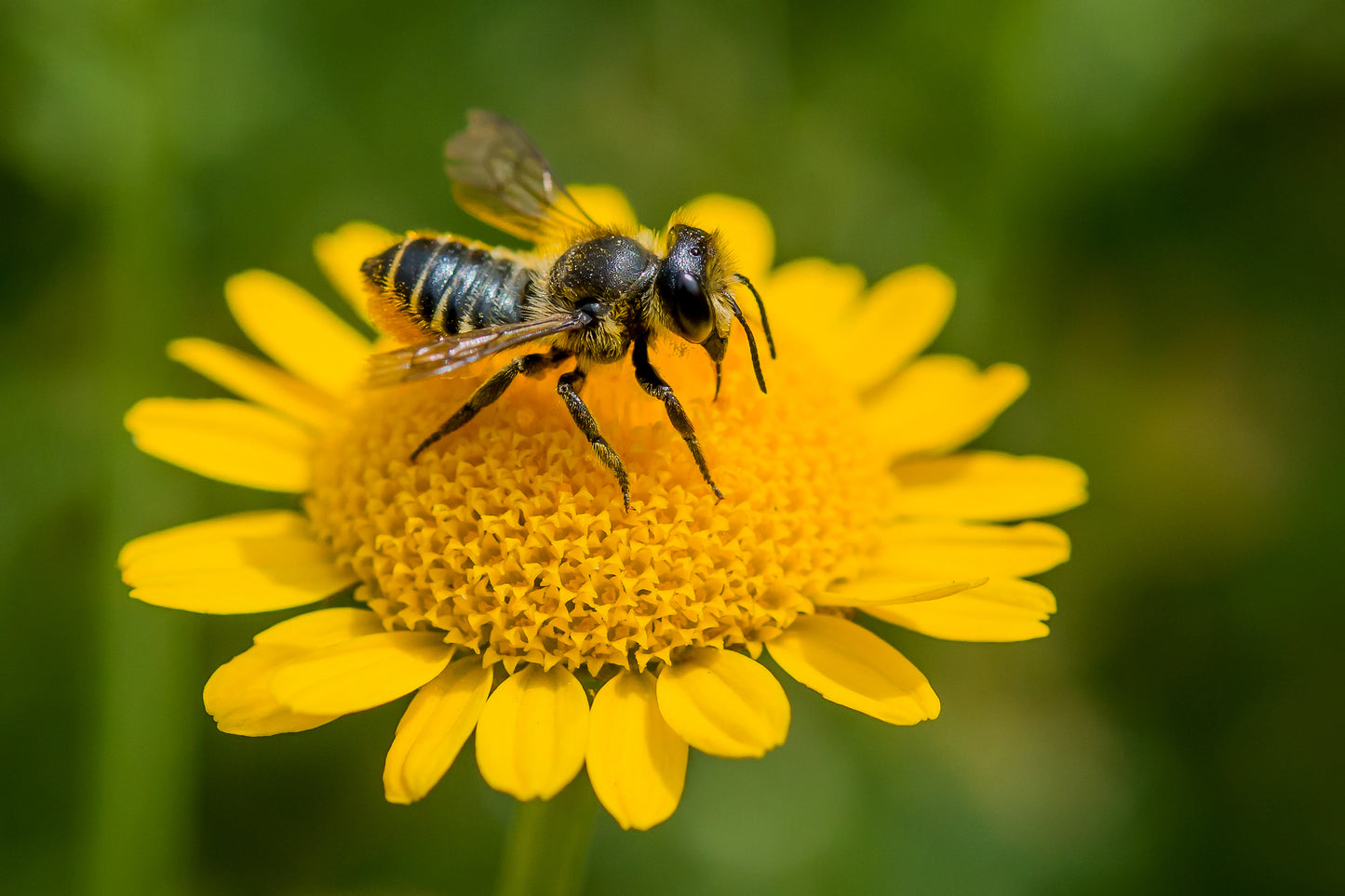
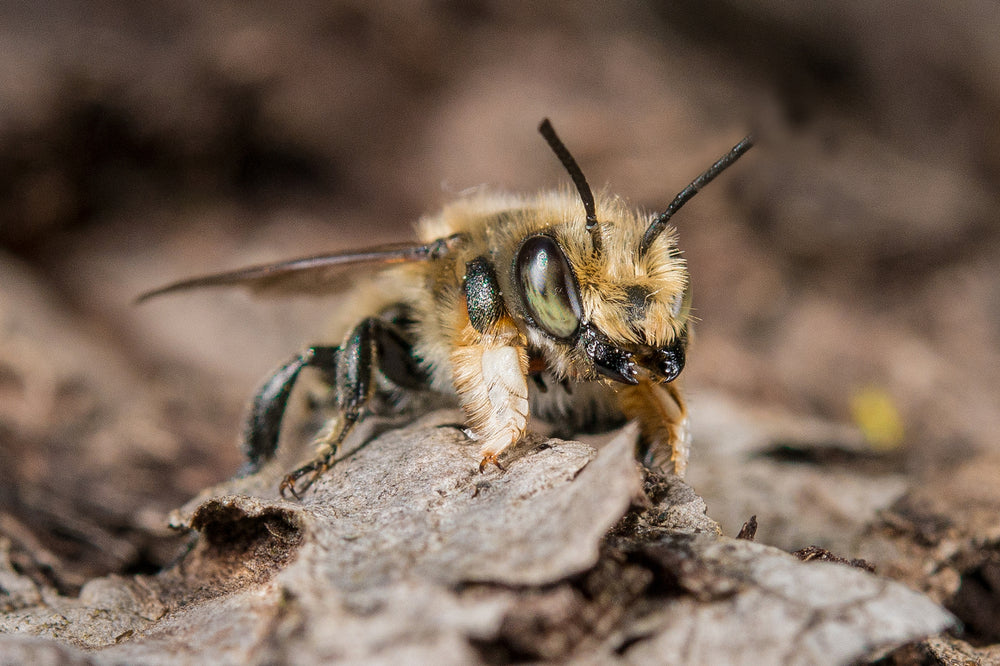
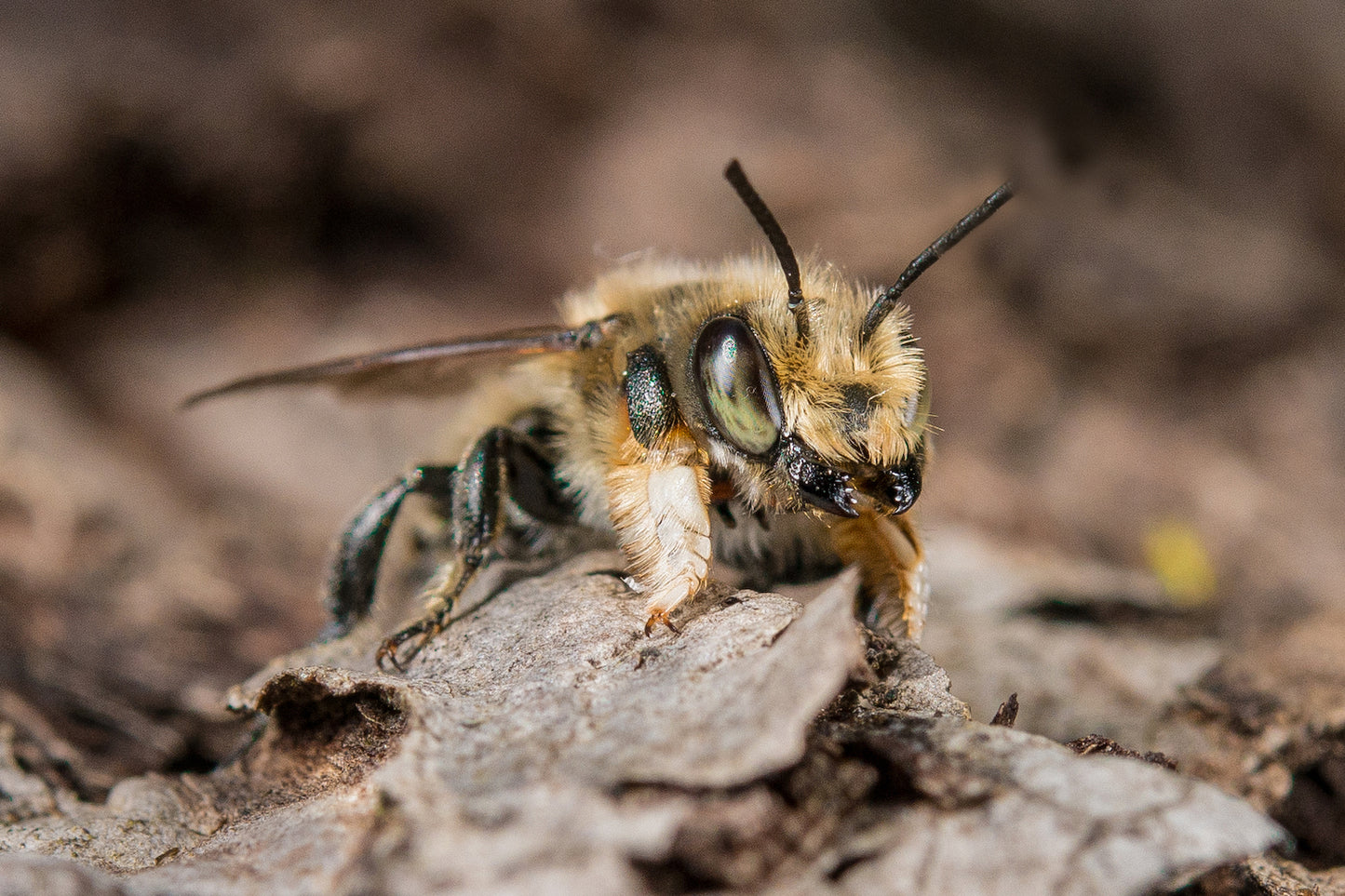
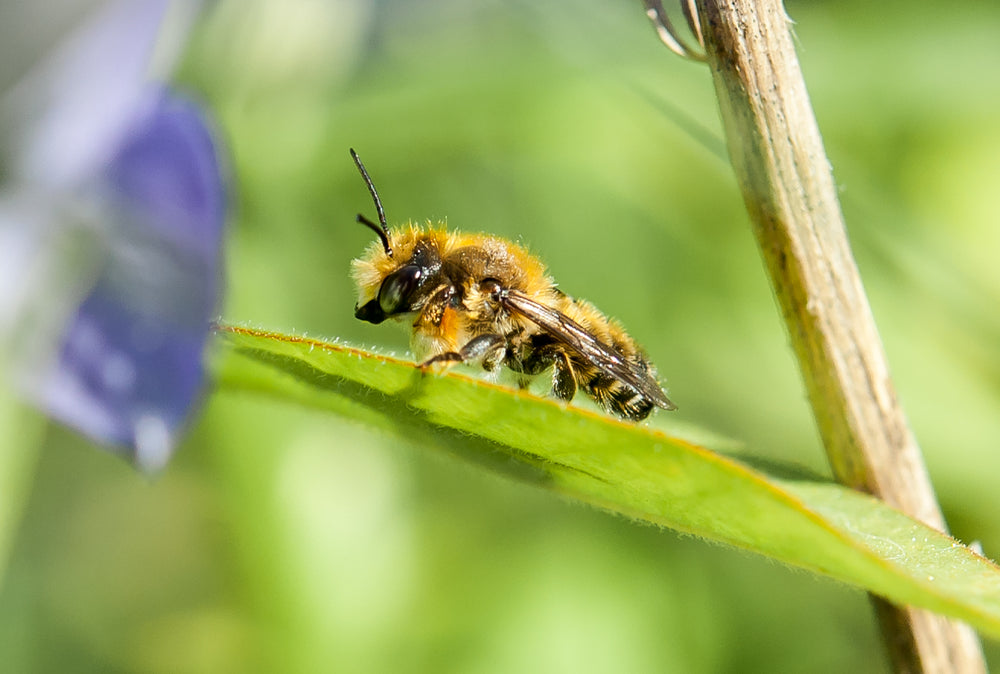
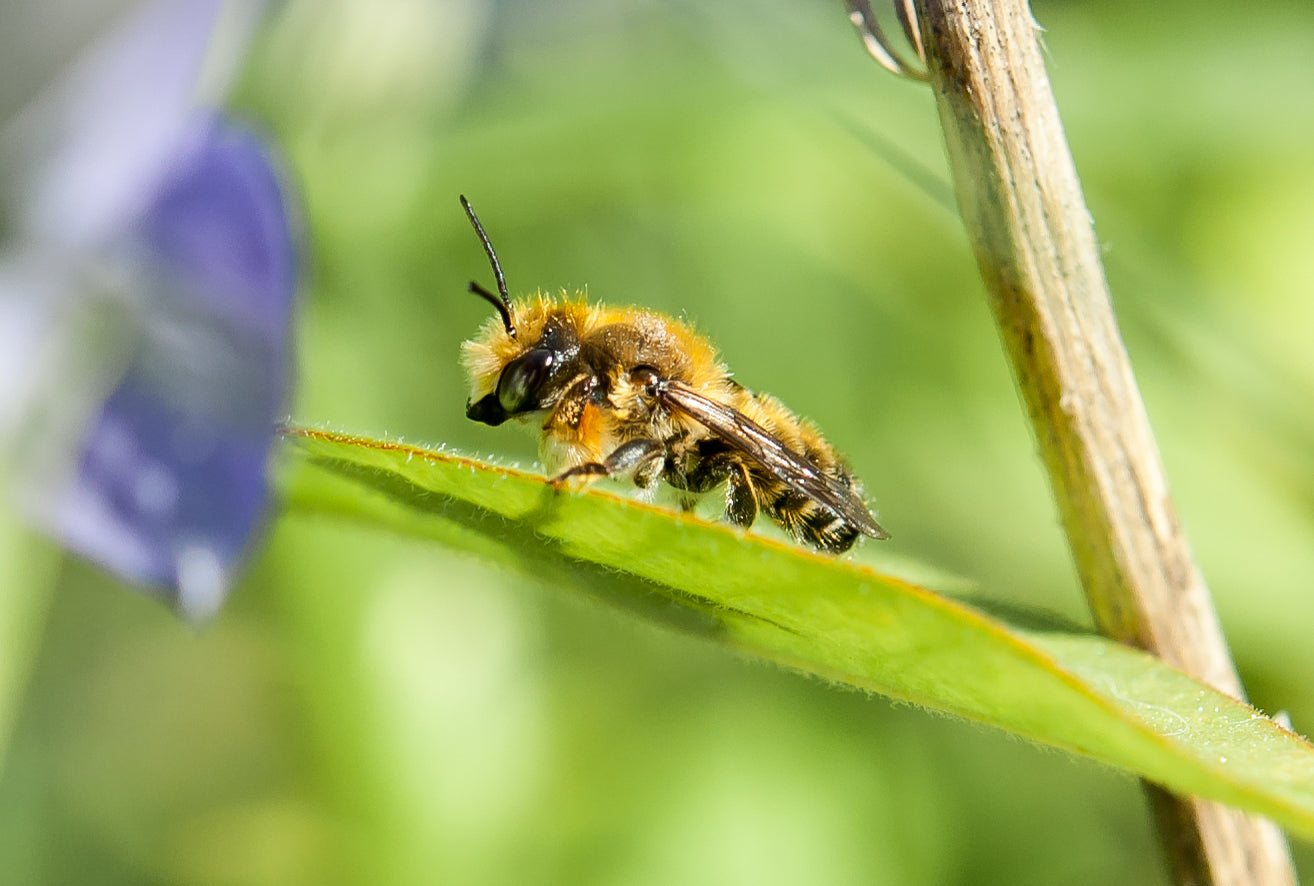
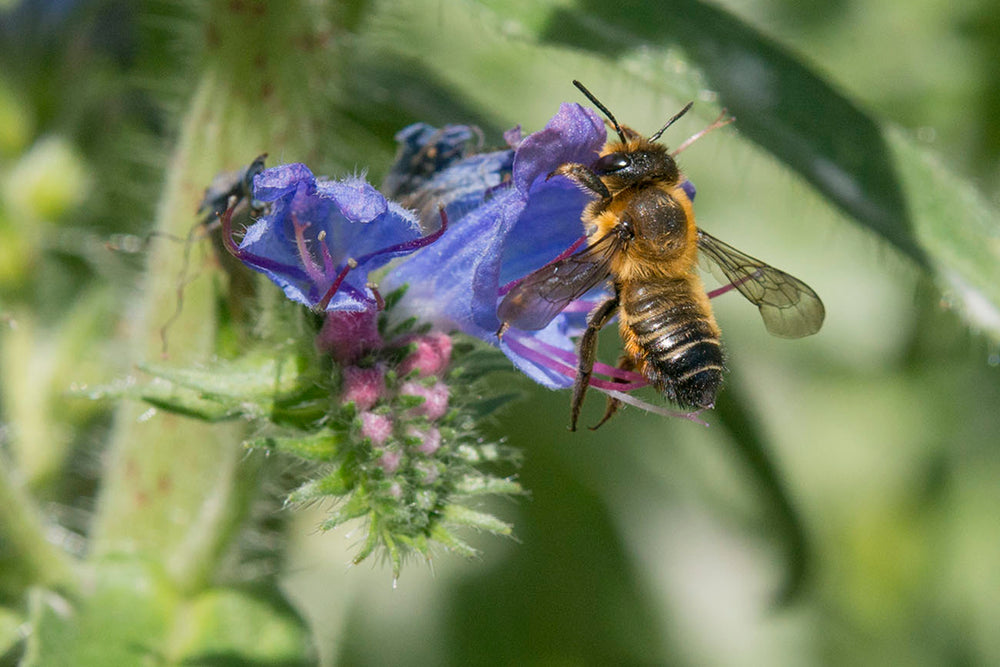
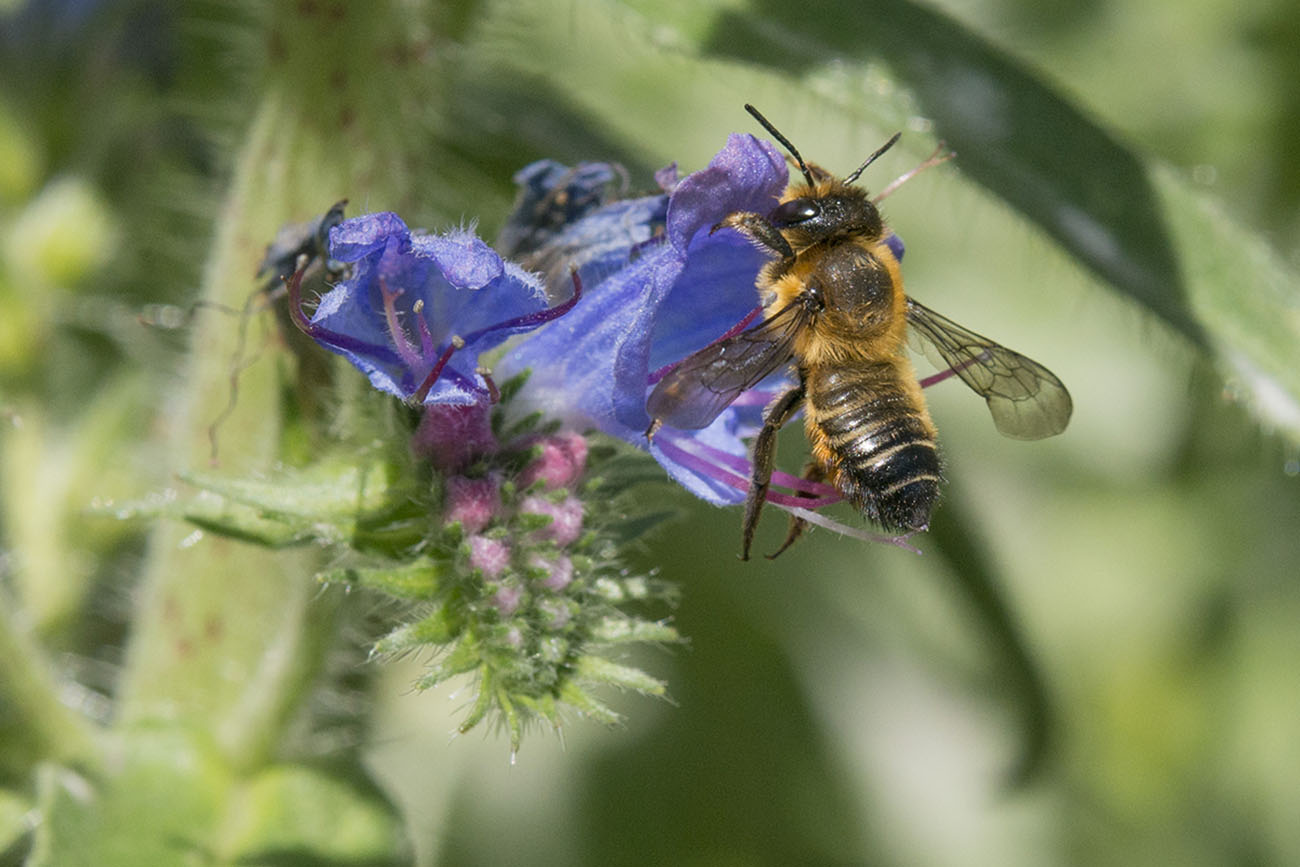
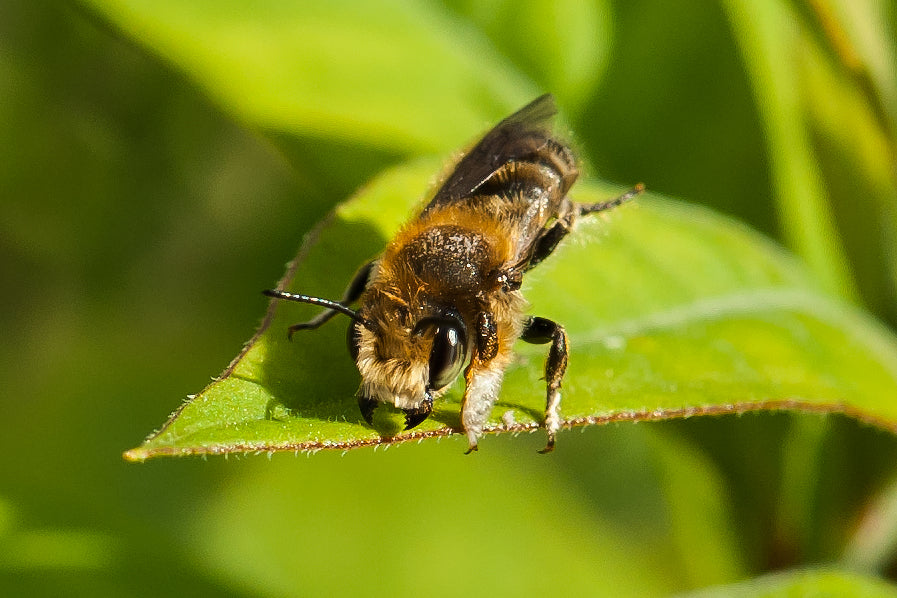
The garden leafcutter bee is larger than the honeybee, measuring 12–15 mm. The males have broadened, snow-white forelegs, which they use to hold the females during mating. The females are inconspicuously dark brown and appear strong and somewhat stocky.
Flight time
May to September. Usually one, sometimes two generations per year.
Food preferences
The garden leaf-cutter bee is not specialized (polylectic) and collects pollen mainly from legumes, composites, stonecrops, and bellflowers.
Nesting behavior
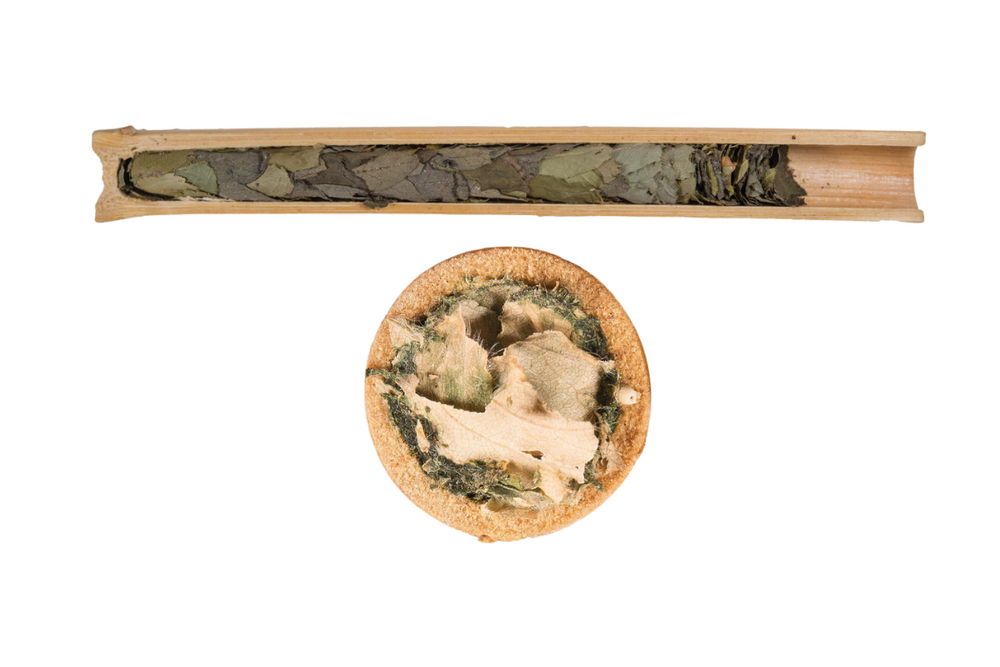
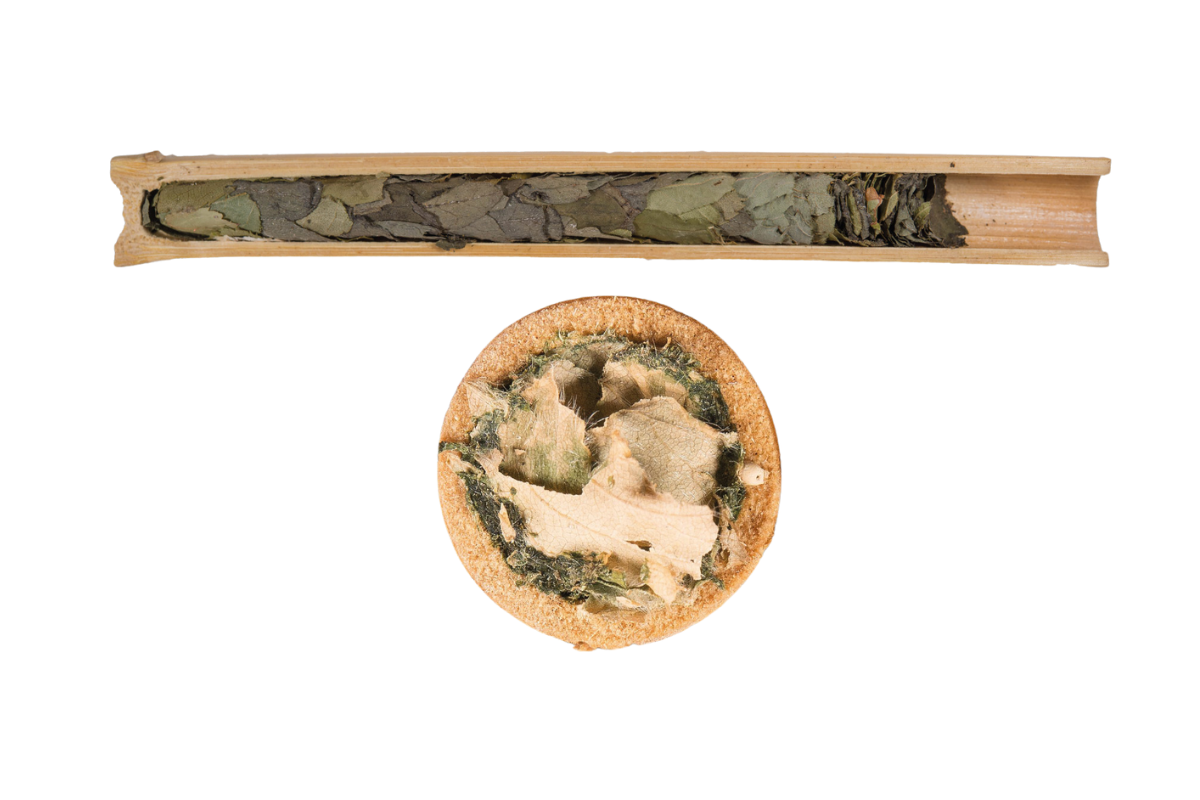
The leafcutter bee builds its nest from pieces of leaves. The nest closure also consists of several dozen leaf pieces, which are circular and have the diameter of the nesting tunnel.
Flight time
May to September. Usually one, sometimes two generations per year.
Food preferences
The garden leaf-cutter bee is not specialized (polylectic) and collects pollen mainly from legumes, composites, stonecrops, and bellflowers.
Nesting behavior
The leafcutter bee builds its nest from pieces of leaves. The nest closure also consists of several dozen leaf pieces, which are circular and have the diameter of the nesting tunnel.
Special Nesting Habits of Leafcutter Bees
As their name suggests, leafcutter bees build their nests from leaves. Anyone seeing one of these wild bees fly past with a piece of leaf bitten out for the first time will rub their eyes in astonishment: it seems as if a bee is riding through the air on a green saddle. Although many Megachile species use leaves as building material, this is not true for all species. Hence the peculiar name leafcutter and mason bees. This is because some species use mortar made of sand and clay for nest building.
How do leafcutter bees nest?
These bees use pieces of leaves as building material, with which they completely line the brood cells. The larvae are completely enclosed by leaves. The nest entrance is also sealed with a thick plug of leaf material.
Preferred nesting materials are hard leaves from maple, beech, rose, or hornbeam. These are cut out in a complex process. The bees simultaneously cut with their mandibles and roll the leaf with their legs. This work is apparently so strenuous that the bees have to rest on the leaf for a few minutes afterwards. The piece of leaf is then brought into the nest. Depending on the species, this nest is in a BeeHome, but also in rotten wood, under stones, or in the ground.


Summer, Sun, Humming Sensations
Start your wild bee oasis now!
Experience the fascinating world of summer wild bees up close on your balcony or in your garden. Now is the perfect time to create new habitats and enjoy the buzzing of nature.
With the MyBeeHome app, you can follow your bees throughout the year, identify which species are nesting with you, and make your personal contribution to biodiversity visible. Simply set it up, let mason bees move in, and bring nature to life.


Leafcutter Bees in Your BeeHome
Alfalfa leafcutter bee (Megachile rotundata)
A widespread leafcutter bee that was introduced to the USA from Europe a long time ago. There, the alfalfa leafcutter bee is the most important pollinator for alfalfa seed production. However, it is not used for this purpose in Europe. It is a widespread bee that also readily moves into BeeHomes. There, it prefers tubes with a diameter of around 6 millimeters.
- Flight period: End of June to mid-August
- Size: 8-9 millimeters
- Forage plants: Alfalfa, white clover, common bird's-foot trefoil, round-headed garlic, and many other plants
- Overwintering: One generation per year, presumably overwinters as a larva.
Small garden leafcutter bee (Megachile centuncularis)
The small garden leafcutter bee is not very numerous, but can occasionally be found in BeeHomes.
A smaller leafcutter bee, generally somewhat inconspicuous. It is often found in residential areas, but never in large numbers, and you need some luck to observe it. It is not particular about its forage plants and accepts many species as food.
- Flight period: Early June to early September, the second generation sometimes until October
- Size: 11-12 millimeters
- Forage plants: Not very particular, golden thistle, knapweed, chicory, but also bird's-foot trefoil or forest peas and many others
- Overwintering: Sometimes two generations per year, presumably overwinters as a larva.