

1) Mason bees overwinter as adults in their cocoons
Many insects survive the cold by resting as an egg, larva, or pupa.
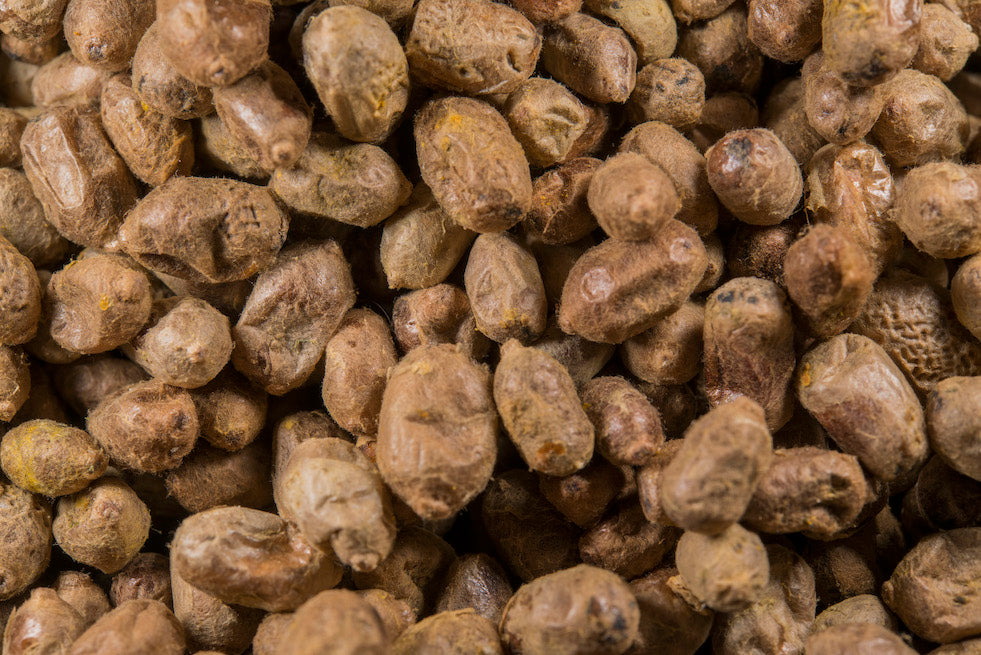
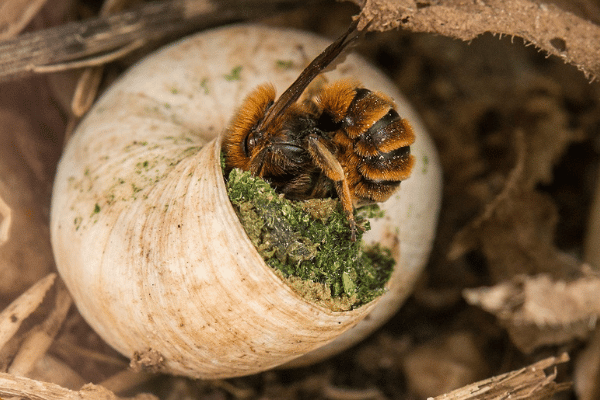
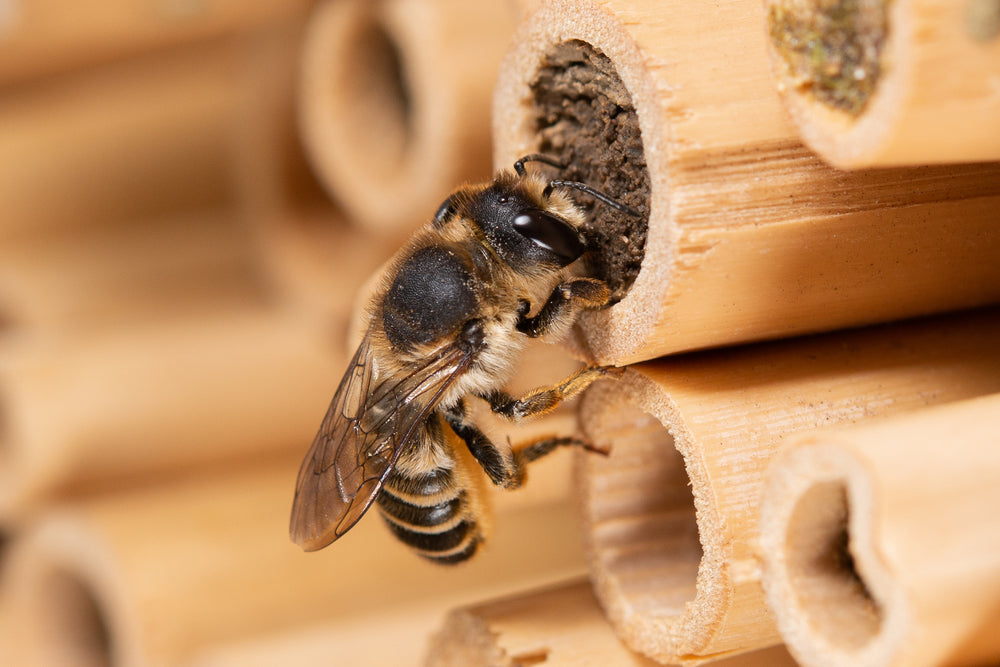
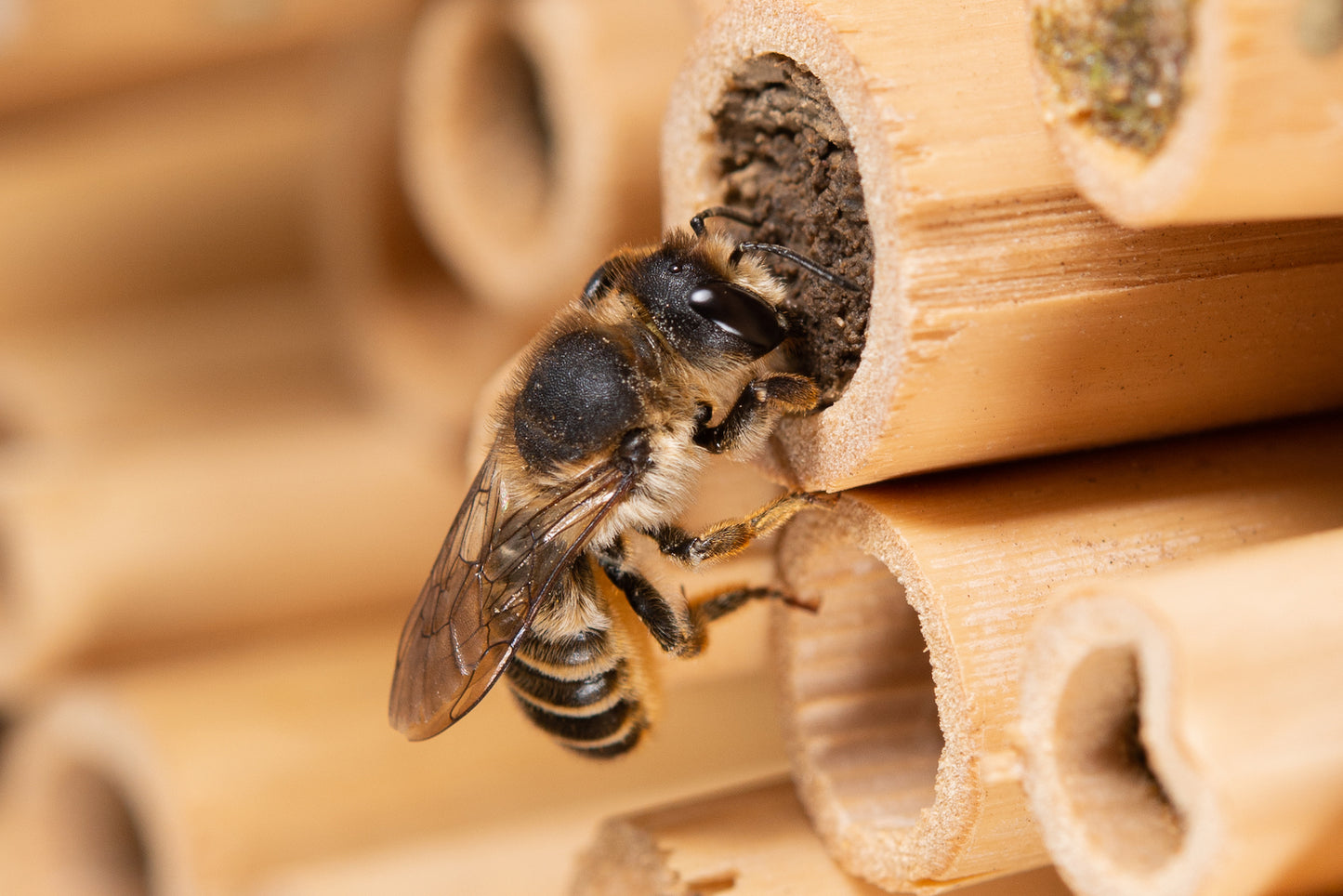
Mason bees, which often nest in our nesting aids, are different: They hibernate as adult insects – well-protected in their cocoons.
Between spring and autumn, the larvae in the nesting tubes have developed into complete wild bees.
While many other species still have to complete their metamorphosis in spring, mason bees are already ready as soon as the first blossoms appear.
Watch the development of the European orchard bee (Osmia cornuta) in this video.
2) A natural antifreeze protects against freezing
Unlike mammals, insects cannot regulate their body temperature. To prevent freezing in winter, wild bees produce a type of natural antifreeze in their bodies.
This trick prevents their body fluids from freezing – even at temperatures as low as –25 °C. Some beetles in the Arctic can even withstand temperatures down to –80 °C!
Your mason bees in the wild bee nesting aid also master this art.
Learn more about how important the correct location of your nesting aid is for safe overwintering.
3) What do wild bees eat in winter?
In short: nothing.
During hibernation, the metabolism of wild bees slows down significantly. They live off their fat reserves and don't need food.
That's why they lose about 10-15% of their body weight during winter. An important tip: Always leave your nesting aid outdoors in winter!
In warmth, their metabolism would speed up again – and the animals would unnecessarily consume energy.
You can find more information in the article Caring for your wild bee nesting aid in autumn



4) How long does hibernation last?
For your wild bees to start the spring fit and healthy, they need to hibernate for at least 90 days.
However, too much of a good thing would also not be ideal – at some point, their fat reserves would run out. Exactly when they awaken depends on the temperatures and the length of the day.
This ensures that the wild bees emerge from their nests just in time for the first blossoms.
Read more: Who actually wakes up the mason bees?
5) Observe your wild bees during hibernation
If you're curious, you can even observe your wild bees overwintering.
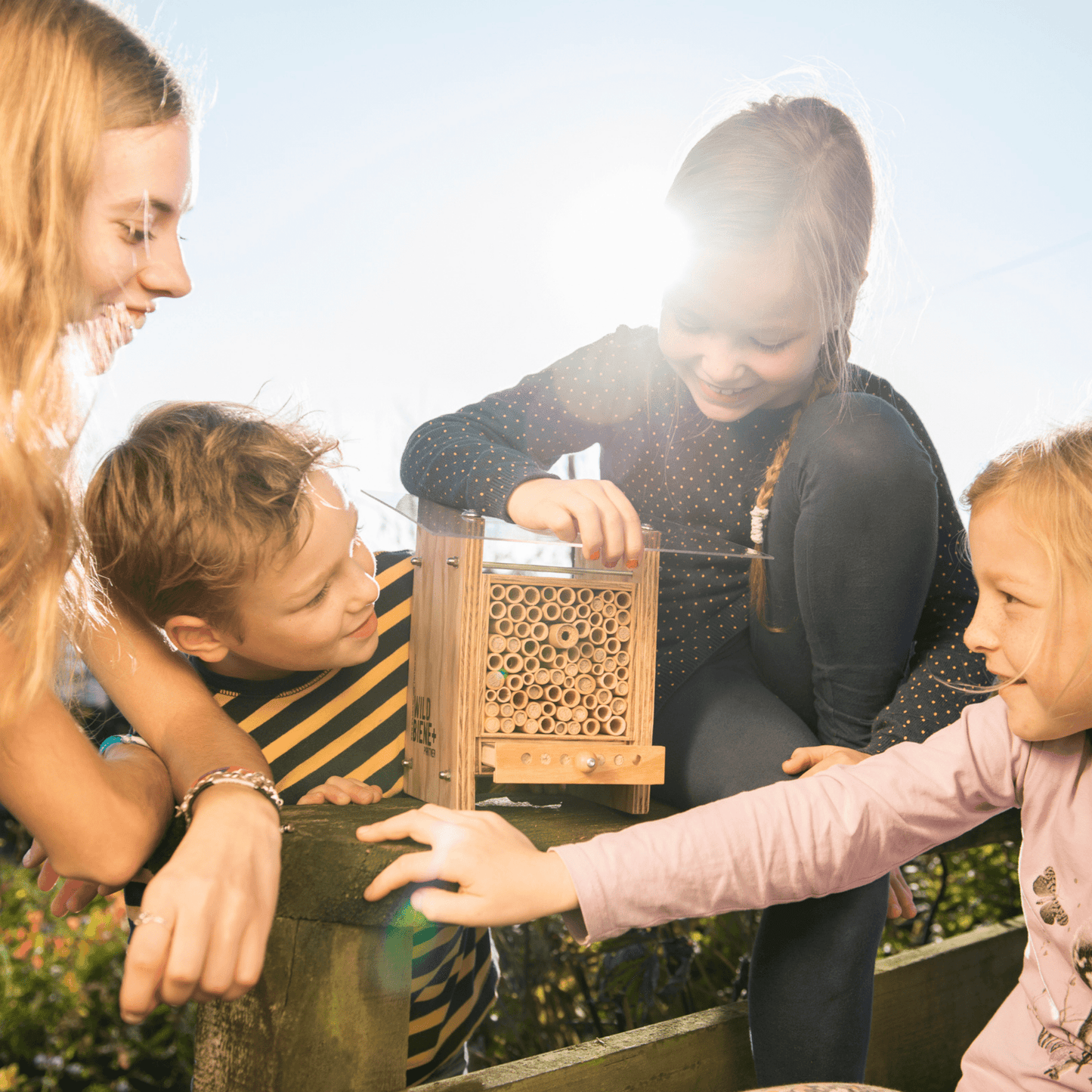
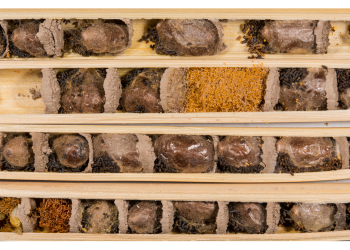
Our nesting aids with observation windows offer the perfect opportunity to get up close: you can watch the bees sleep, build their nests, and pupate.
The mason bees overwinter in them without any problems and emerge in spring completely without your intervention.
This turns the nesting aid into a true nature experience – not just for children, but for anyone who wants to take a closer look.
Discover more in our article How you can encourage wild bees in your garden





Thoughtful gifting – lasting joy
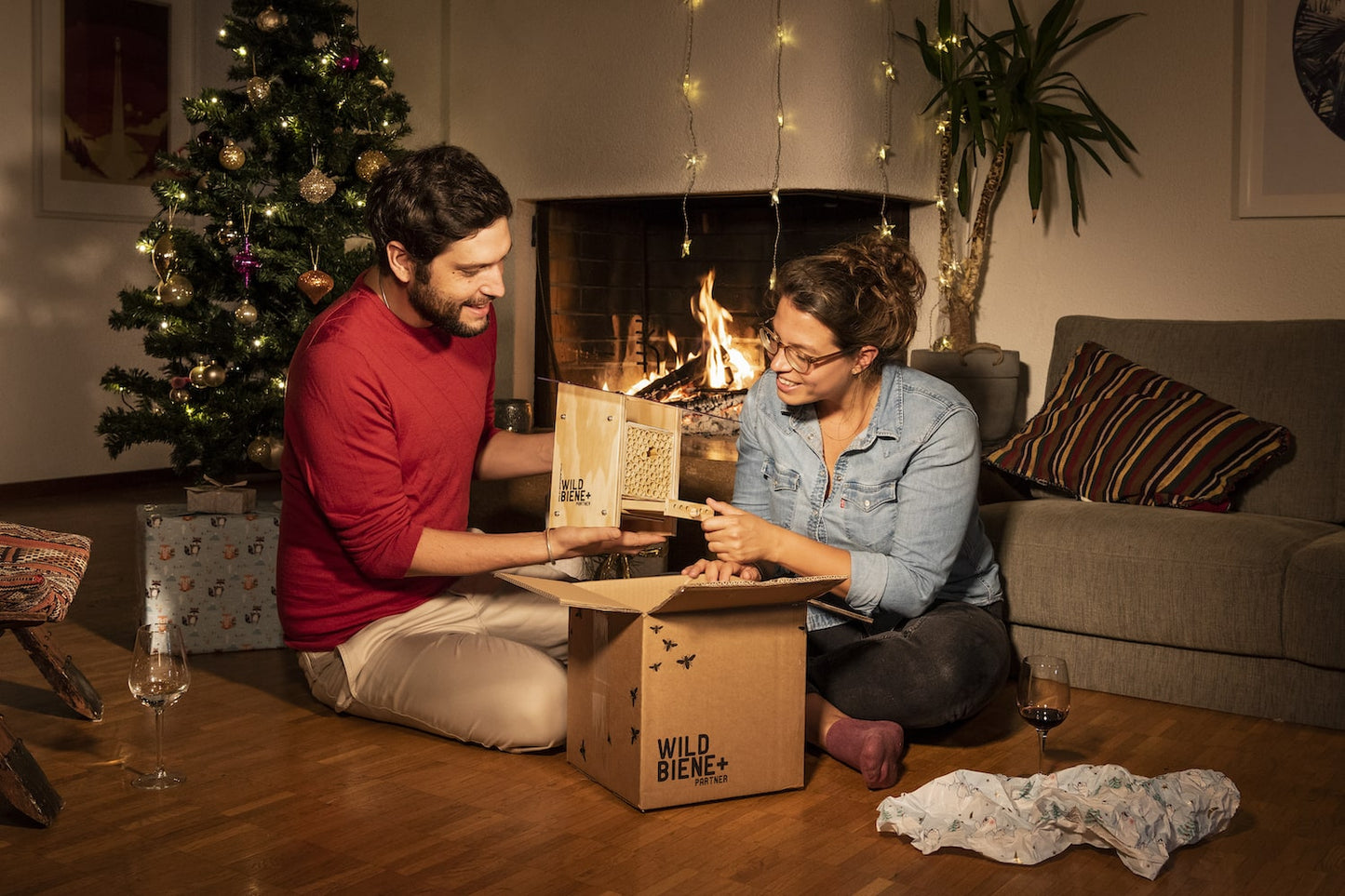
A sustainable Christmas gift with impact
Do you want to give a meaningful gift for Christmas – instead of glitter and plastic?
A wild bee nesting aid is a sustainable gift idea: handcrafted, locally produced, and with social responsibility.
Each nesting aid is the result of careful handwork – made from certified, recyclable materials in social workshops.
With this, you not only bring joy but also directly support biodiversity right outside your doorstep.
Goodbye, glittery awkward gifts – hello wild bee adventure!




More than a Bee Hotel — "BeeHome" Wild Bee Nesting Aid as a Durable Home
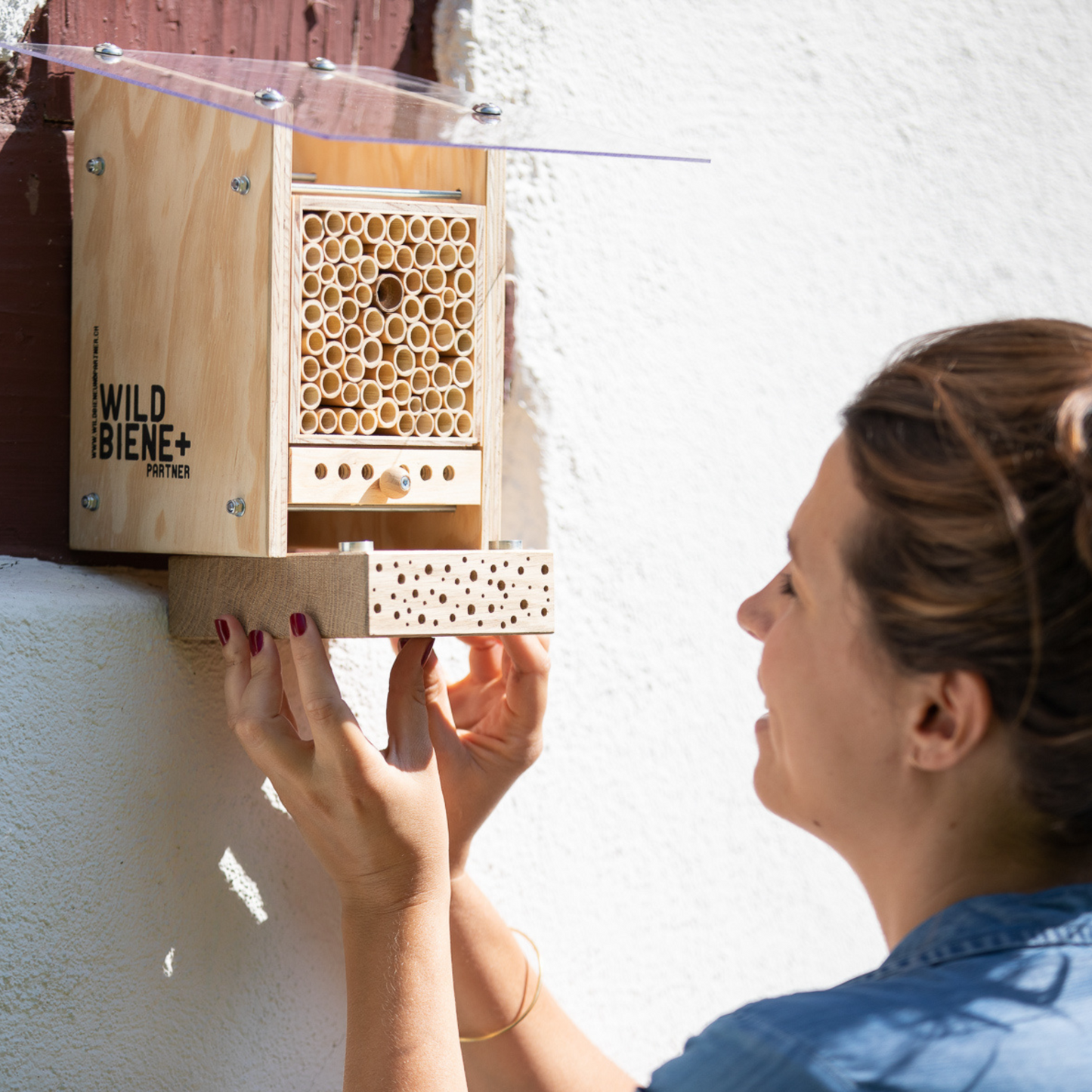
The term bee hotel is widely used – but strictly speaking, it doesn't describe what wild bees really need. When people talk about bee hotels in gardens or hardware stores, they are usually referring to decorative nesting aids with many materials that are, unfortunately, unsuitable for wild bees: tubes that are too short, rough drill holes, or filling materials that are not used at all.
A species-appropriate nesting aid for wild bees, on the other hand, offers exactly what they need for their brood: enclosed, clean cavities of suitable depth, so that the bees can safely create their brood cells and overwinter undisturbed – for example, in tubes made of species-appropriate giant reed.
That's why we at Wildbiene + Partner named our nesting aids BeeHomes (i.e., wild bee houses) instead of bee hotels.
Here, wild bees find a safe nesting aid and a long-lasting home year after year, instead of a short-term visit to a bee hotel. Because here the focus is not on decoration, but on real habitat – a place where wild bees can nest, develop, survive the winter, and make nature hum again next year.