

A Year with the BeeHome Diversity:
Wild Bee Update from Dietelsberger Hof
Wild bee diversity, dry stone walls - and a carpenter bee buzzing through the cottage garden.
Some stories deserve a sequel. Our encounter with Joanna, Simon, and their little paradise above Oberuzwil was so inspiring that we absolutely had to visit them again - this time not in person, but by phone, while Joanna was zipping through the landscape on her e-bike. In tow: lots of flowery news from the Dietelsberg farm, where natural gardening, animal husbandry, and wild bee protection go hand in hand.
From Newborn to Nature Explorer – and from BeeHome to Carpenter Bee
When we first met Joanna in summer 2024, her son was just three months old. Today, the little nature lover is already happily running through the garden, while wild bees hum around him, bumblebees dance, and there is a lively hustle and bustle in the tubes of the BeeHome Diversity.
“We already do a lot for wild bees anyway – flowers are blooming all over the farm, there's deadwood, brush piles, old grass,” Joanna explains. And that's exactly what's noticeable: “The BeeHome is really well-visited, many holes are sealed. There’s a lot happening!” Particularly popular: the hardwood nesting blocks in the BeeHome Diversity. “Almost all holes have been occupied by summer bees.”


Observing the Carpenter Bee – A Highlight in the Wildlife Garden
But one visitor particularly caught Joanna's eye: the Great Carpenter Bee. "It buzzes through the garden so impressively – you spot it immediately because it's so big," she recounts enthusiastically. The imposing bee, jet black with a blue shimmer, is Switzerland's largest wild bee and loves old fruit trees, rotten trunks, and dry wood. There's plenty of that at Dietelsberger Hof: "We leave dead trees standing, and a carpenter bee often buzzes by."
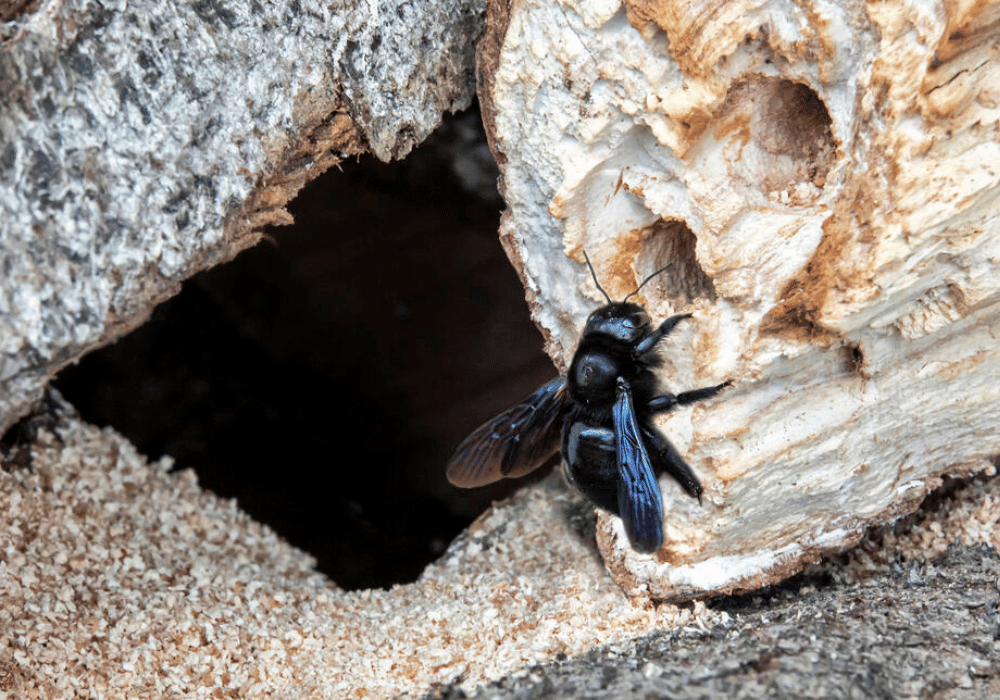
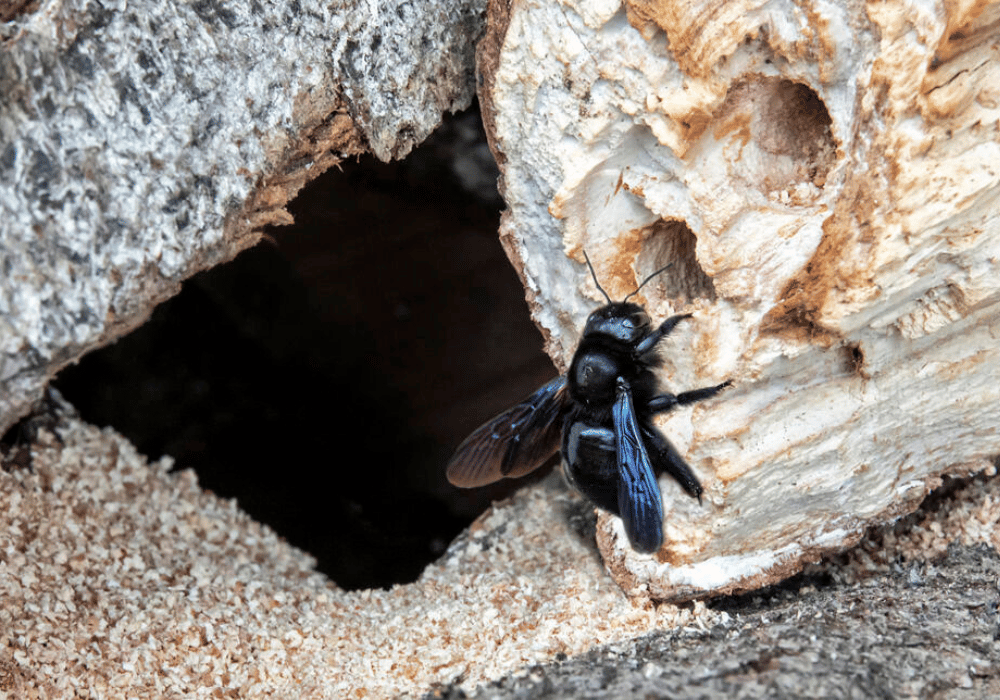
🐝 Observe a carpenter bee?
Joanna's tip: "Don't tidy everything up – the wilder the corners, the greater the diversity."
Even if the carpenter bees in the deadwood block of the BeeHome Diversity have not yet drilled their own spot, they still benefit from the near-natural environment. Because if you want to observe carpenter bees, you need one thing above all: diversity. Old fruit trees, standing deadwood, sun-warmed corners, and nectar-rich flowers like clary sage reliably attract these magnificent buzzers. Curious about the great carpenter bee?
The new dry stone wall – built with many hands and even more heart
In spring 2025, another project was completed: the first dry-stone wall on the Dietelsberg. In a three-day course – conducted by Stein und Sein – with natural garden enthusiasts, stones were split, layered and placed in such a way that they will provide a home for ground-nesting wild bees, lizards and other garden inhabitants in the future.
"We all had a great deal of fun," says Joanna. "It was not only educational but also very bonding. And a pile of stones is already ready for next year." The wall is not only ecologically valuable but also a real eye-catcher in the natural garden.


What have you learned about wild bees?
“You just have to do it. Don't plan everything. And: Be brave enough to embrace messiness!”
Joanna advocates for a more relaxed approach to nature: “I'm not saying you can't have a lawn anymore – but there should also be room for some wilderness next to it. Especially in small gardens, you can achieve a lot with perennials, native plants, and a few wild corners.”
BeeHome Diversity: A home for many, an eye-opener for all
The BeeHome Diversity has not only proven itself as a nesting aid on the farm – it has also opened up new perspectives. For Joanna, for her son – and for everyone who visits.
Those who observe the buzzing in the tubes discover more than just insects. They experience the bigger picture: how life emerges from diversity.


Our BeeHome Diversity
Would you like to promote wild bees yourself or even observe a carpenter bee?
With the BeeHome Diversity, you lay the foundation for a diverse bee world – whether on the balcony or in the garden. Combined with the right plants and a little courage for wildness, oases for rare wild bee species will also emerge in your home.
The BeeHome Diversity combines various nesting aids for many - including rare - wild bee species:
- Inner box Observer with approx. 80 giant reed tubes and a discovery drawer
- Inner box with approx. 95 giant reed tubes
- Hardwood nesting block (beech / ash)
- Deadwood block (self-collected in the forest)
Want to read more about Dietelsberger Hof?
You can find the first part of our report here 👉 A Visit to Paradise – Wild Bee Diversity at Dietelsberger Farm


