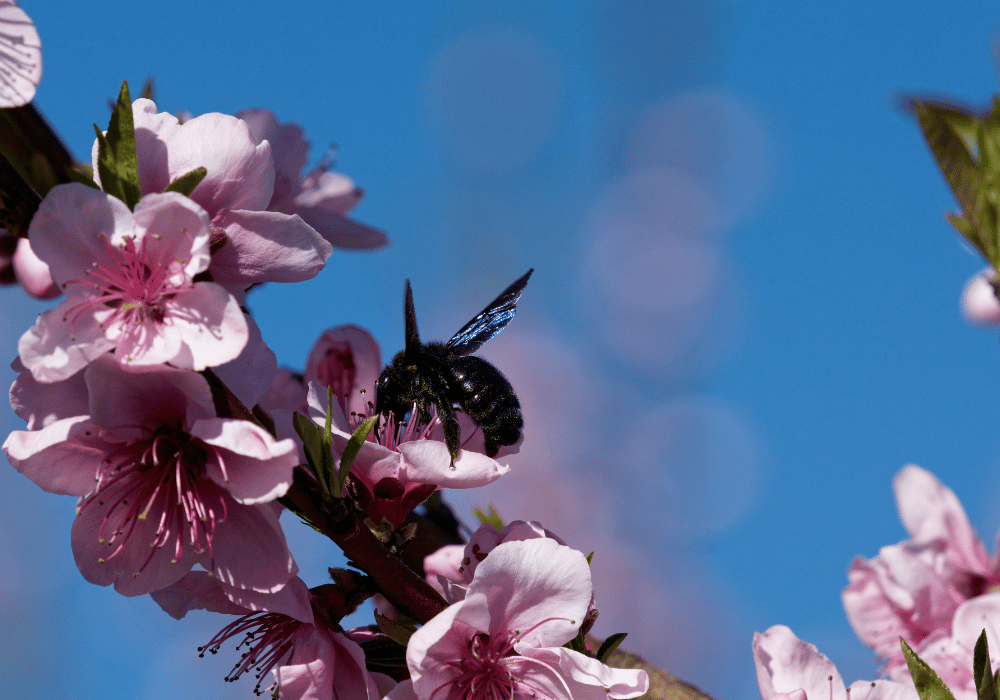
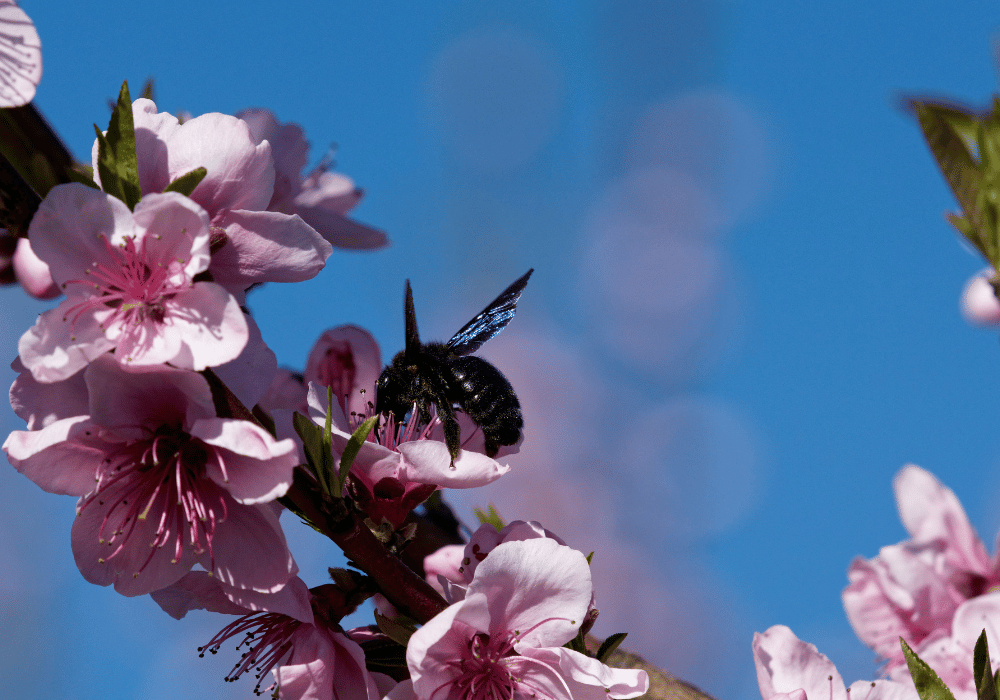
Carpenter bees have a very special life cycle. Males and females hatch in late summer and spend the rest of the season without nesting. They look for a suitable hiding place to survive the winter – often in the brood cavities where they hatched. In spring, they emerge and mate. Afterwards, the female builds a nest from which the next generation hatches in summer. They sometimes spend their twilight years together with the young bees in their nest.
Flight time
March to September. One generation per year.
Flight time
March to September. One generation per year.
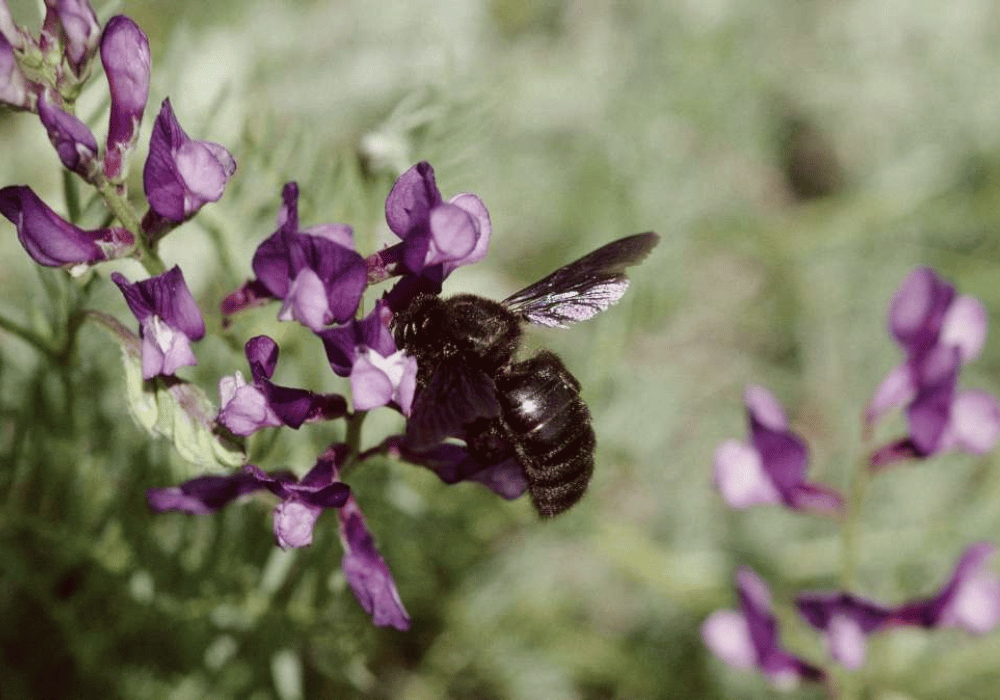
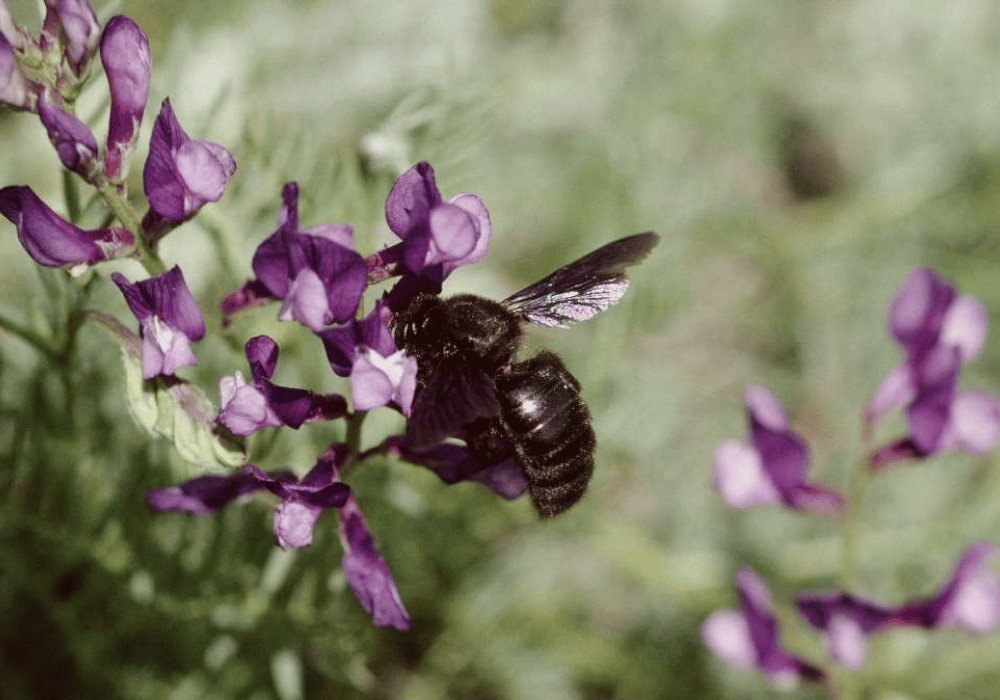
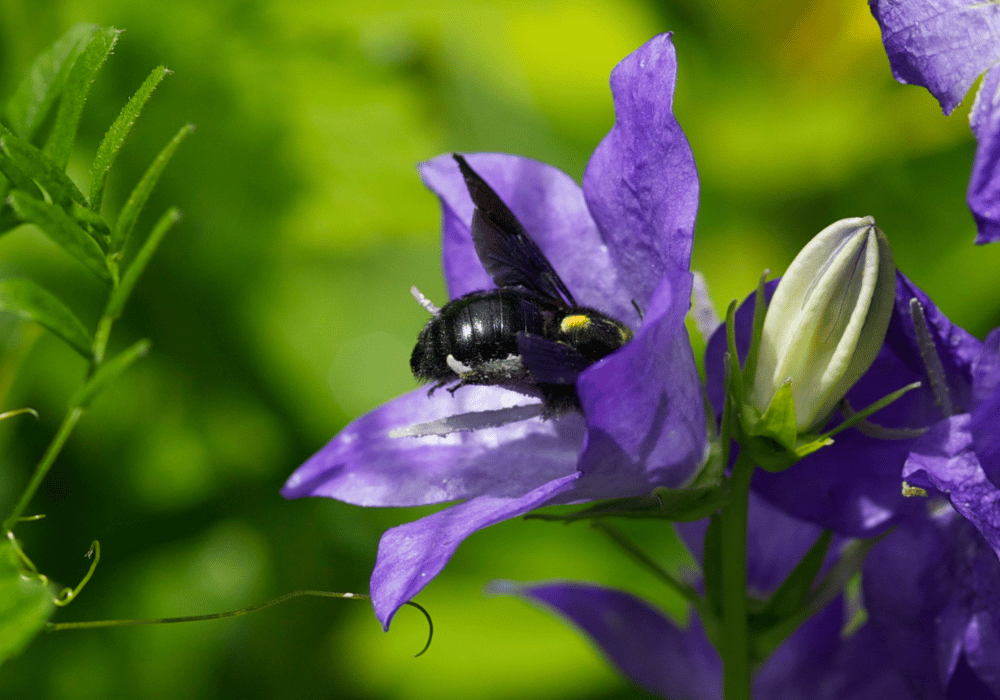
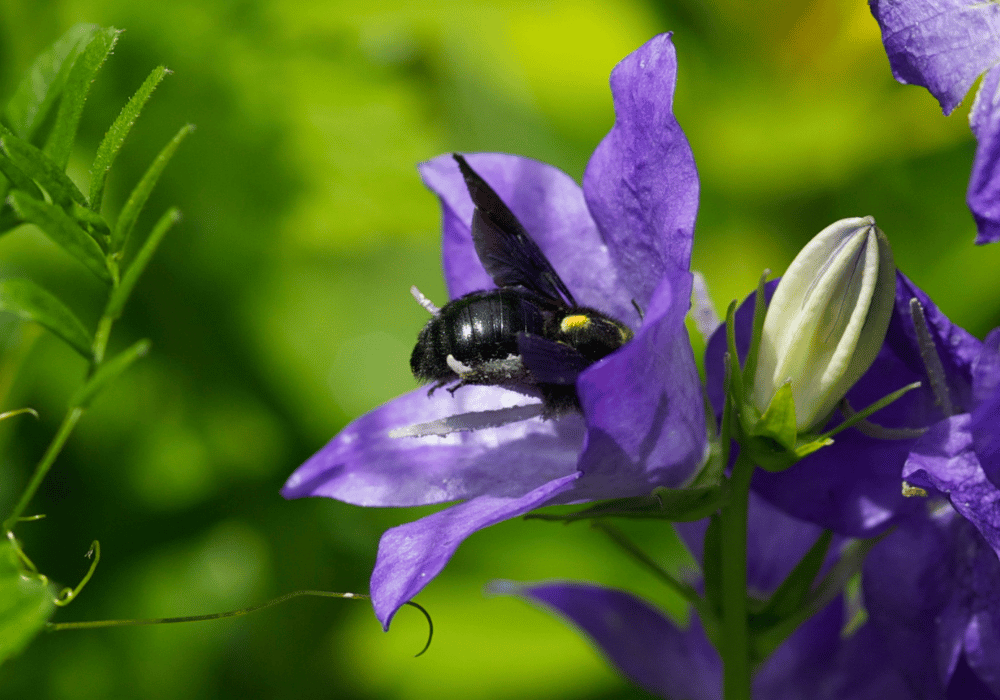
What do large carpenter bees look like?
Due to their size, dark wings, and hairiness, carpenter bees resemble large bumblebees.
However, unlike bumblebees, they do not form colonies, which makes them the largest solitary
bees in Switzerland. Four species of carpenter bees live in Switzerland, but they are difficult to
distinguish from each other in the field. Only the much smaller Xylocopa iris can be identified
immediately. But even with its size of about 15 mm, it still makes a stately hummer.
What do large carpenter bees eat?
Carpenter bees feed on the nectar and pollen of many different flowers, preferably labiates and legumes, such as peas. However, they are particularly fond of clary sage flowers. If you have a good stock of this beautiful wild flower in your garden, you can be almost certain that it will immediately be discovered and regularly visited by carpenter bees.
How do Carpenter Bees nest?
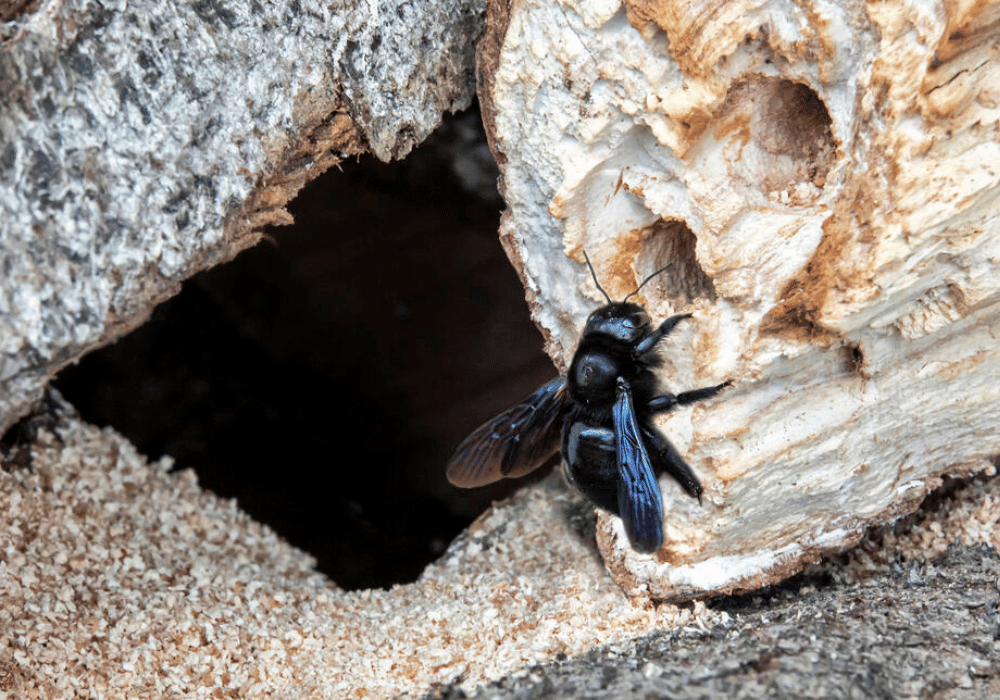
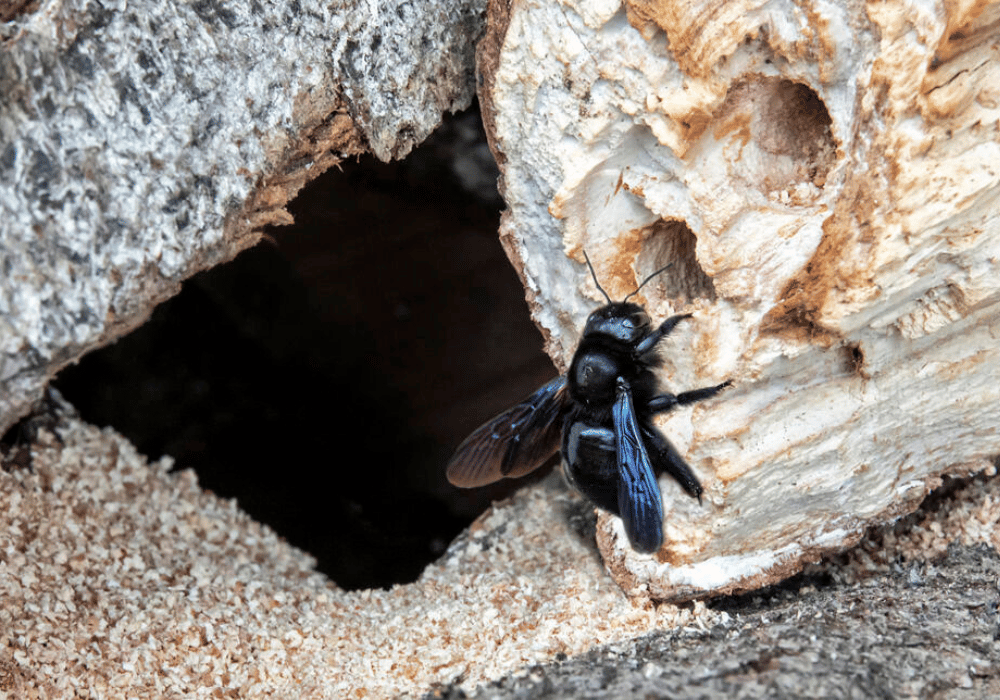
As their name suggests, carpenter bees lay their eggs in decaying wood or in pithy
stems. The females chew out a tunnel in which several brood cells are created one after
another. The individual brood cells are separated by wood shavings, which are glued
together with saliva. Unlike most other wild bee species, carpenter bee offspring do not
form a cocoon before hatching after only about two months.
It is jet black, with a dark blue sheen, and is Switzerland's largest wild bee: the Large Carpenter Bee
The Large Carpenter Bee on Peach Blossom