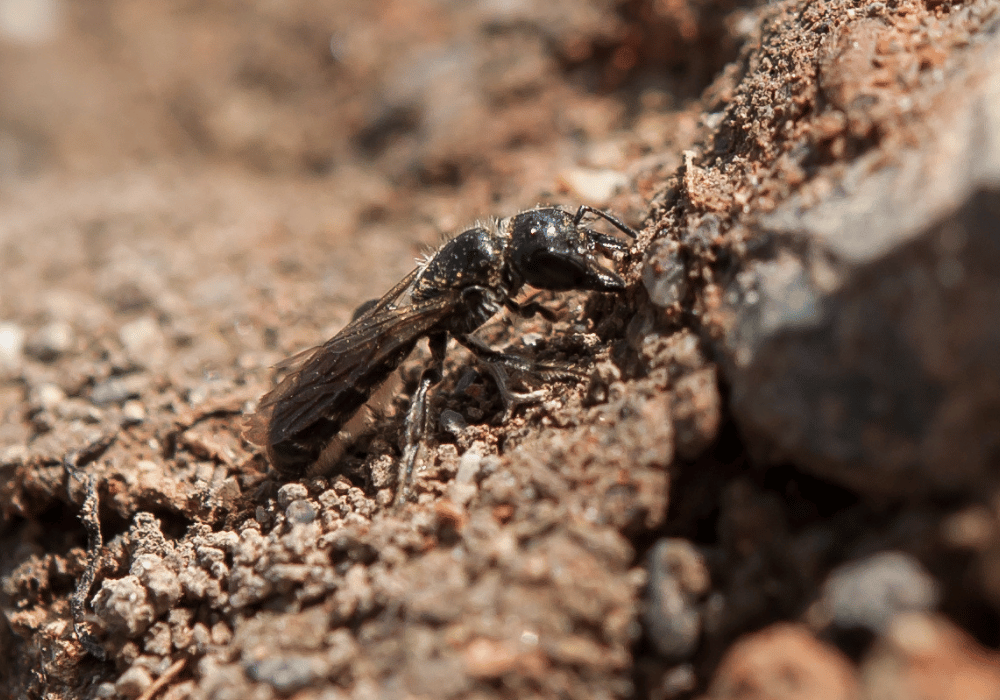
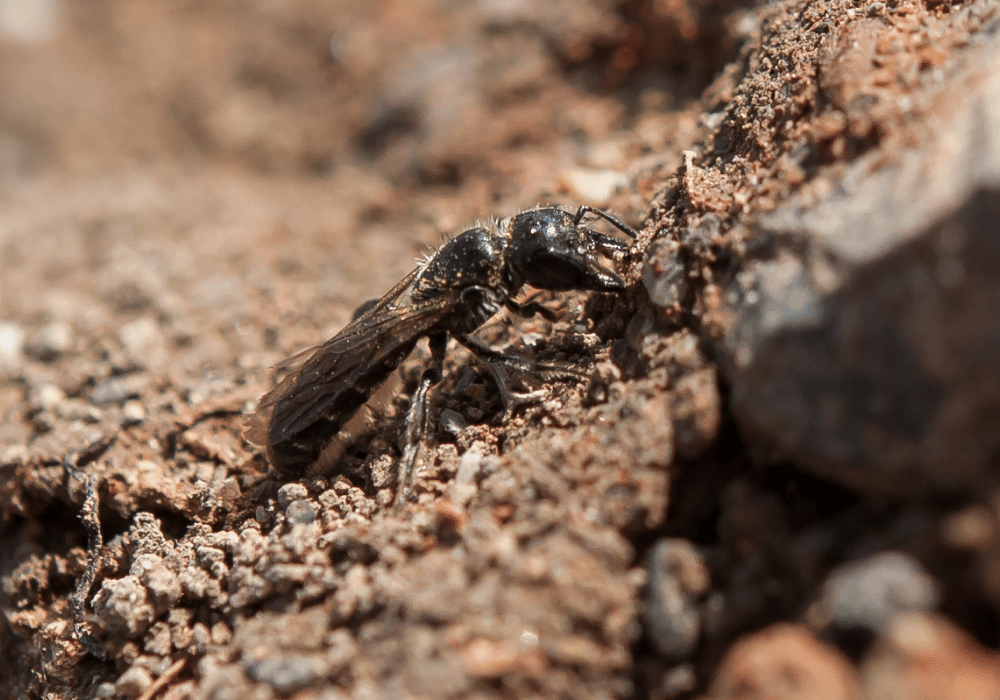
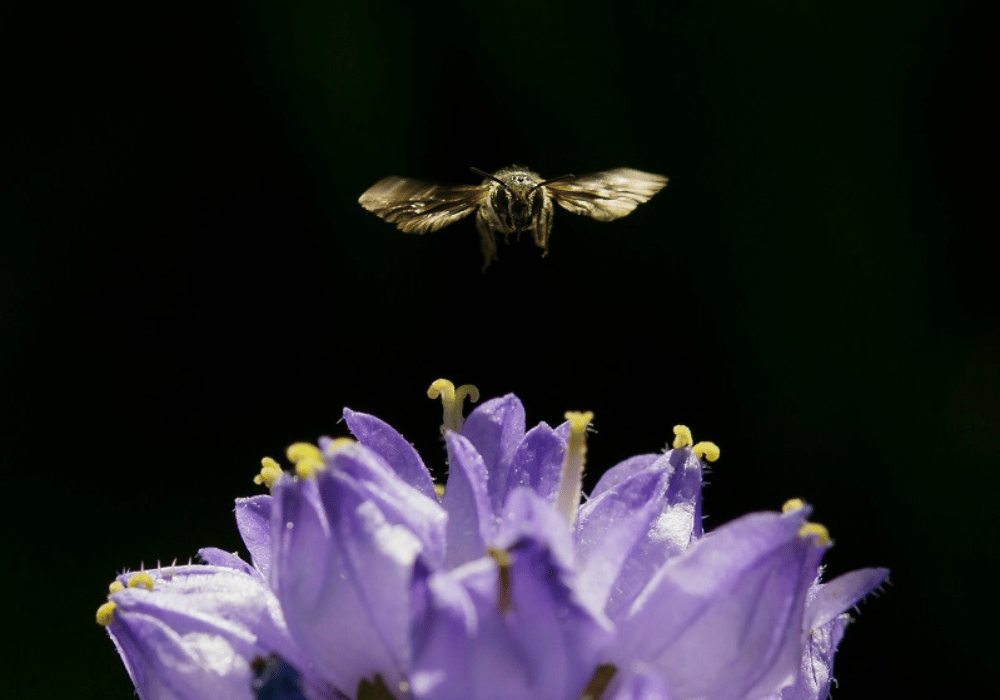
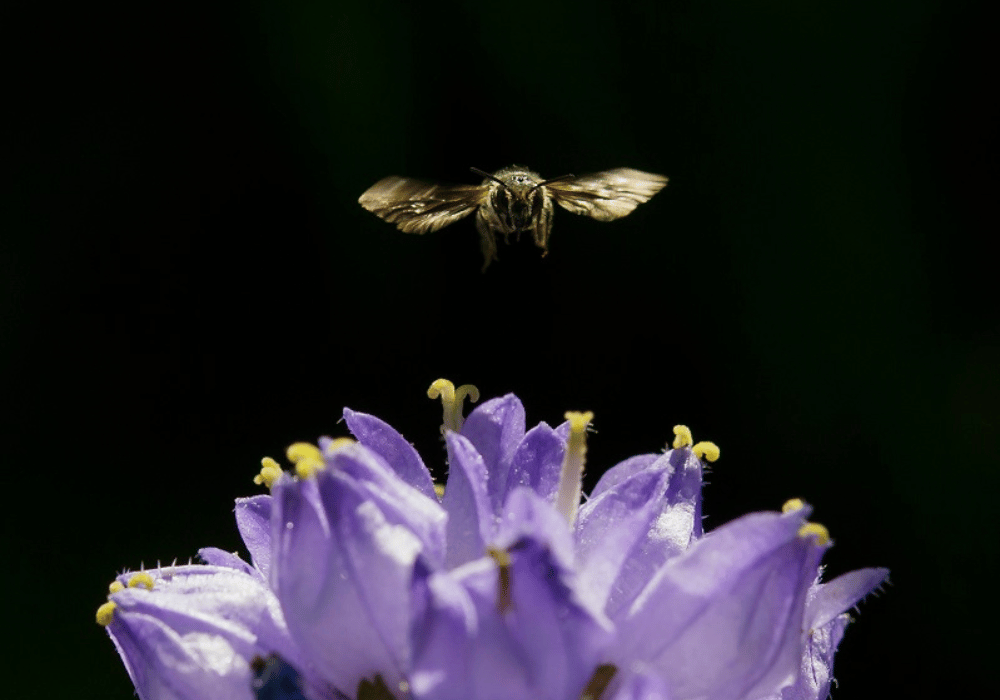
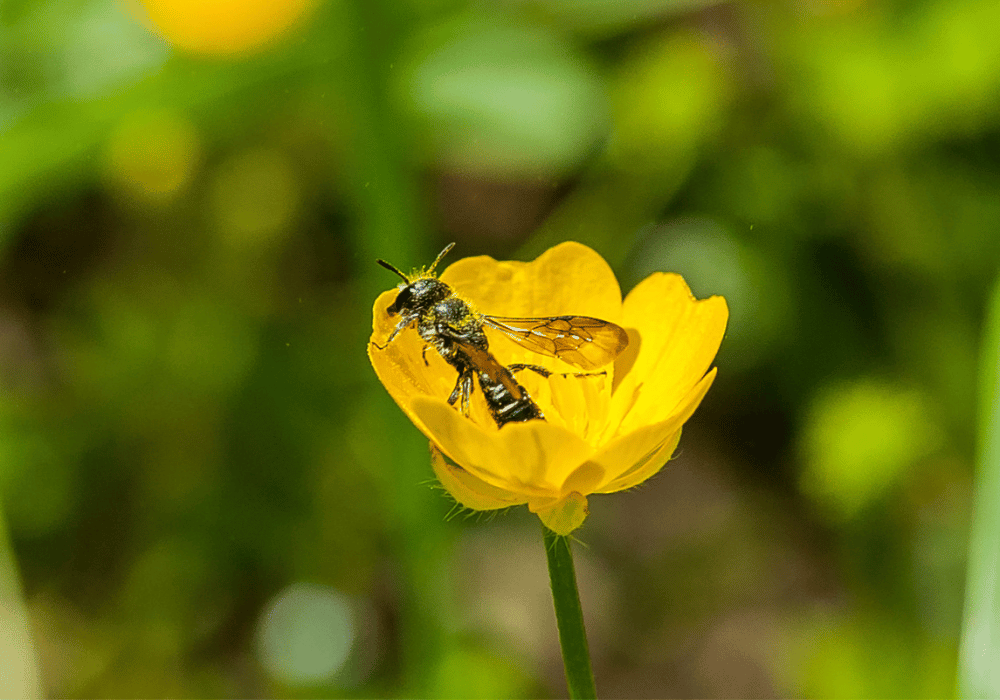
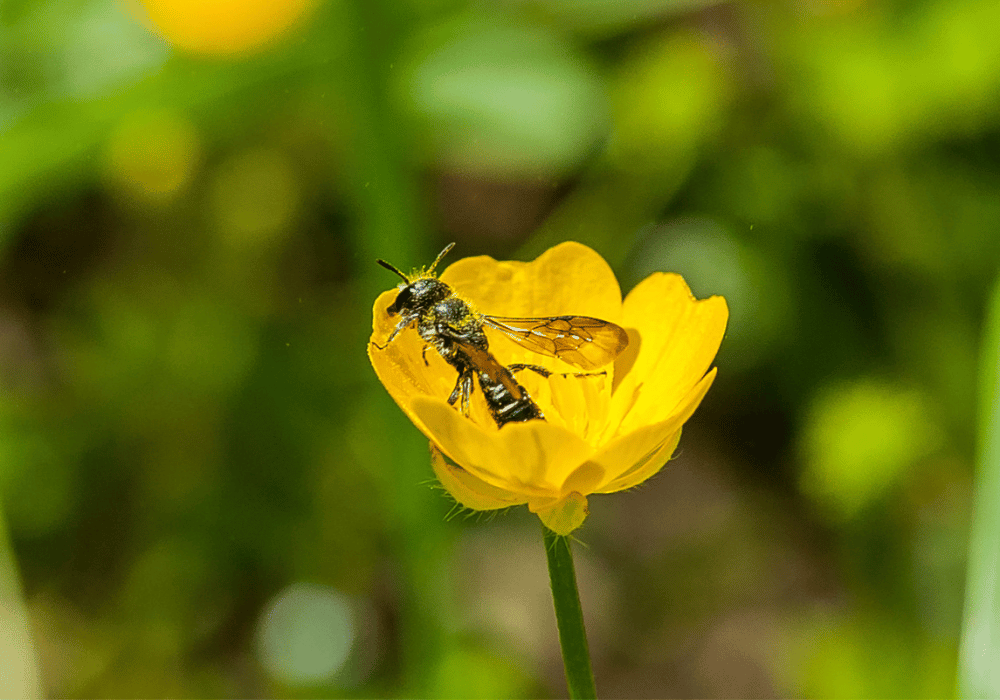
Bellflower cellophane bees are widespread wherever bellflowers thrive. It is exciting to observe how the females build their nest closures with small stones. Once dry, the closures also become very hard. It is remarkable that the young of the next generation can bite through this solid wall when they hatch.
What do large bellflower mason bees look like?
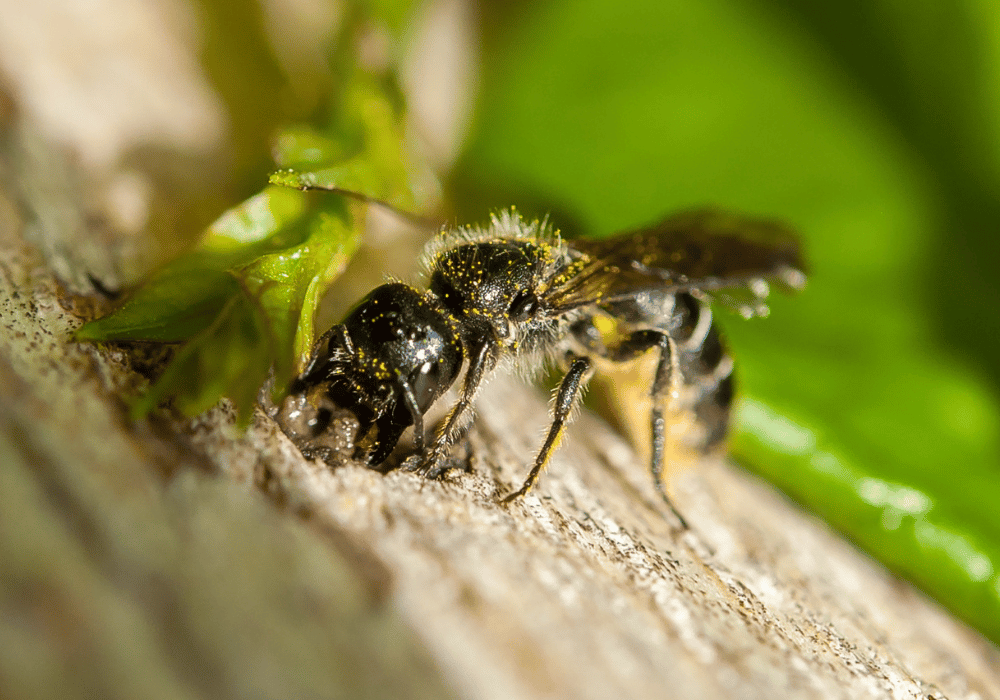
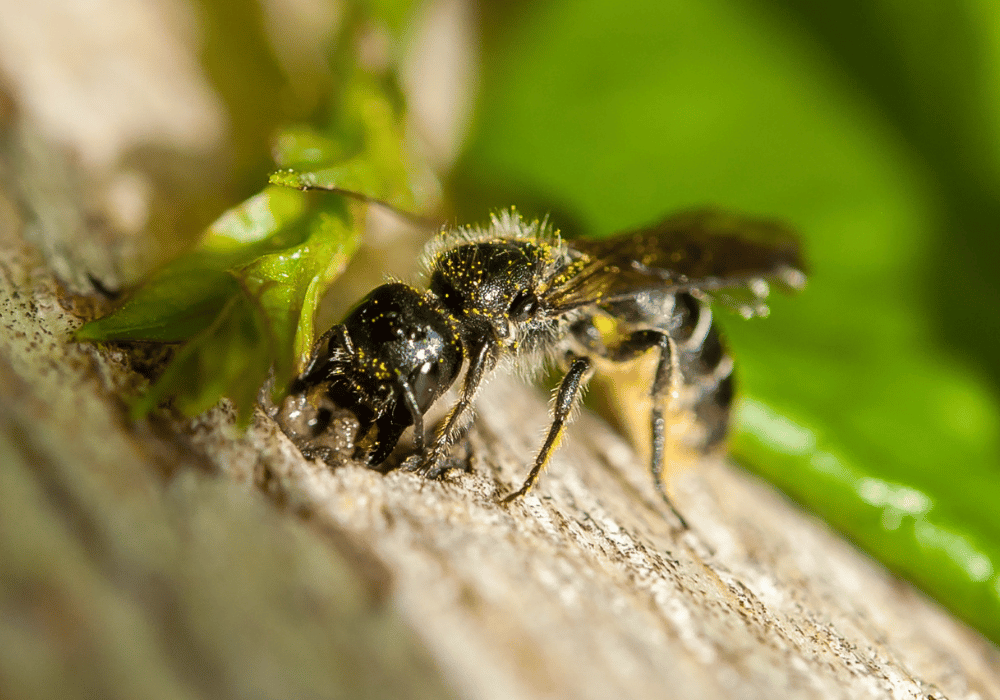
The large bellflower mason bee is 8–11 mm long and has a slender, elongated body. The females are deep black; however, they have sharply defined, white hair bands on their abdomen. The males are also predominantly black, but have beige-brown hair and less clearly defined hair bands.
Flight time
April to August. One generation per year.
Food preferences
The Campanula mason bee is a strict food specialist (oligoleptic): It collects pollen exclusively from bellflowers, such as the peach-leaved or nettle-leaved bellflower.
Flight time
April to August. One generation per year.
Food preferences
The Campanula mason bee is a strict food specialist (oligoleptic): It collects pollen exclusively from bellflowers, such as the peach-leaved or nettle-leaved bellflower.
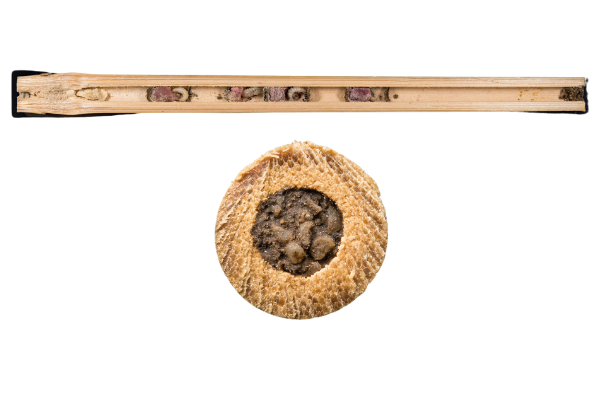
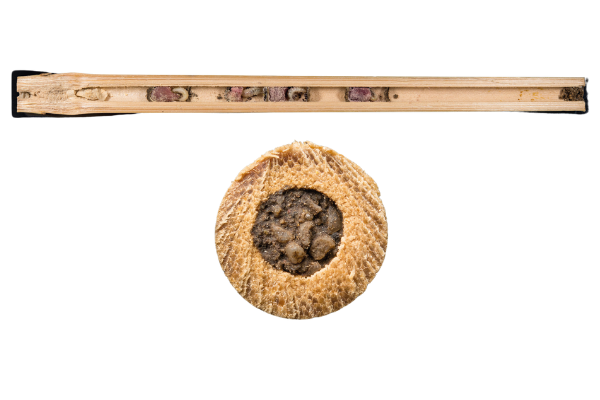
How do large scissorbies nest?
The cell partitions and the nest plug are made of sand and small stones, glued together with nectar and saliva.
Wild Bees in Switzerland: The Bellflower Resin Bee