

The Great Hatch:
The best way to observe your mason bees now
A soft rustle, a big moment
It starts with a soft rustle. Even before you see the first mason bees of the year in your BeeHome, you can hear them. Then it gets serious: the buzzing wild bee season begins – right on your doorstep.
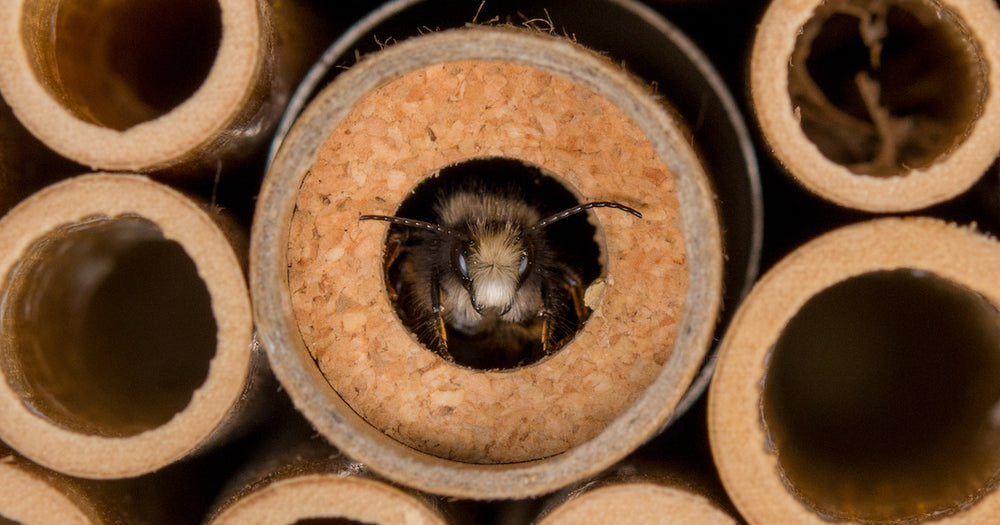
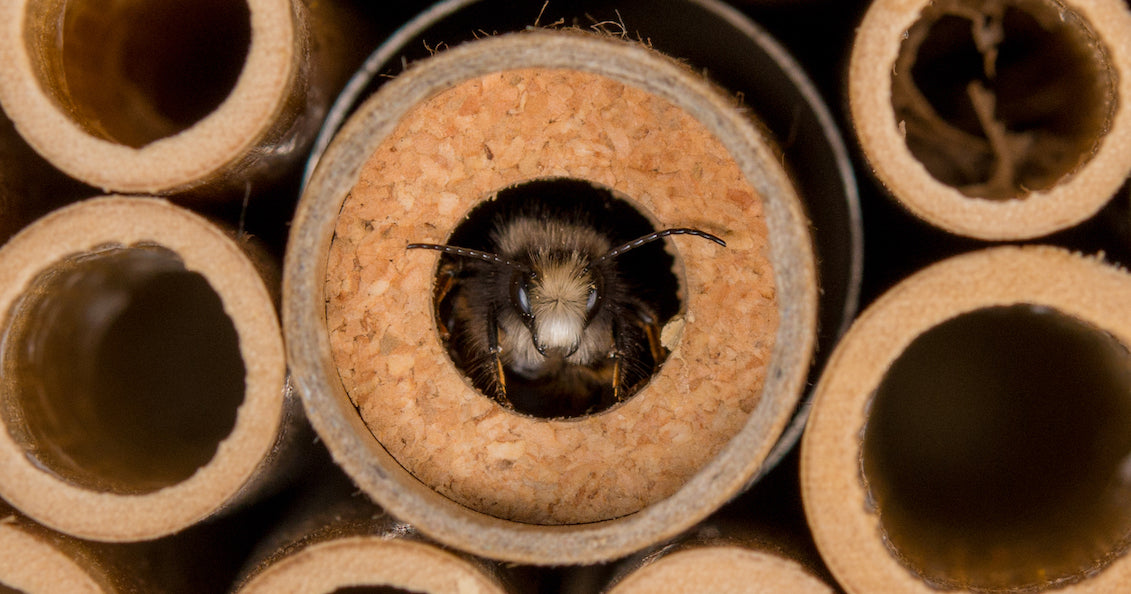
When you perceive a subtle rustle in the warm spring sun, you know: Your protégés are now gnawing a hole in their cocoon from the inside. In a few minutes, they will appear at the exit of the nesting tube – ready to discover the world.
If you have a BeeHome from the previous year, you can recognise the sealed tubes by the typical clay plugs. Here, too, life begins anew: with their strong mandibles, the wild bees open their self-sealed exits – spring is calling.
The males always start first
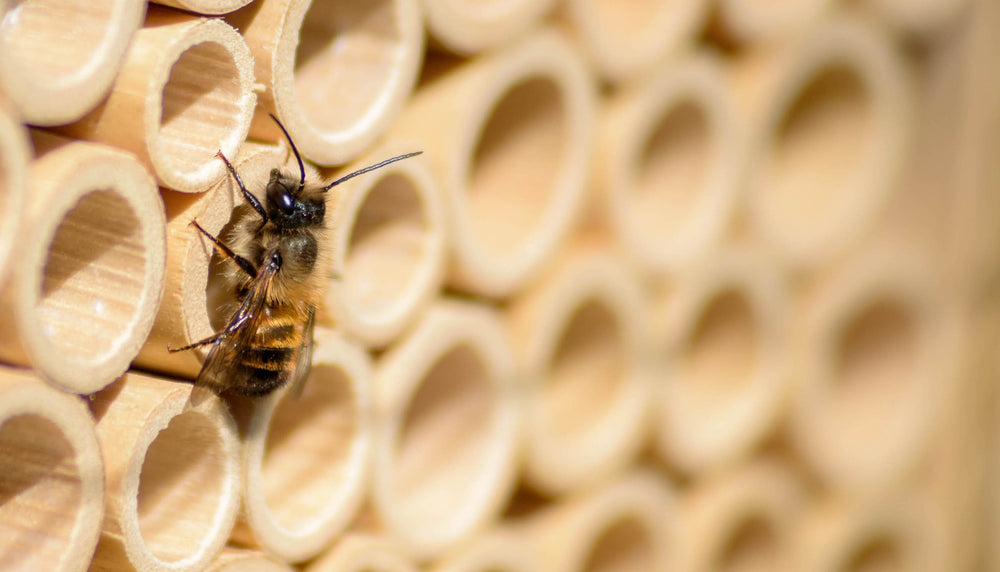
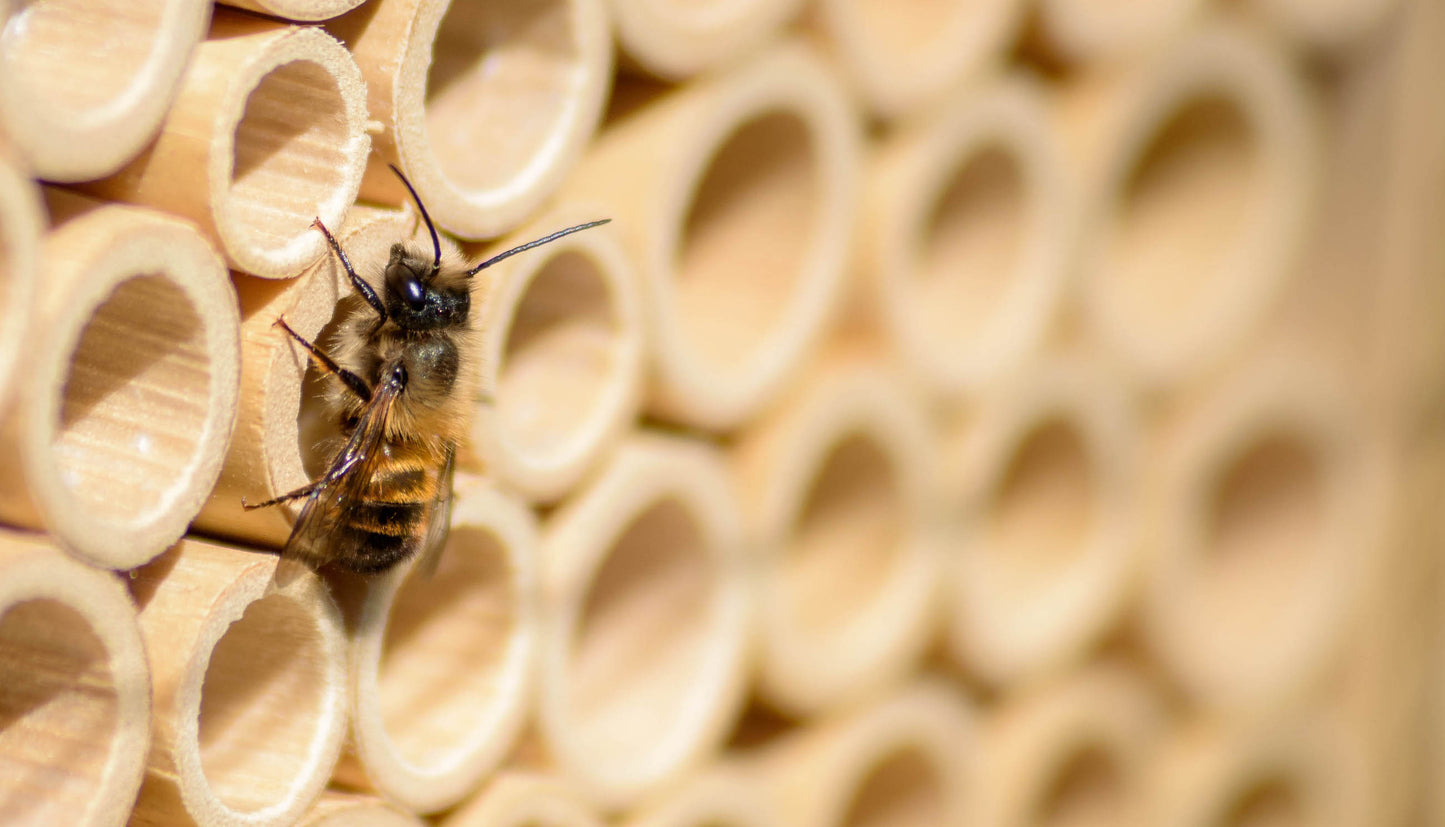
A small, furry head peeks out: the first hatched red mason bees appear – the males always show up first, easily recognisable by their white-grey facial hair. It is now important that the wild bees can strengthen themselves with nearby flowers. Therefore, make sure that your protégés can find food in the area. Grape hyacinths, squills and other early bloomers make it easier for the wild bees to start their outdoor life.
Fresh from the cocoon, the male first empties its intestine (that's also part of it) and then sets off on its first flower flight. And then? It's time to wait.
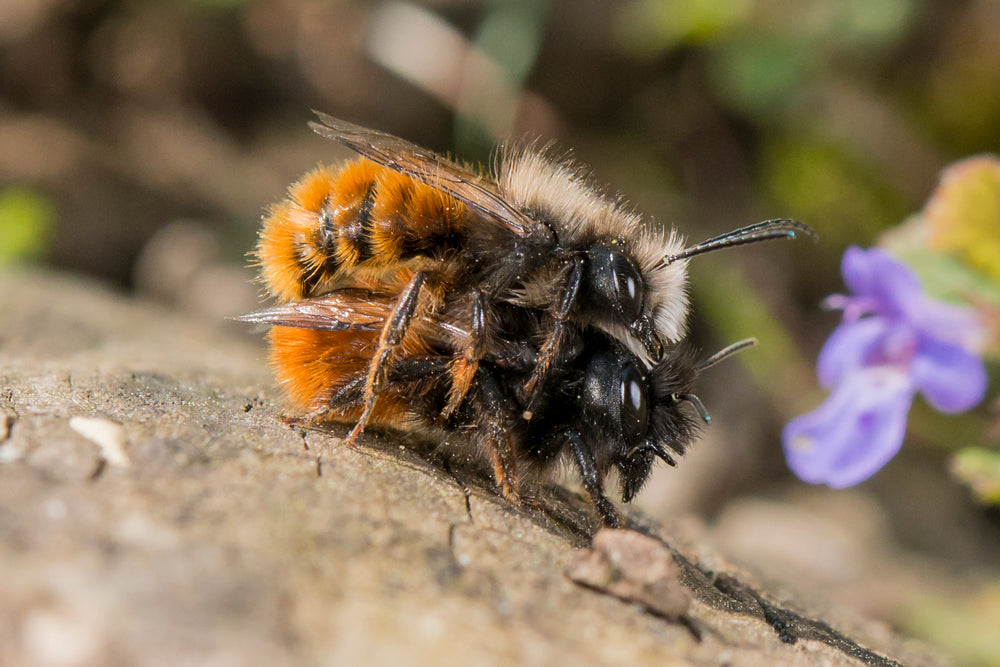
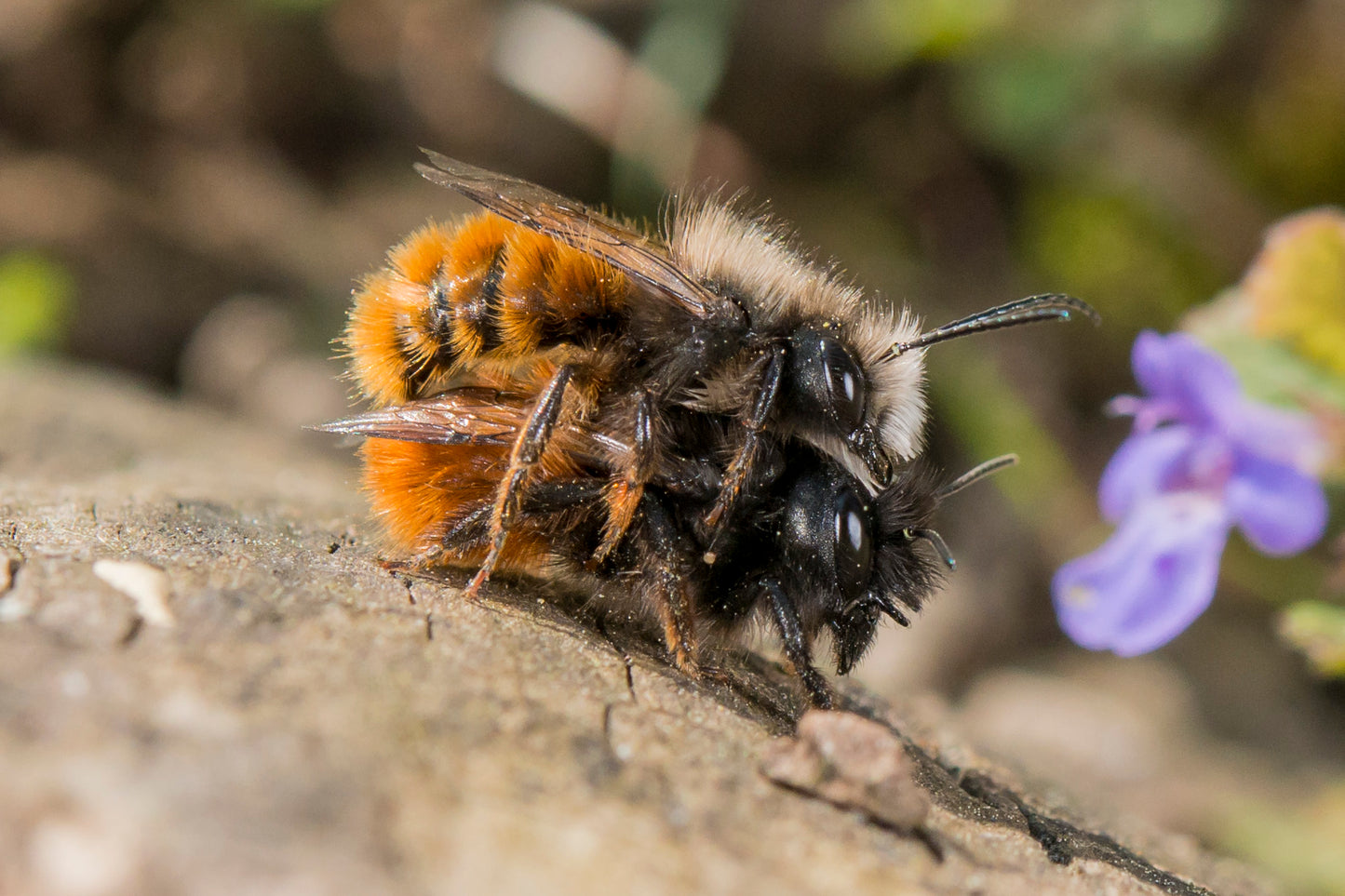
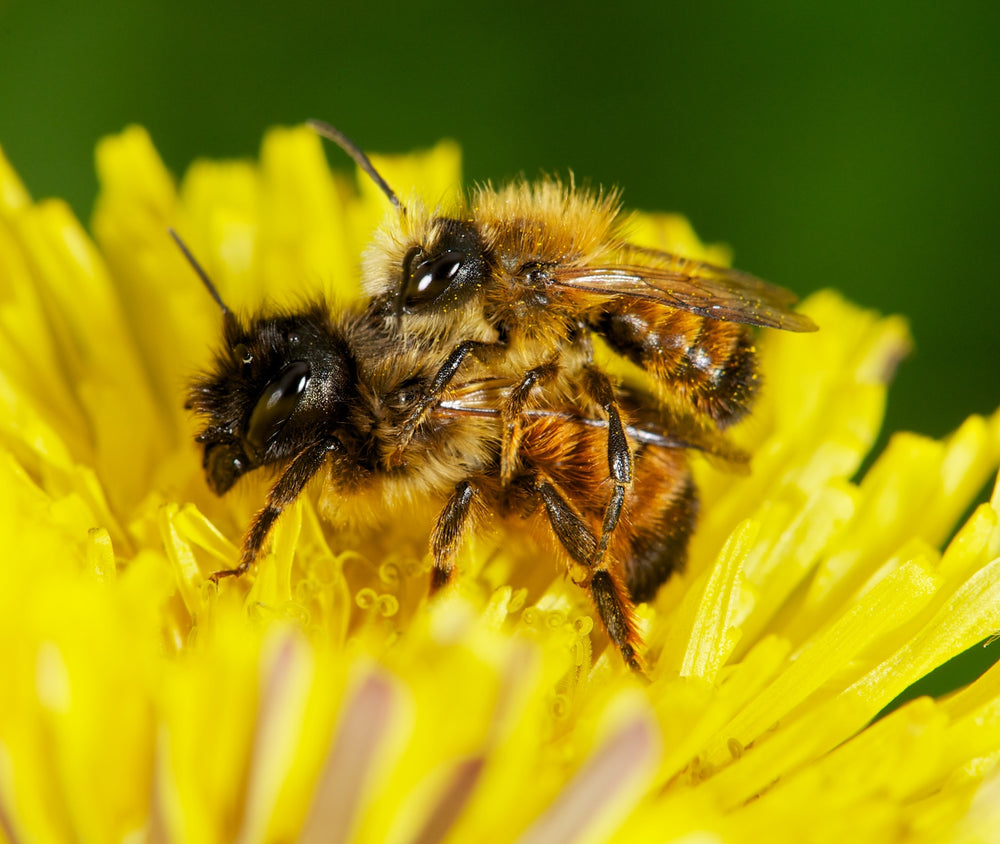
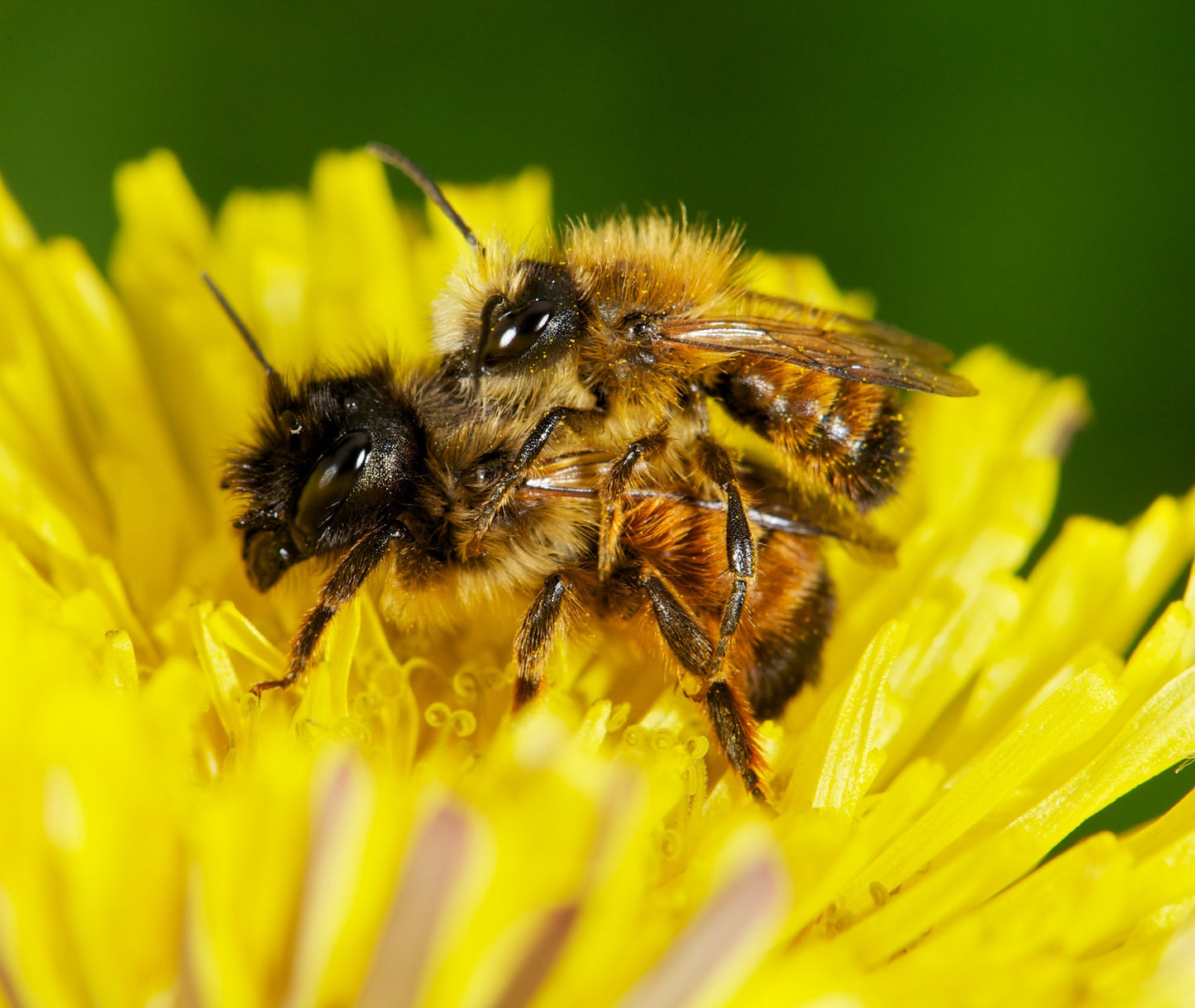
They patrol restlessly in flight in front of the BeeHome and search for partners in open nesting tubes. Depending on the temperature, it takes three days or even longer until the first females appear at the nesting exits. As soon as the significantly larger females show themselves, things get wild: the eager-to-mate males immediately pounce on the eagerly awaited mason bee females, often leading to a longer struggle. Whoever is the first to get on the back of one of the significantly larger females clings to it tightly and fends off competitors with their legs.
Mating season is discovery time
Hardly a better moment to observe the mason bees in peace. Because during the ritual, which lasts up to two hours, the pairs remain calmly seated in one place and are not disturbed even by curious observers – a rare opportunity for silent nature cinema up close.


The females take over
After mating, the females begin to build their nests. Equipped with a furry ventral brush, they collect pollen and nectar for their offspring. With a pollen-laden abdomen, the female lands at her nesting tube and crawls in forwards. Shortly afterwards, she emerges backwards, turns around, and crawls into the nest hind-end first. Here, she sheds the pollen she collected in the furry abdominal hairs, the ventral brush, during her flower visits.
Wild bee days are very long. The most industrious ones fly out with the first rays of sun and only return to their nesting tube at dusk to sleep. A single female builds up to 30 brood cells and uses several nesting tubes for this purpose. She provides the larvae with what is known as bee bread, a mixture of pollen and nectar.
They tirelessly fly between flowers and BeeHome – up to 2,500 flower visits a day are not uncommon. In this way, mason bees ensure excellent pollination in the surroundings.
Spring is buzzing – and you are right in the middle of it
If you have placed your BeeHome well, now begins the most beautiful time of the year: observing, learning, marveling. The grand hatching is not only fascinating, but also a small contribution to the preservation of biodiversity.


Experience wild bees for yourself 🐝
Do you want to experience the spring awakening of your own mason bees live? Then now is the right time: Order your starter population of Red Mason Bees on MyBeeHome and accompany the diligent pollinators as they restart their lives. Please note that it can take up to 30 days for your little ones to hatch.
To ensure everything runs smoothly, Sabrina shows you step-by-step how it works in this short video.
What your mason bees need now
For everything to run smoothly, your protégés need one thing above all: food in the form of early bloomers. Do you want to know which plants are particularly popular – not only with mason bees, but also with bumblebees, leafcutter bees and other important pollinators? Then take a look at our current Plant overview with flowering times and favorite bees (PDF).


Of course we'll take care of it
Personally there for you
Our small team of enthusiastic experts will be happy to personally assist you as you buzz into spring!
Do you have any questions or suggestions? Check out our FAQs or contact Antonia, Agnes, or Cornelia directly.
You can chat live with us or reach us by phone from Monday to Thursday. Outside of our business hours, you can send us an email at info@wildbieneundpartner.ch at any time - we will take care of your request as quickly as possible.